




 0
0
He Took Pole Position Three Times. He Never Led an F1 Lap
Pole position is supposed to mean one thing above all else: for at least a moment, you’re the fastest car on the grid.
Teo Fabi took three pole positions across his Formula 1 career. He never led a single lap of a Grand Prix. Not once, not even briefly. It remains a record nobody else has matched.
Three poles, three different ways of losing the lead
Fabi’s first pole came at the 1985 German Grand Prix at the Nürburgring, driving for Toleman. Wheelspin at the start dropped him to eighth before the race had even properly begun, and he retired later with a clutch problem.
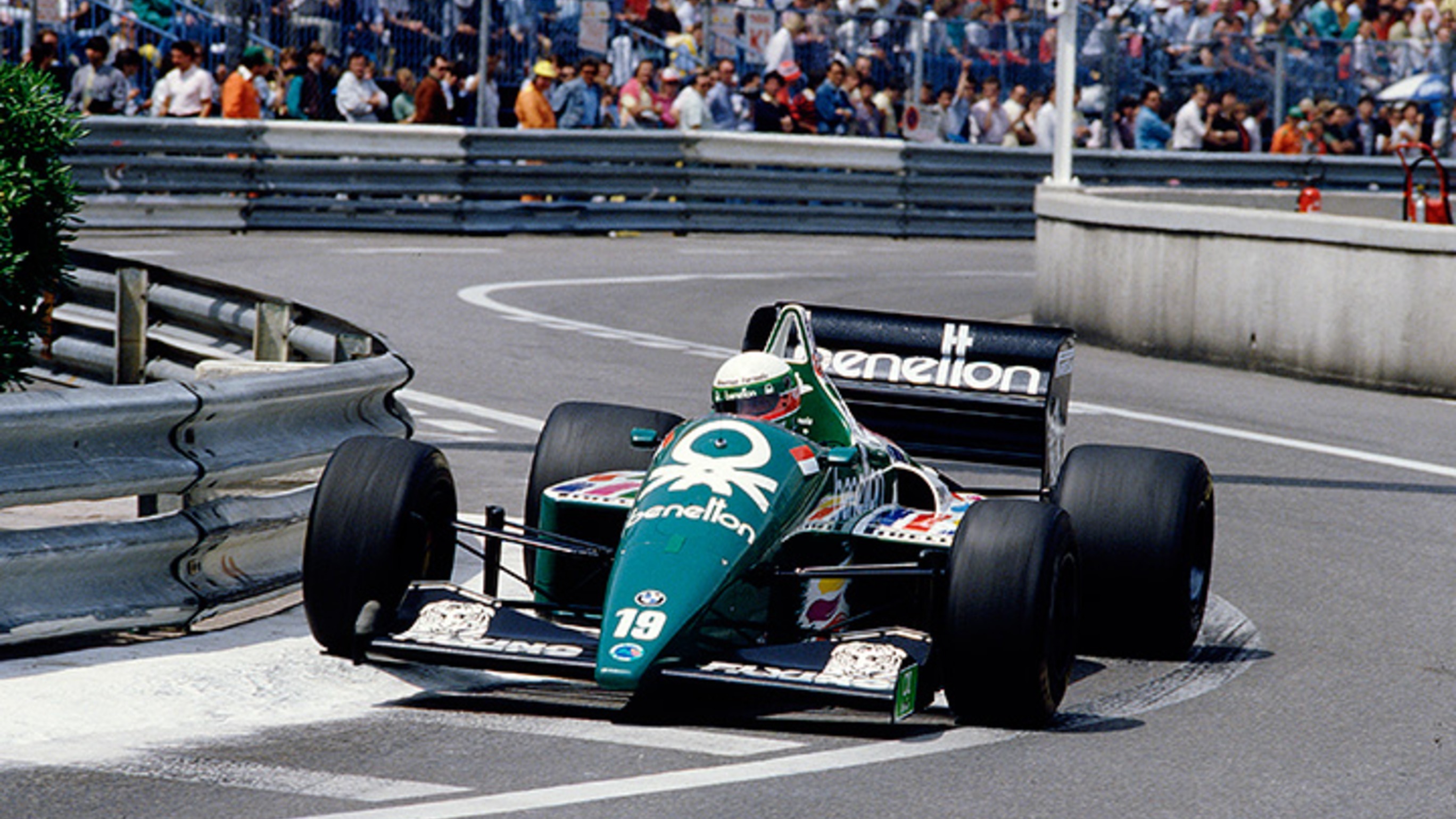
His second pole arrived a year later at the 1986 Austrian Grand Prix, this time for Benetton. His teammate Gerhard Berger beat him off the line and grabbed the lead before Fabi could establish it. Fabi did eventually fight his way back past Berger, technically taking the lead on track, but his engine failed moments later, before he’d completed enough of the lap for it to count in the official records.
His third pole, at Monza that same season, never even translated into a race start from the front. A problem on the formation lap forced him to start from the back of the grid instead, and he retired again before the finish.
An Italian who found more success in America
Fabi’s F1 career, spread across Toleman, Brabham and Benetton between 1982 and 1987, produced just two podium finishes and 23 championship points from 71 entries. It’s a modest record for a driver who was clearly capable of extracting a single blistering lap out of a car when it mattered.
He found more consistent success elsewhere. In IndyCar, Fabi became the only rookie to take pole position at the Indianapolis 500 between 1950 and his 1983 debut, and he won the World Sportscar Championship with Jaguar in 1991. His younger brother Corrado also raced in F1, occasionally filling in for Teo at Brabham when his commitments in America overlapped with the Grand Prix calendar.
Splitting his career between two continents
For part of 1984, Fabi was effectively running two racing careers on two continents at once, competing in CART in the United States while also holding a Brabham F1 seat, with Corrado stepping into the Brabham whenever the schedules clashed. That kind of split commitment would be almost unthinkable for a top-level driver today, when full-time focus on a single championship is treated as a basic requirement for competing at the front.
Fabi’s ability to be genuinely fast in both categories, an Indy 500 pole as a rookie on one side of the Atlantic, three F1 poles on the other, is part of what makes his complete absence from the list of lap leaders so strange.
Speed without follow-through
What makes Fabi’s record so unusual is how specific the failure is. Plenty of drivers have taken poles without ever winning a race. Fewer have taken multiple poles without leading a single lap at all, since simply starting at the front usually guarantees a driver leads, if only for the opening corner. Fabi’s three poles were each undone in a completely different way, by a bad start, by a rival’s reflexes, by a mechanical gremlin before the green flag.
Four decades later, his name still comes up in lists of F1’s strangest statistical footnotes, a driver who was, for three isolated moments, officially the fastest man in the world, and never once got to prove it on track.
What do you think matters more in racing: the single lap that puts a car on pole, or the laps that follow it once the race actually starts?


