

 0
0
The Rugby Scrum Isn’t Boring Filler, It’s the Sport’s Most Technical Moment
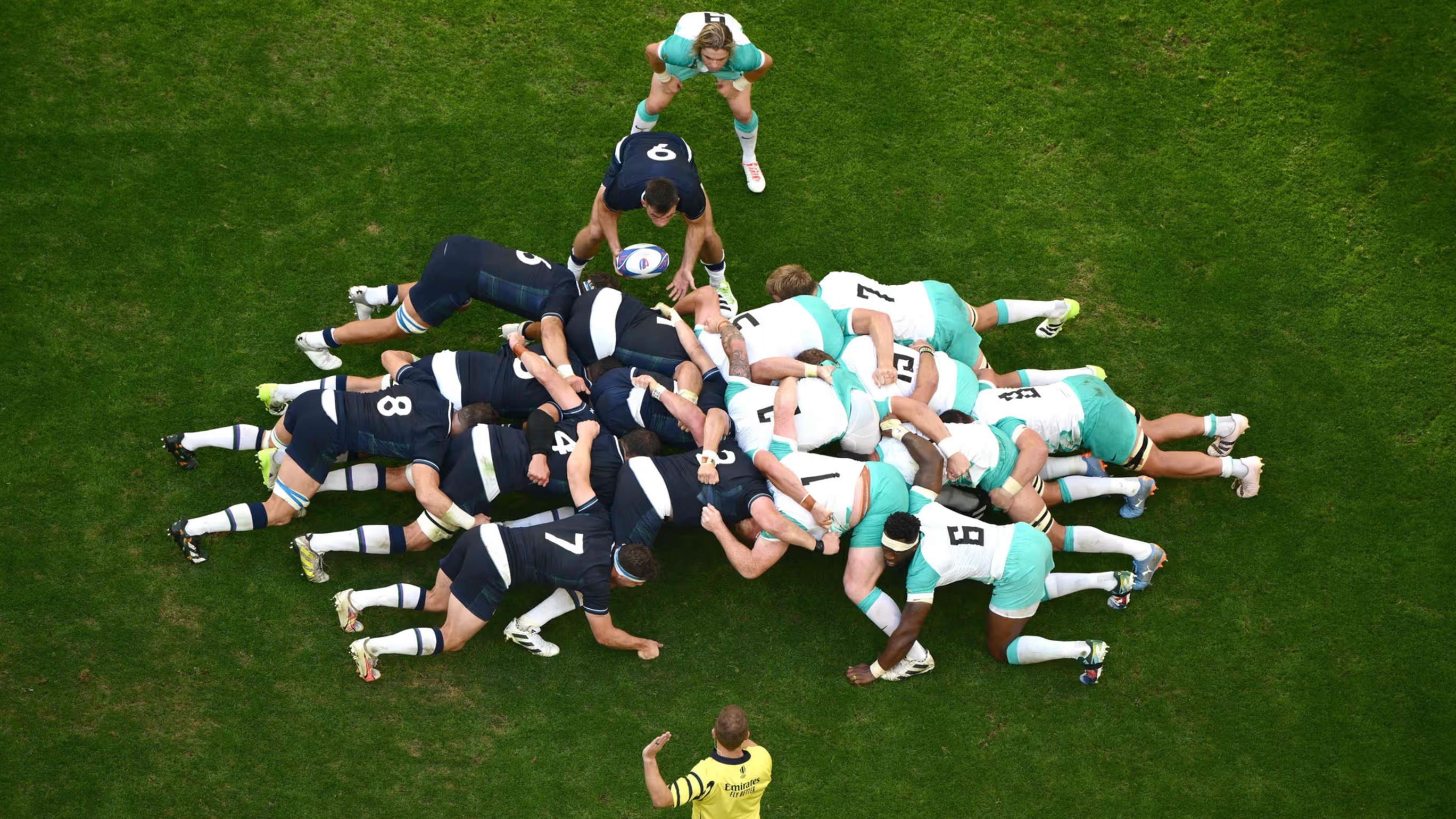
Watch a rugby scrum without understanding it, and it looks like sixteen large men pushing against each other until someone falls over or a whistle blows. That’s a fair first impression, and it’s almost entirely wrong about what’s actually happening.
The scrum is rugby’s way of restarting play after a minor infringement, most commonly a knock-on or forward pass, and it involves the eight forwards from each team binding together in three interlocking rows to contest possession as the ball gets fed into the middle.
What looks like brute-force chaos is actually a rare thing in team sport: a genuine technical contest disguised as a shoving match.
Why it collapses, and why that’s a real problem
Scrums used to collapse constantly, and it wasn’t just an aesthetic issue. Collapsed scrums put enormous, dangerous pressure through the necks and spines of the players in the front row specifically, and injuries from failed engagements became a serious enough concern that World Rugby overhauled how scrums are formed.
Since the 2013-14 season, referees use a structured sequence, effectively “crouch, bind, set,” requiring front rows to physically bind together and pause before any forceful engagement happens. Referee Wayne Barnes noted the change produced measurably fewer resets and, more importantly, significantly reduced serious injuries compared to the old system where packs simply crashed into each other on the whistle.
The part fans miss entirely
Winning a scrum isn’t just about which pack is stronger, even though raw power obviously matters. Front row players, specifically the props and hooker, need precise footwork, exact body angles, and split-second timing to win the contest legally rather than simply forcing a collapse. The hooker’s job specifically involves striking for the ball with a foot while the rest of the pack drives forward, a skill that takes years to master and rarely gets acknowledged by anyone watching casually.
Tighthead props, the players anchoring one specific side of the front row, are among the highest paid positions in professional rugby specifically because of how technically demanding and physically punishing that role is, despite tightheads often lacking the speed or ball-handling skills that make wingers and fly-halves look more exciting to casual viewers.
The ongoing tension over the scrum’s place in the game
Rugby has genuinely struggled with how much weight to give the scrum in the modern sport. Critics argue that scrums have become tedious stoppages, frequently resulting in repeated resets and penalties rather than genuine ball-in-play contests, disrupting the game’s flow for fans who came to watch open, attacking rugby. Some have proposed reducing the scrum’s competitive importance entirely to speed up matches and open more space for attacking players.
Others push back hard against that idea, arguing it would strip away one of rugby’s most distinctive elements and devalue a genuinely elite skill set that decades of specialized training have been built around. That tension hasn’t fully resolved, and it shows up in ongoing law tweaks nearly every season.
Why it deserves a second look
Casual viewers who tune out during scrums are missing a genuine technical battle, one that rewards years of specialized training in a way few other moments in sport do. Visually it’s rarely the highlight of a rugby match. Technically, it might be the most skillful passage of play in the entire game.
Should rugby continue prioritizing the scrum as a genuine contest for possession, or would the sport benefit from reducing its competitive weight in favor of more consistently open, fast-paced play?


 1
1