




 0
0
The NBA’s Most Important Rule Was Once Treated Like a Gimmick
Modern NBA teams average somewhere around 35 three-point attempts a game, and the shot has completely reshaped how basketball is played at every level.
When the NBA introduced the three-point line for the 1979-80 season, most of the people running the league treated it as a novelty act, something borrowed from a rival league that wouldn’t seriously affect how real basketball was played.
Born as a rival league’s trick
The three-point shot didn’t originate in the NBA at all. It was invented by Abe Saperstein, founder of the Harlem Globetrotters, for his short-lived American Basketball League in 1961, specifically to give smaller players a way to compete with taller ones.
The rival American Basketball Association picked it up in the late 1960s as one of several flashy gimmicks meant to distinguish itself from the more conservative NBA, alongside its red, white and blue ball.
When the ABA merged into the NBA in 1976, the three-point line was left out of the deal entirely. NBA executives and coaches largely viewed it the way Boston Celtics president Red Auerbach did: an unnecessary novelty that didn’t belong in serious professional basketball. “We don’t need it,” Auerbach reportedly said. “I say leave our game alone.”
A slow, reluctant start
The NBA finally adopted the line in June 1979, initially only on a one-year trial basis, partly to make games more exciting for a league whose popularity had been sliding. Boston’s Chris Ford made the first three-pointer in NBA history on opening night that October, in the same game that marked the NBA debuts of Larry Bird and Magic Johnson.
Almost nobody built their offense around it. Teams averaged just 2.8 three-point attempts per game that first season, barely one shot in every 33 taken, and made only around a quarter of them. Bird himself later admitted that he and most of his teammates thought the shot was little more than a gimmick when it arrived, and his own coach barely mentioned it in training camp.
The Celtics that season are a good illustration of just how little the shot was trusted early on. Despite having Bird, who would go on to become one of the best long-range shooters of his generation, on the roster from day one, the team didn’t design a single play around the three-pointer that year. It sat there as an option nobody was actively looking to use, a rule change on the books rather than a genuine part of anybody’s game plan.
From afterthought to obsession
The shift happened gradually, then all at once. Attempts per game slowly climbed through the 1980s and 1990s as sharpshooters like Reggie Miller and Dale Ellis proved teams could win by leaning into the long ball. By the 1999-2000 season, teams were attempting nearly 14 threes a game, already five times the rate from 1979.
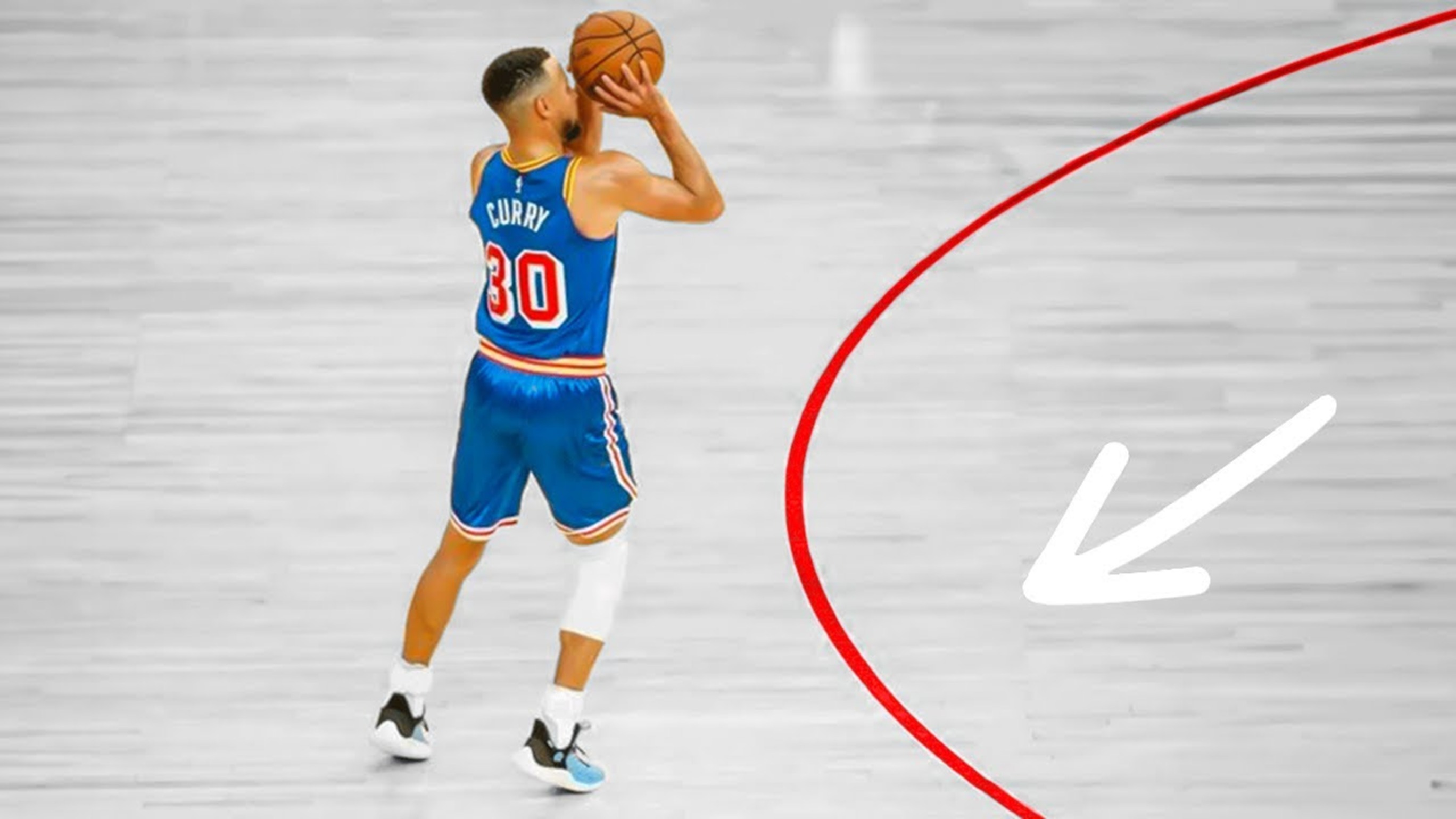
The real explosion came in the 2010s, driven by analytics departments realizing a three-pointer was simply worth more points per attempt than a mid-range jumper, and by the rise of the Golden State Warriors and shooters like Stephen Curry. Today’s NBA teams average well over four times the three-point attempts of that first, tentative 1979-80 season, built entirely around a shot the league’s own establishment once dismissed as beneath serious basketball.
What does it say about sports in general that one of the biggest tactical revolutions in basketball history started as something the league’s most respected figures actively didn’t want?


