




 0
0
Why Rally Drivers Don’t Actually Race on the Same Track
In most motorsport, every competitor drives the identical piece of tarmac under roughly the same conditions.
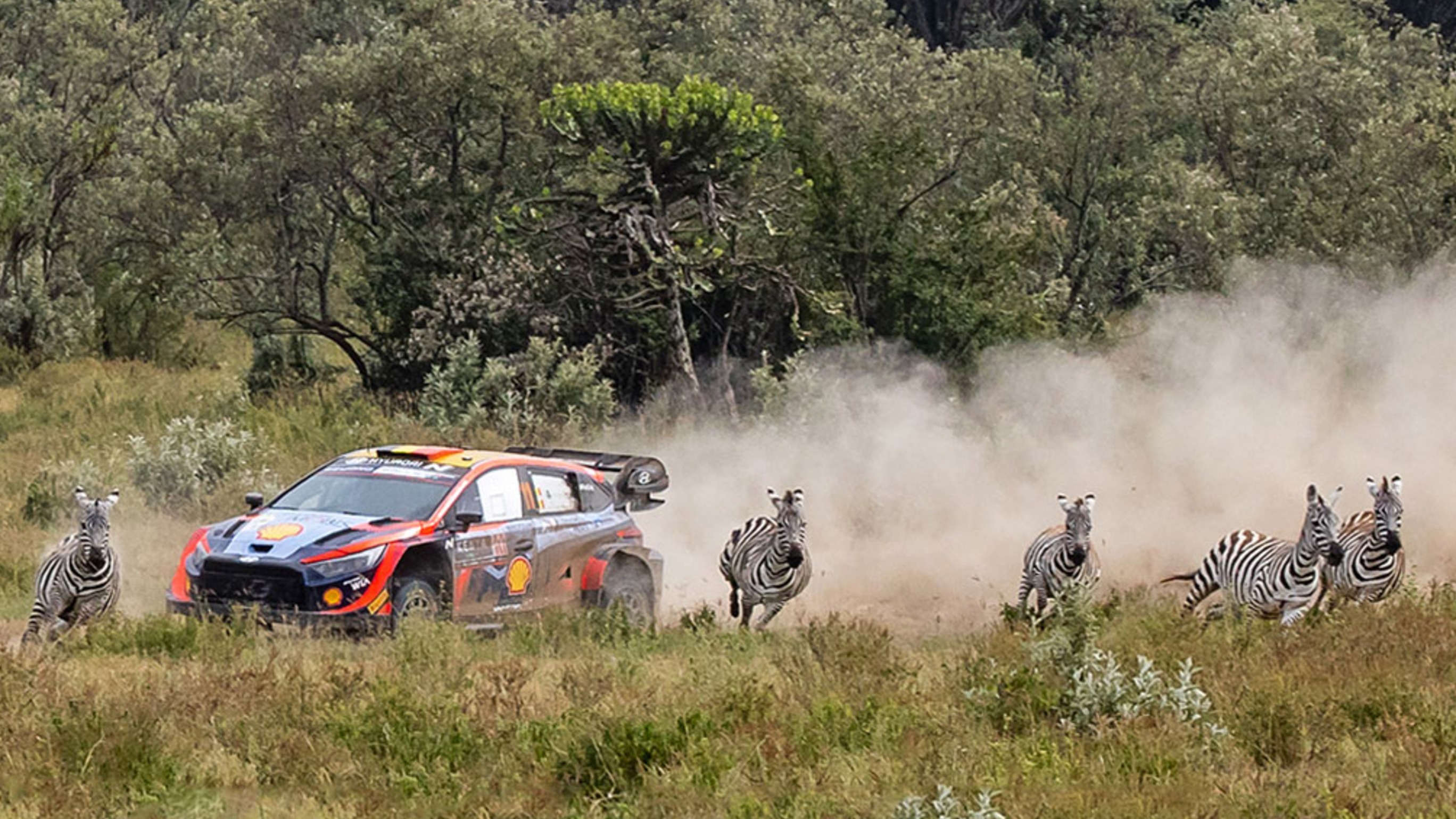
Rallying breaks that assumption completely. With cars being sent out one at a time, minutes apart, on public and forest roads rather than a closed circuit, the driver who goes first and the driver who goes fortieth can face a genuinely different surface, even though they’re technically running the exact same stage.
The road changes while the race is happening
A rally stage might start dry and dusty for the first few cars through, then turn to mud once rain rolls in an hour later, then start freezing over as temperatures drop toward evening. Gravel stages get progressively more rutted and loose as more cars chew up the surface. On stages that pass through farmland, cattle or debris can end up on the road between one car’s run and the next.
None of this happens in a closed-circuit race, where every competitor drives the same lap under essentially identical conditions within minutes of each other.
Start order becomes a genuine strategic variable as a result. Running first on a wet or snow-covered stage can mean carving through untouched, more grippy snow, sometimes called “cleaning the road,” which can be an advantage or a serious handicap depending entirely on conditions nobody can fully predict in advance.
Why teams obsess over road position
This is why rally teams and championship organizers spend so much effort on start-order rules, often based on championship standings from the previous events, specifically to try to balance out an advantage or disadvantage that has nothing to do with driving skill.
A driver leading the championship might find themselves running first on a muddy stage, clearing a path for slower rivals running behind them to enjoy a cleaner, faster surface, an outcome that can feel deeply unfair given it’s a direct consequence of that driver’s own success.
Co-drivers exist partly because of this same unpredictability. Rather than memorizing a fixed track the way a circuit racer might, rally drivers rely on pace notes, a co-driver’s real-time, shouted description of every upcoming corner, crest, and hazard, because no driver could possibly memorize the constantly shifting character of dozens of different stages spread across an entire event.
A sport built around uncertainty rather than removing it
Circuit racing spends enormous effort trying to make conditions as equal and repeatable as possible for every competitor. Rallying does close to the opposite, treating unpredictable conditions and road position as a core part of the challenge rather than something to be engineered away. It’s part of why rally results can feel so much harder to predict than a Grand Prix or a MotoGP race: the fastest driver on paper can lose simply by drawing the wrong start number on the wrong morning.
For fans new to the sport, it’s one of the most surprising things to learn. Rally isn’t really a race between drivers on the same track. It’s closer to dozens of individual time trials, run on roads that are quietly changing underneath every competitor as the day goes on.
Does that added layer of unpredictability make rally a purer test of adaptability than circuit racing, or does it just mean the results are shaped as much by luck as by skill?


