




 0
0
Why Doesn't Football Allow the Number 0?
Football shirt numbers run from 1 to 99 in almost every major competition in the world, a range set not by FIFA's actual Laws of the Game, which say nothing specific about it, but by the individual leagues and associations that organise each competition.
Somewhere in that gap between rule and custom, exactly one player in English or Scottish top-flight football ever wore the number 0.
His name was already a perfect match for it.
A nickname that became a shirt number
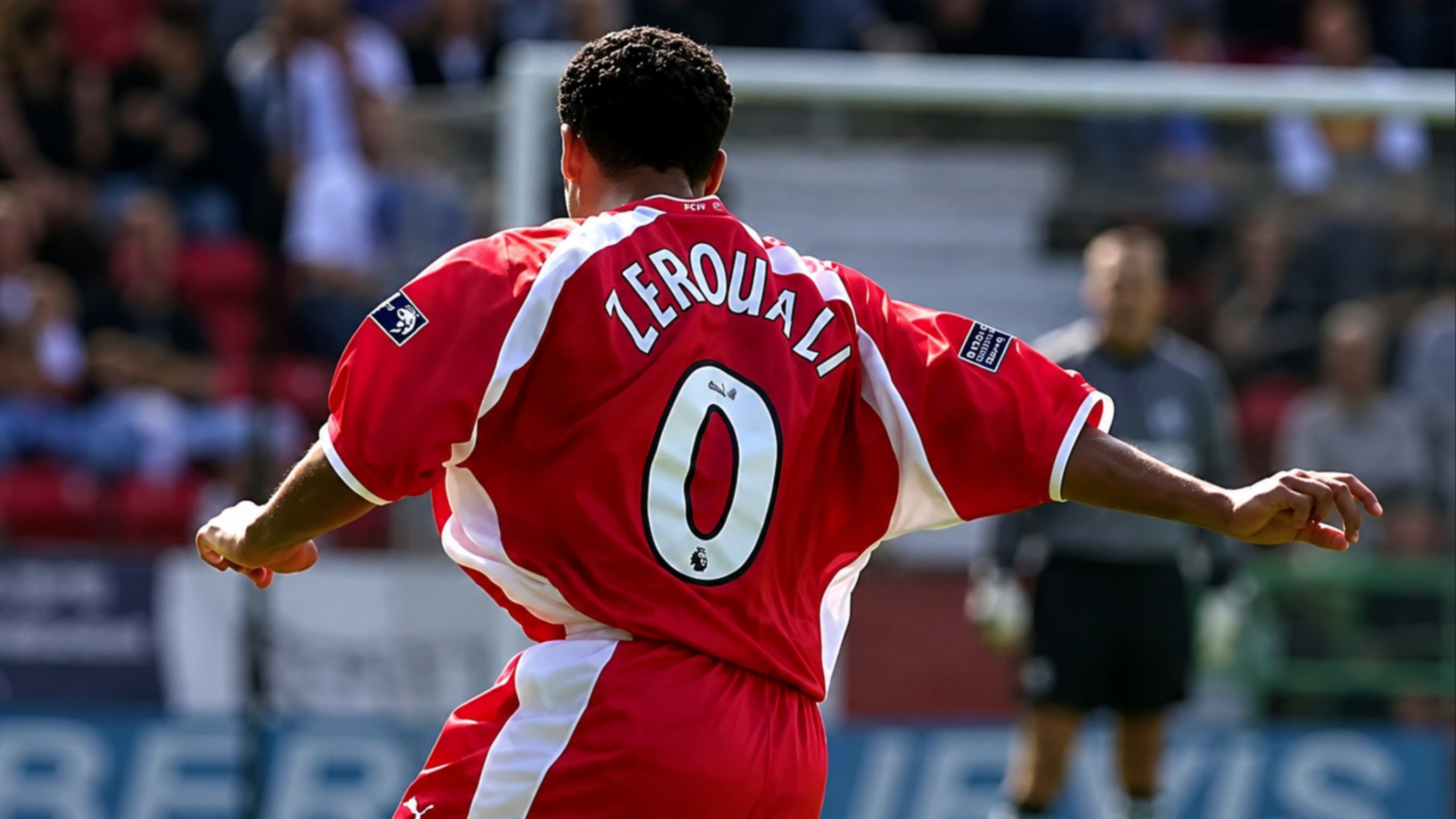
Moroccan forward Hicham Zerouali joined Scottish Premier League club Aberdeen in December 1999.
His teammates and the club's fans already knew him by a nickname built from the first letters of his surname: Zero.
When it came to picking a shirt number, the Scottish Football Association granted him special dispensation to wear the number 0 itself, making him the first and, to date, only player in the top flight of English or Scottish football history to do so.
It wasn't a loophole so much as a genuine exception.
Competition organisers had settled on the 1-to-99 range as a practical standard, but nothing in football's actual laws technically barred a lower number, and the SFA simply decided Zerouali's case was distinctive enough to allow it.
A tragedy that changed how the number was treated
Zerouali played for Aberdeen until 2002 before returning to Morocco.
He died in a car accident in 2004, at just 27 years old.
In the aftermath, both English and Scottish football effectively retired the number 0 out of respect, treating it as something closely tied to his memory rather than a number any other player might casually request.
It's never formally been written into the rulebook as banned, but in practice, no player has worn it in either country's top flight since.
That informal retirement is part of why the number 0 carries a slightly different weight in football than it does in sports like American football or basketball, where it's a completely normal, unremarkable choice.
In football, it exists as something closer to a tribute, tied permanently to one player's story rather than available as an open option for whoever wants it next.
A number defined by an exception rather than a rule
Most football shirt number conventions trace back to positional tradition or simple squad management: goalkeepers wear 1, outfield numbers run up to 11 for a starting lineup, and modern squad numbering opened up everything from 12 to 99 for players to choose more freely.
The number 0 sits outside all of that, not banned by any official rulebook, but effectively unavailable anyway, held in place by the memory of the one player who was ever specifically allowed to wear it.
It's an unusual way for a number to become off-limits in professional sport, not through legislation, but through an unspoken agreement among clubs and associations that some things are better left as they were.
A contrast with how other sports treat zero
The reluctance around wearing 0 in football stands out even more when set against sports that treat the number as completely unremarkable.
Basketball and American football both use 0 and 00 routinely, with no particular symbolic weight attached to either.
Football's version of the same digit carries an entirely different kind of history, tied to a specific person's memory rather than simply being one more available option on a numbered list.
It's a small reminder that shirt numbers, even in a sport as globally standardised as football, don't always follow the same logic from one code to the next.
Should a number be treated as retired across an entire sport out of respect for one player, even without any official rule saying so, or does that risk quietly erasing a small piece of football history from view?


