




 1
1
Seven F1 Drivers Once Shared One Championship Point
For the first ten years of the Formula 1 World Championship, there was a bonus point on offer for whoever set the fastest lap of the race.
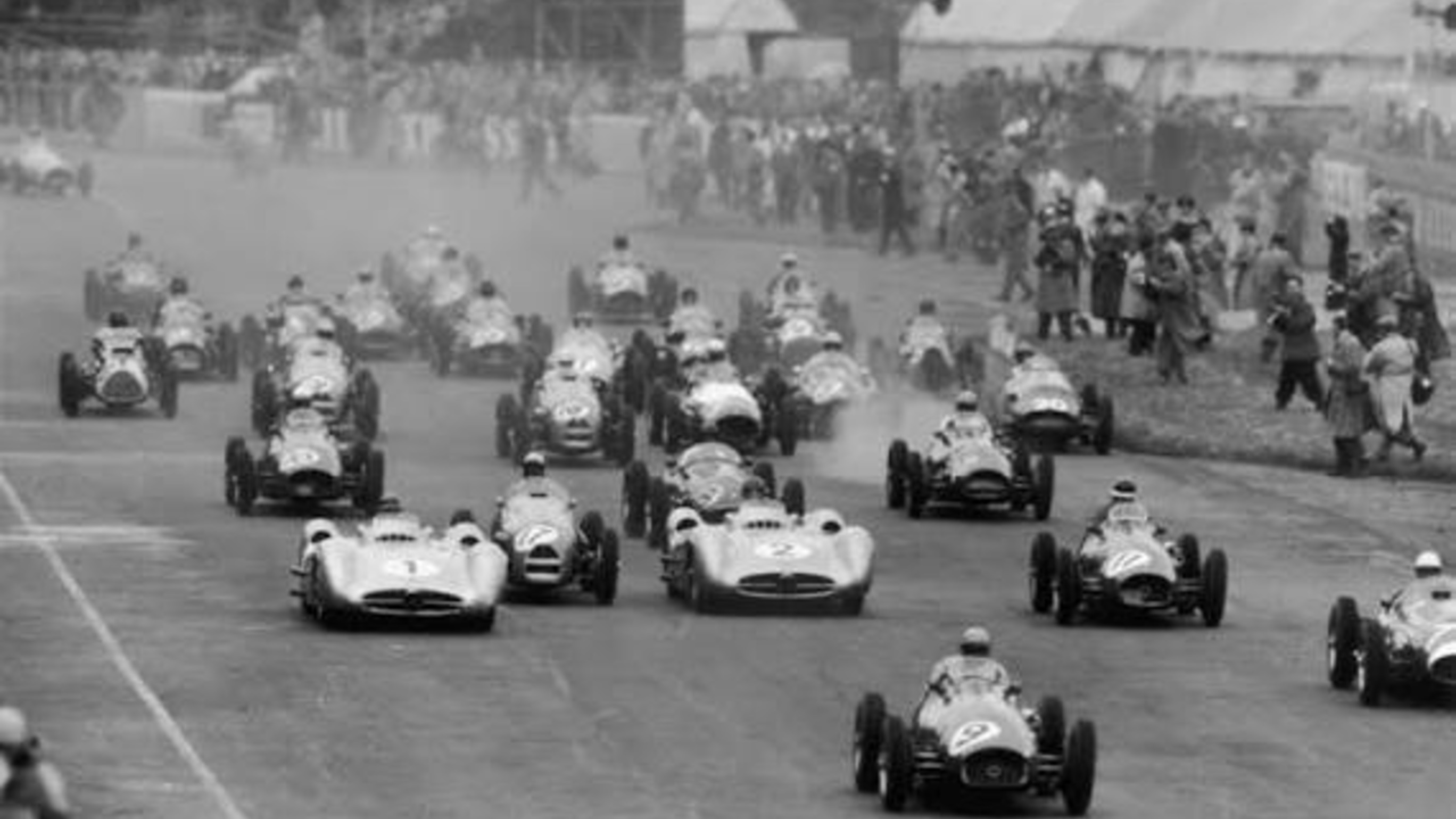
It sounds like a small detail. At Silverstone in 1954, it produced one of the strangest results in the sport’s history: seven different drivers officially tied for fastest lap, and each of them was awarded one-seventh of a point.
A timing system that couldn’t keep up
In 1954, F1 didn’t have anything close to modern timing technology. Stewards stood trackside with stopwatches, recording lap times by hand, rounded only to the nearest whole second.
At that year’s British Grand Prix, seven drivers, Alberto Ascari, Jean Behra, Juan Manuel Fangio, José Froilán González, Mike Hawthorn, Onofre Marimón, and Stirling Moss, all recorded exactly the same time: one minute fifty seconds.
There was no way to separate them. Rather than give all seven a full point each, or pick a winner at random, officials split the single point on offer seven ways, handing each driver one-seventh of a point on their championship tally.
The most crowded fastest lap in F1 history
Two-way ties for fastest lap had happened before, and were handled by splitting the point in half. A seven-way tie was something else entirely, and it left the sport’s own record books looking almost comical: drivers finishing seasons with totals like 28 and one-seventh points, fractions nobody outside F1 had ever had to deal with before.
The race itself was won by González, who led from the front after taking over from Fangio, while Hawthorn and young Argentine driver Marimón rounded out the podium. But it’s the fastest lap that people remember, seven of the era’s best drivers, including two future five-time world champions in Fangio and Ascari, all matching each other down to the second.
A lineup that reads like a hall of fame
Part of what makes the tie so remarkable is who was involved. This wasn’t seven midfield drivers benefiting from a timing quirk.
Fangio would go on to win five world titles and is still regarded by many as the greatest driver of his era. Ascari had already won back-to-back championships in 1952 and 1953. Moss became one of the most celebrated drivers never to win a title at all.
Having that calibre of field bunch together on a single lap time, down to a whole second with equipment that couldn’t measure any finer, says as much about how bunched the competition was that day as it does about the primitive stopwatches timing it.
A rule that eventually got fixed, then came back
The chaos at Silverstone pushed the sport toward better timing standards, and the fastest-lap bonus point was eventually dropped from the championship altogether after the 1959 season, partly because ties like this kept muddying the standings. It sat unused for sixty years.
In 2019, F1 brought the fastest-lap point back in a modified form, hoping to encourage more flat-out racing at the end of races. Nobody expects a repeat of 1954’s seven-way split. Modern timing measures lap times to the thousandth of a second, precise enough that even two drivers matching each other to the hundredth would be treated as remarkable. But for one afternoon at Silverstone, seven of the fastest men alive were, officially, exactly as fast as each other.
Does a rule that produced a result this chaotic deserve credit for rewarding raw speed, or does it show why sports eventually need better ways of measuring performance than the technology of the time allows?


