





 1
Carlos Alcaraz Is Back. But Has Tennis Entered a New Era of Uncertainty?
Novak Djokovic lost in the first round of the US Open for the first time in his career, beaten by Argentina's Mariano Navone in five sets while visibly struggling with illness. Jannik Sinner, the world number one, wasn't even in the draw to see it happen. He withdrew before the tournament began, still recovering from the injury that ended his Cincinnati Open final early.
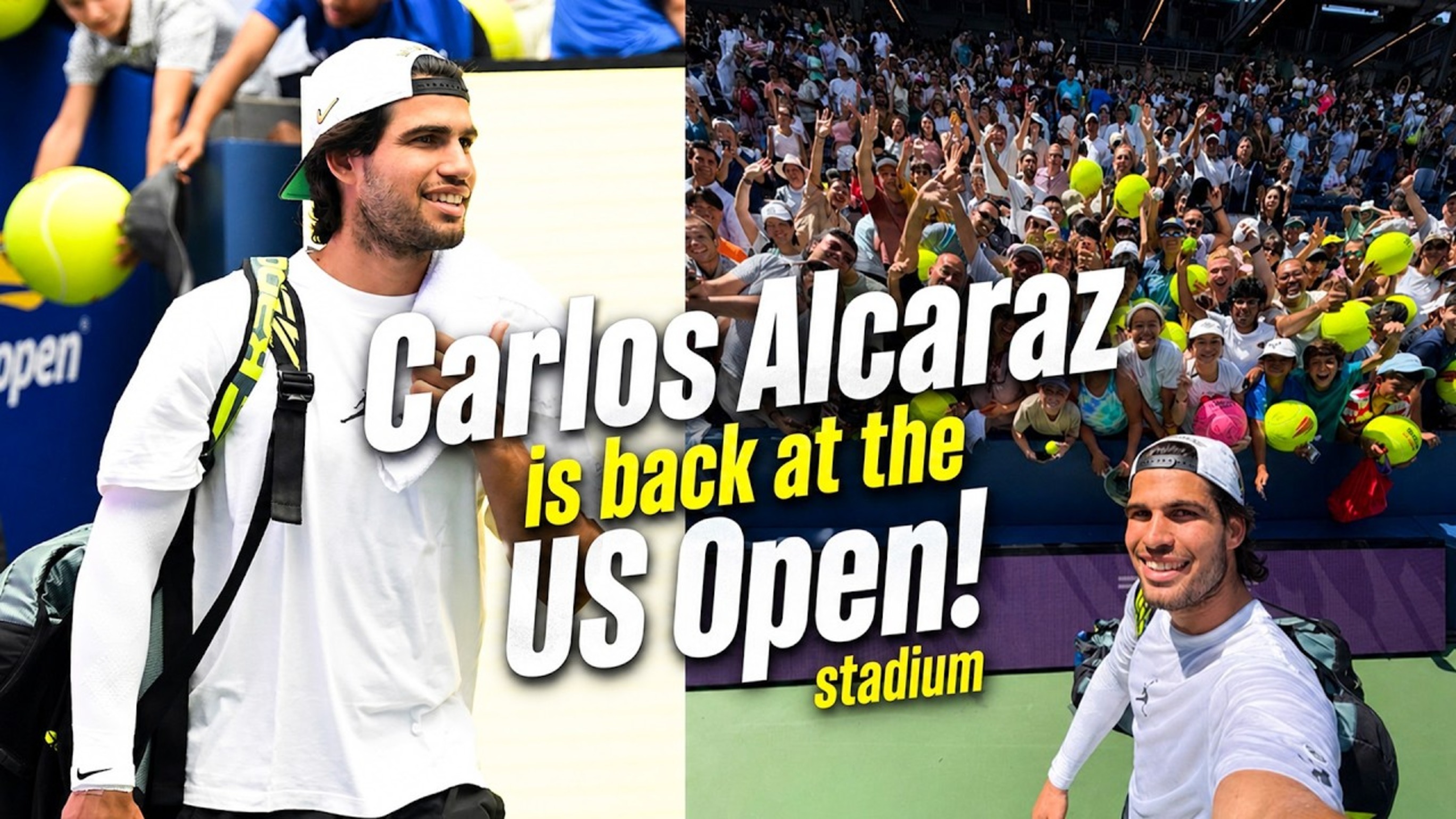
Into that vacuum walked Carlos Alcaraz, the defending champion, playing his first tour matches in four months after a wrist injury that sidelined him from April onward. He has reached the quarterfinals. Nobody quite knows what version of him is going to show up next.
The comeback nobody could fully prepare for
Coming back from a long layoff is one thing in best-of-three tennis. It's another thing entirely in a Grand Slam, where five-set matches punish anything less than full match sharpness. Alcaraz's only competitive minutes before the tournament came in a pair of mixed doubles matches alongside Serena Williams, where the pair reached the quarterfinals before losing.
That is not the preparation a title defense usually looks like. No man has successfully defended the US Open men's singles title since Roger Federer completed his run in 2008. Alcaraz is trying to do it having barely played in months, in a draw that has already swallowed the man many expected to be his stiffest opposition.
Djokovic's exit changes the calculation
Djokovic's history at majors before this tournament made a first-round exit almost unthinkable. He vomited courtside multiple times during the match and looked in visible pain through the final sets, eventually falling 7-6, 5-7, 4-6, 6-2, 6-1. Whatever was affecting him physically, the result stands: the most decorated man in the sport's history is out of the US Open before the second week even begins.
That leaves a men's draw with Sinner absent and Djokovic gone in round one, a combination that hasn't happened together at a major in recent memory. Alexander Zverev, fresh off reaching the last two Grand Slam finals and winning Roland-Garros, now sits as the alternate favorite with a noticeably easier path to the final than Alcaraz's.
What a wide-open draw actually means
There's a temptation to read a depleted draw as good news for whoever survives it. That's only half true. Fewer elite obstacles also means less signal about who's genuinely playing the best tennis right now, since the matches that would normally separate contenders from pretenders simply aren't happening.
Ben Shelton, Frances Tiafoe, and a cluster of Americans have taken advantage of the gap left by the sport's usual gatekeepers. Whether that reflects a genuine changing of the guard or simply a favorable set of absences this particular fortnight is the more interesting question, and it won't be answerable until Sinner, Djokovic and a fully fit Alcaraz are all back in the same draw together.
A hierarchy that suddenly looks less fixed
For most of the last three years, men's tennis has operated on the assumption that Sinner and Alcaraz would simply keep trading Grand Slam finals between them, with Djokovic occasionally forcing his way back into the conversation. That assumption looks shakier by the week. Sinner has been managing recurring physical issues all season. Djokovic, at 38, just suffered a defeat that would have been unthinkable at any previous point in his career. Alcaraz is playing on a wrist that only recently stopped being a medical concern.
None of that means the sport's hierarchy has actually flipped. It might mean nothing more than a rough few weeks for three players at three different points in their careers. But if a 23-year-old walking in on four months of rust is still considered the man to beat, that says as much about the state of the field around him as it does about Alcaraz himself.
Is men's tennis genuinely entering a less predictable era, or is this just an unusually bruised few weeks for the sport's three biggest names at the same time?

Sarajevo Back at the Heart of Regional MMA: SFC Returns with Explosive Matchups

How Buzzer Karma Works: Levels, Penalties, and What They Mean

Inside Buzzer's Latest Update (and Why It Changes How You Use the App)

Buzzer Introduces Ads Console: A New Era of Advertising Across the Entire Buzzer Ecosystem

Buzzer Is Evolving: From Quantity to Quality

Buzzer Now Has a Games Hub, and Tournaments Are Coming

Polo Al Taco Expands Its Global Reach Through Weekly Livestreams on Buzzer Arena TV

Al Ittihad SC's Matches Are Now Live on Buzzer

Palm City vs Gulf United Ends in 1–1 Draw in UAE Second Division League Clash

"We Don't Take the Guy With the Camera." He Built His Own Club Anyway. Now He's Coming to Find You.


