



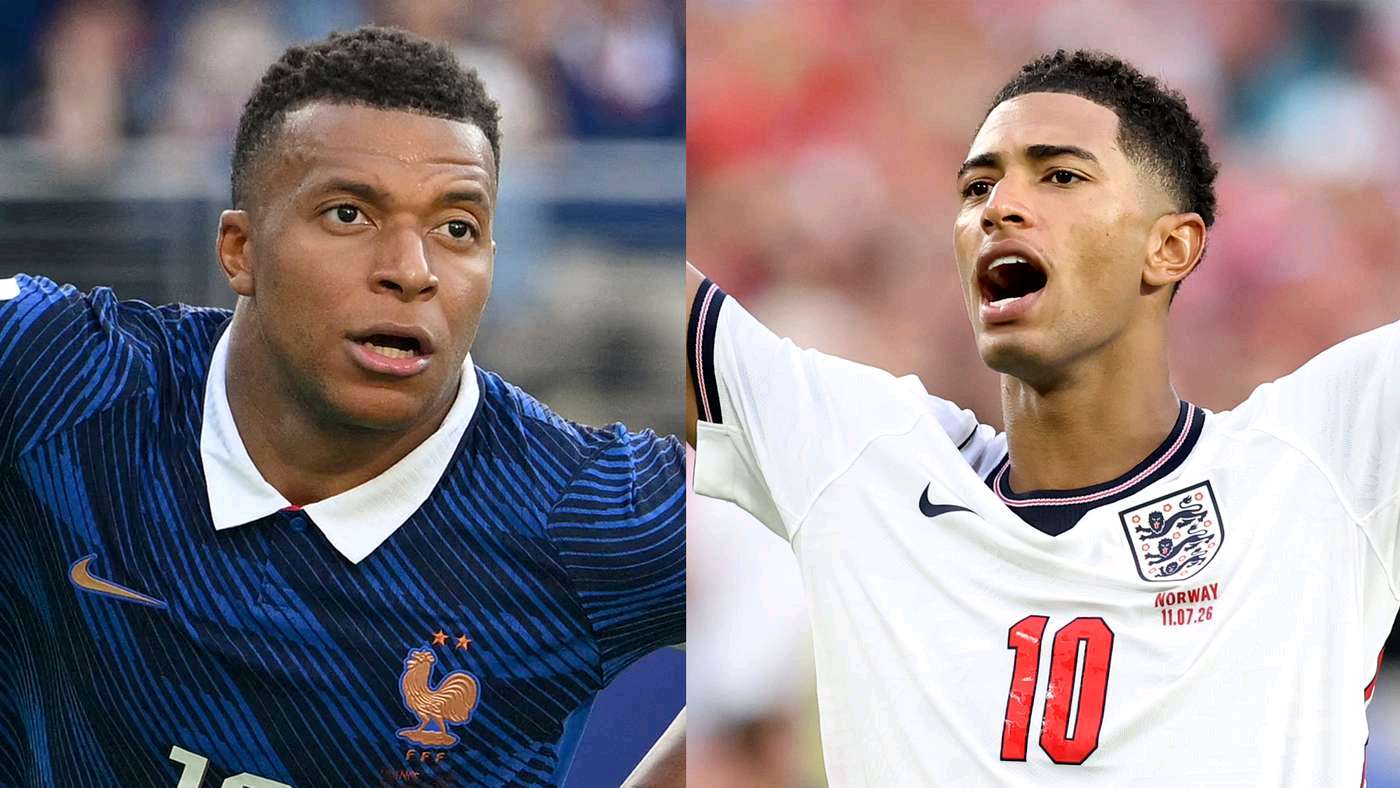
 0

The Battle for Bronze: A Deep Tactical Analysis of France vs. England
Match: France vs. England (Third-Place Play-off)
Context: Often dubbed the "consolation final," the third-place match between these two European giants carried immense tactical intrigue. It was a clash between Didier Deschamps’ pragmatic, transition-focused block and Gareth Southgate’s structured, possession-oriented system. With the pressure of the final lifted, both managers loosened the tactical handbrakes, resulting in a fascinating tactical chessboard.
1. Starting Lineups & Structural Formations
France (4-2-3-1 / 4-3-3)
Deschamps rotated fresh blood into the lineup while maintaining his core structural spine to exploit England's defensive vulnerabilities.
Goalkeeper: Mike Maignan
Defenders: Jules Koundé (RB), Dayot Upamecano (CB), William Saliba (CB), Théo Hernandez (LB)
Midfield Engine: Aurélien Tchouaméni (DM), Adrien Rabiot (CM), Antoine Griezmann (AM / Advanced Playmaker)
The Attack: Ousmane Dembélé (RW), Kylian Mbappé (LW), Marcus Thuram (CF)
England (4-3-3 / 3-2-4-1 in Possession)
Southgate stuck to his fluid system, looking to dominate the midfield zones and control the tempo through sustained possession.
Goalkeeper: Jordan Pickford
Defenders: Kyle Walker (RB), John Stones (CB), Marc Guéhi (CB), Kieran Trippier (LB)
Midfield Trio: Declan Rice (DM), Kobbie Mainoo (CM), Jude Bellingham (AM)
The Attack: Bukayo Saka (RW), Phil Foden (LW/Free Roam), Harry Kane (CF)
2. Phase-by-Phase Tactical Breakdown
Phase A: England’s Build-up and Box Midfield vs. France’s Mid-Block
England’s primary objective was to control the rhythm of the game from deep. In possession, Kyle Walker often tucked inside next to John Stones, allowing Declan Rice and Kobbie Mainoo to form a temporary double-pivot. This effectively created a 3-2 build-up shape designed to bypass France’s front press.
Further up the pitch, Jude Bellingham and Phil Foden drifted into the half-spaces, forming a "Box Midfield" with Rice and Mainoo. The tactical goal was to outnumber France's midfield duo of Tchouaméni and Rabiot.
France, however, countered this by dropping into a disciplined 4-5-1 mid-block. Antoine Griezmann played a crucial tactical role here, dropping deeper to shadow Declan Rice, preventing him from easily turning and distributing the ball forward. France intentionally conceded possession in the wide areas, daring England's fullbacks to cross into a box heavily protected by the physically dominant Saliba and Upamecano.
Phase B: France’s Direct Transitions and the Mbappé-Théo Overload
When France won the ball in their own half, they did not waste time with short passes. Tchouaméni or Griezmann immediately looked for vertical, progressive passes to trigger explosive counter-attacks.
The primary tactical weapon for France was the Left-Flank Overload:
Kylian Mbappé stayed wide, pinning Kyle Walker in 1v1 situations.
Théo Hernandez timed his overlapping and underlapping runs perfectly. When Mbappé cut inside to drag Walker with him, Théo exploited the vacated space on the flank.
This forced John Stones to slide out of the central defensive line to cover the wide space, leaving Marcus Thuram in isolated 1v1 battles against Marc Guéhi in the penalty box.
On the opposite side, Ousmane Dembélé provided pure isolation value. Whenever England shifted their entire defensive block to the left to contain Mbappé, France executed rapid diagonal switches to Dembélé, who used his elite dribbling to stretch Kieran Trippier.
Phase C: The Battle of the Half-Spaces (Bellingham & Foden)
England's most dangerous moments came when Harry Kane dropped deep as a "False 9." By dropping into the midfield, Kane dragged either Saliba or Upamecano out of position.
This movement opened up central vertical gaps for Jude Bellingham to make late, aggressive third-man runs directly into the penalty area. At the same time, Phil Foden drifted inside from the left wing, operating as an inverted playmaker. Foden’s ability to turn in tight spaces between the lines created severe structural issues for France, forcing N'Golo Kanté (when subbed on) or Rabiot to abandon their positional zones to close him down.
3. Second-Half Adjustments and Managerial Chess
As the match went on, both managers made key structural changes to break the deadlock:
Deschamps' Tactical Shift: Sensing that England’s left side (Trippier) was vulnerable, Deschamps introduced fresh pace on the right wing. He instructed France to press higher up the pitch for a 15-minute blitz, forcing Jordan Pickford into long, inaccurate clearances that Saliba easily recycled.
Southgate’s Response: To counteract France's lethal transitions, Southgate brought on a more defensive-minded midfielder to anchor the center alongside Rice. This allowed England’s fullbacks to play more conservatively, effectively neutralizing the space Mbappé and Dembélé could exploit on the counter.
4. Final Tactical Verdict
This third-place playoff was a masterclass in contrasting football philosophies. England proved that their positional structure and ability to overload the midfield can suffocate teams for long stretches. However, their slow horizontal passing sometimes made them predictable against a compact low block.
France, on the other hand, demonstrated why they remain the most dangerous transition team in international football. Even without dominating the ball, their defensive discipline, coupled with individual physical and technical superiority on the wings, allowed them to create higher-quality scoring opportunities in transitional moments.
Ultimately, the match was decided by small margins: France’s clinical nature on the counter-attack versus England’s patience in breaking down a set defensive structure.
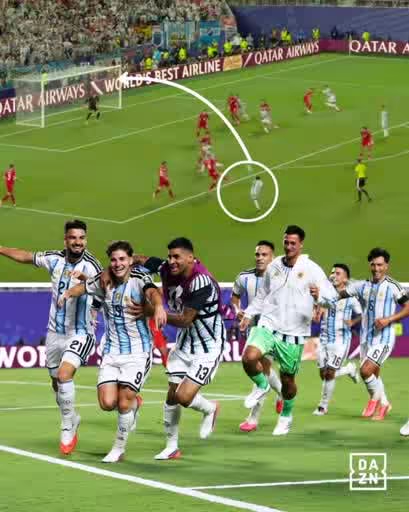
The thrilling 2026 FIFA World Cup Quarter-Final clash between Argentina and Switzerland at Arrowhead Stadium was an absolute classic that required extra time to separate the two sides.
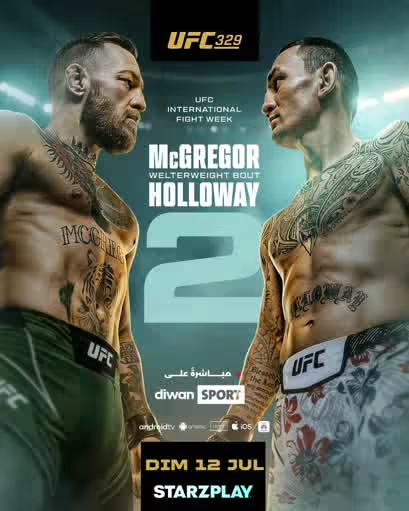
Here is an extensive, detailed comprehensive report in English about the highly anticipated rematch shown in the poster: **Conor McGregor vs. Max Holloway 2** at **UFC 329**.
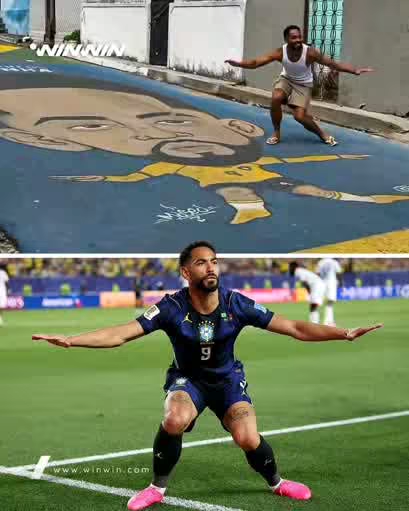
Matheus Cunha
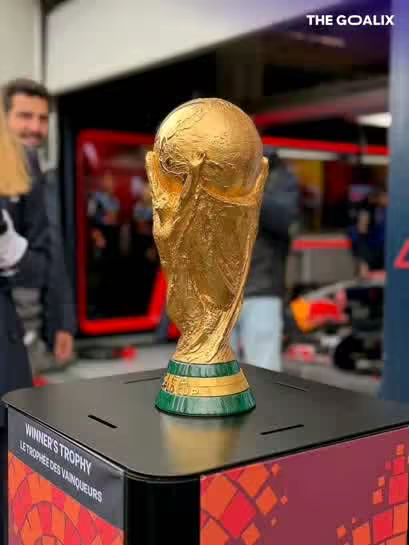
FIFA World Cup Review: A Historic Tournament of Emotion, Excellence, and Football Glory
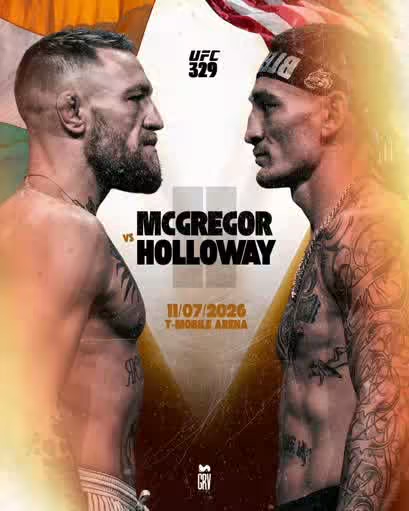
UFC 329: McGregor vs. Holloway II – A Rivalry Reborn, A Legacy on the Line
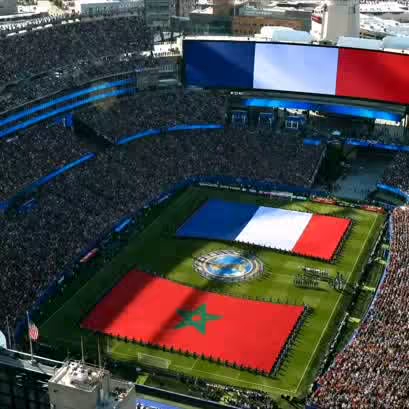
France vs Morocco: A Renewed Rivalry with a World Cup Semi-Final at Stake
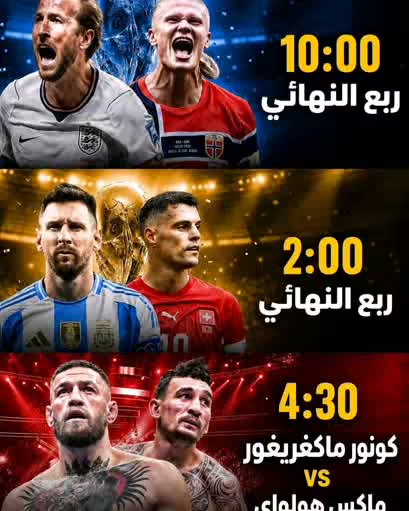
# 📅 The Ultimate Sports Night: Breakdown & Analysis
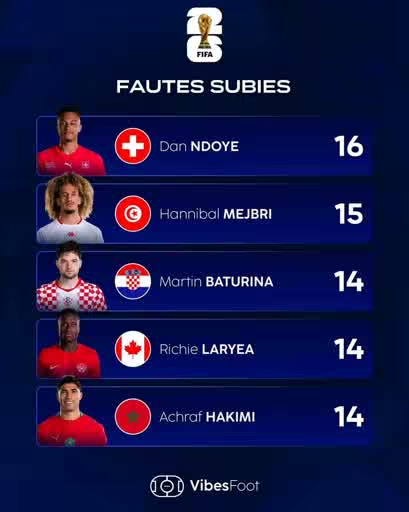
The Warriors of Discipline: The Players Who Collected the Most Fouls at the FIFA World Cup
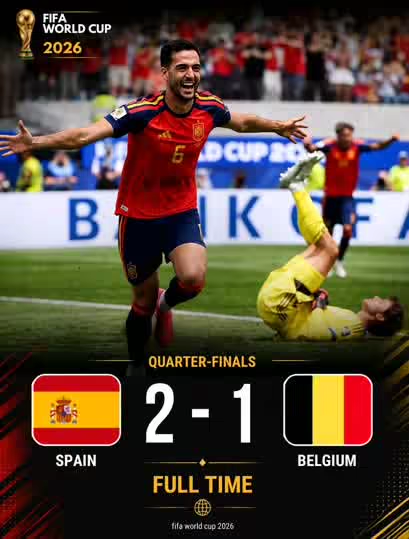
📝 Match Report: Spain Edge Belgium 2-1 to Book World Cup Semifinal Showdown
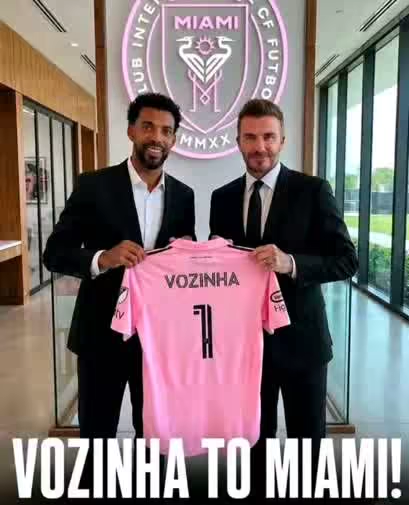
Inter Miami Monitoring Cape Verde Goalkeeper Vozinha After Remarkable FIFA World Cup Campaign


 10

