





 0
Kyrgyzstan Just Won an Asian Games Swimming Medal. The Family Behind It Makes the Story Better
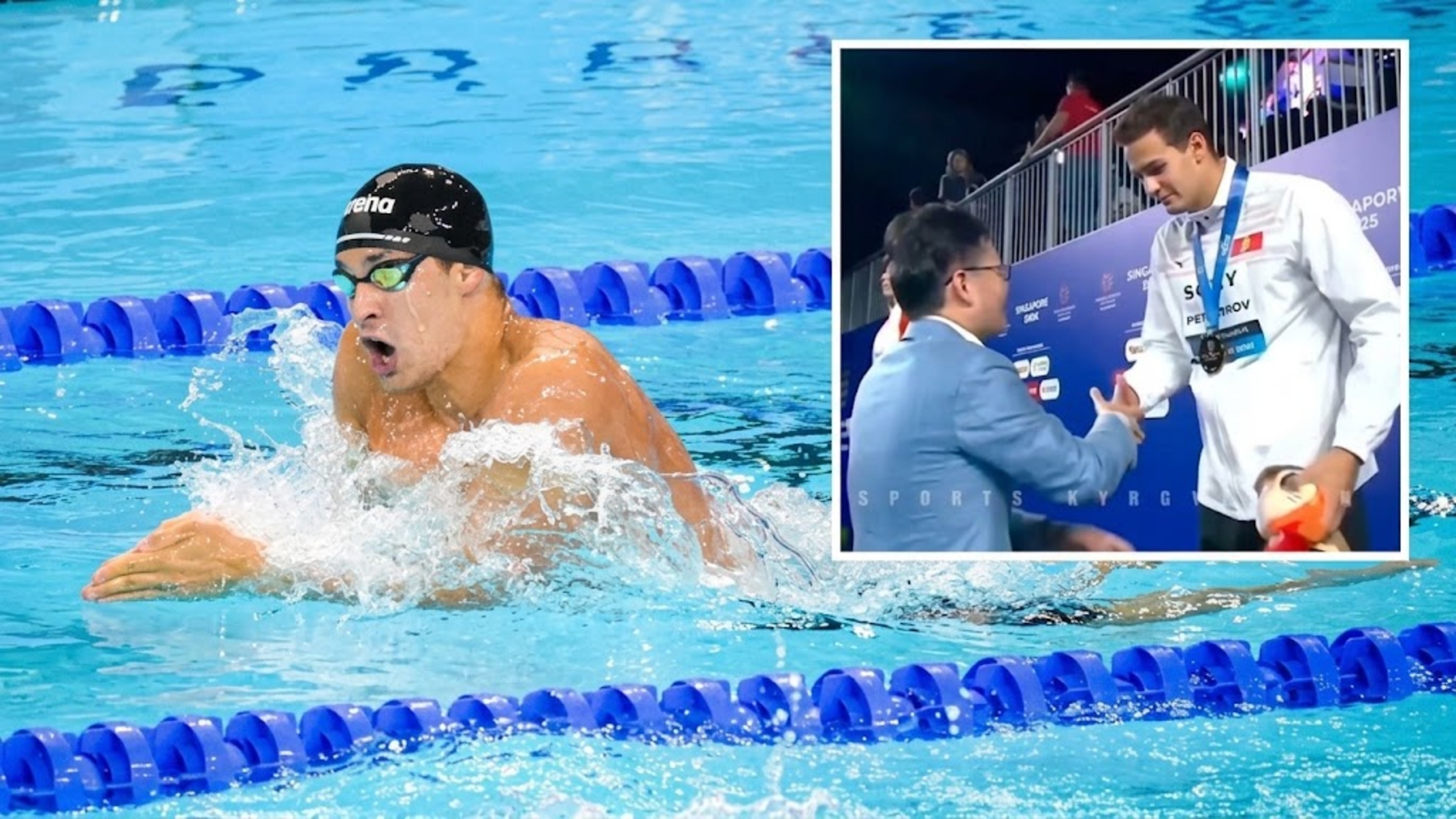
Denis Petrashov's reported silver at the Asian Games gave Kyrgyzstan a rare medal on swimming's biggest continental stage. It's also, quietly, a two-generation story that most coverage of the result is going to miss entirely.
Petrashov's father, Yevgeny Petrashov, swam for Kyrgyzstan at three separate Olympics between 1996 and 2004, competing in the same breaststroke events his son now specializes in. Yevgeny never reached an Olympic final and never won a major international medal, racing for a country that, in the years just after the Soviet Union's collapse, had almost no infrastructure to support elite swimming. He was there anyway, representing a program still figuring out what it meant to compete internationally.
From competing to actually winning
Denis has taken that foundation somewhere his father never quite reached. In 2025, he won Kyrgyzstan's first-ever medal at a World Aquatics Championships, a bronze in the 100m breaststroke behind China's Qin Haiyang, in a national record time of 58.88 seconds. "First medal for my country at the worlds, so very proud and happy," he said afterward. "I was not expecting this at all."
Kyrgyzstan doesn't currently have an Olympic-sized pool, a detail Petrashov has mentioned publicly more than once when asked what would help the sport grow back home. That a country without the basic infrastructure most swimming nations take for granted has produced a world championship medalist, and reportedly now an Asian Games medalist too, says as much about individual persistence as it does about any national program.
Why this keeps happening in former Soviet republics
There's a broader pattern worth noting here. Kazakhstan produced an Olympic champion in this exact event, Dmitriy Balandin, winning the 200m breaststroke gold in 2016 despite a similarly modest domestic infrastructure. Central Asian nations that emerged from the Soviet Union sometimes carry a residual base of coaching knowledge and competitive culture even decades after the systems that built it disappeared, occasionally producing athletes who punch well above what their country's facilities would suggest is possible.
That tension is what makes Petrashov's medal so significant. The result is not just about one swimmer; it shows how talent can survive even when the system around it remains incomplete. For Kyrgyzstan, the challenge now is turning one exceptional family story into a sustainable pathway for the next generation.
What comes next
Petrashov has said explicitly that he hopes his results translate into more resources for swimming back home, the same wish his father likely carried through three Olympics that never quite broke through. A medal at the Asian Games, on top of the 2025 world championship bronze, gives that argument real weight in a way that simply competing never could.
It took one generation of a Kyrgyz family just to make an Olympic final field without medaling, and the next generation to bring home the country's first medals at multiple global stages. What does a third generation, raised with an actual medal to point to, end up being capable of?

Sarajevo Back at the Heart of Regional MMA: SFC Returns with Explosive Matchups

How Buzzer Karma Works: Levels, Penalties, and What They Mean

Inside Buzzer's Latest Update (and Why It Changes How You Use the App)

Buzzer Introduces Ads Console: A New Era of Advertising Across the Entire Buzzer Ecosystem

Buzzer Is Evolving: From Quantity to Quality

Buzzer Now Has a Games Hub, and Tournaments Are Coming

Polo Al Taco Expands Its Global Reach Through Weekly Livestreams on Buzzer Arena TV

Al Ittihad SC's Matches Are Now Live on Buzzer

Palm City vs Gulf United Ends in 1–1 Draw in UAE Second Division League Clash

"We Don't Take the Guy With the Camera." He Built His Own Club Anyway. Now He's Coming to Find You.


