





 0
F1 Built Madrid a Brand-New Circuit. It's Already Rebuilding It
Formula 1's newest circuit hosted exactly one race before organizers started talking openly about changing it. That's not the reaction a €83 million venue is supposed to get after its debut.
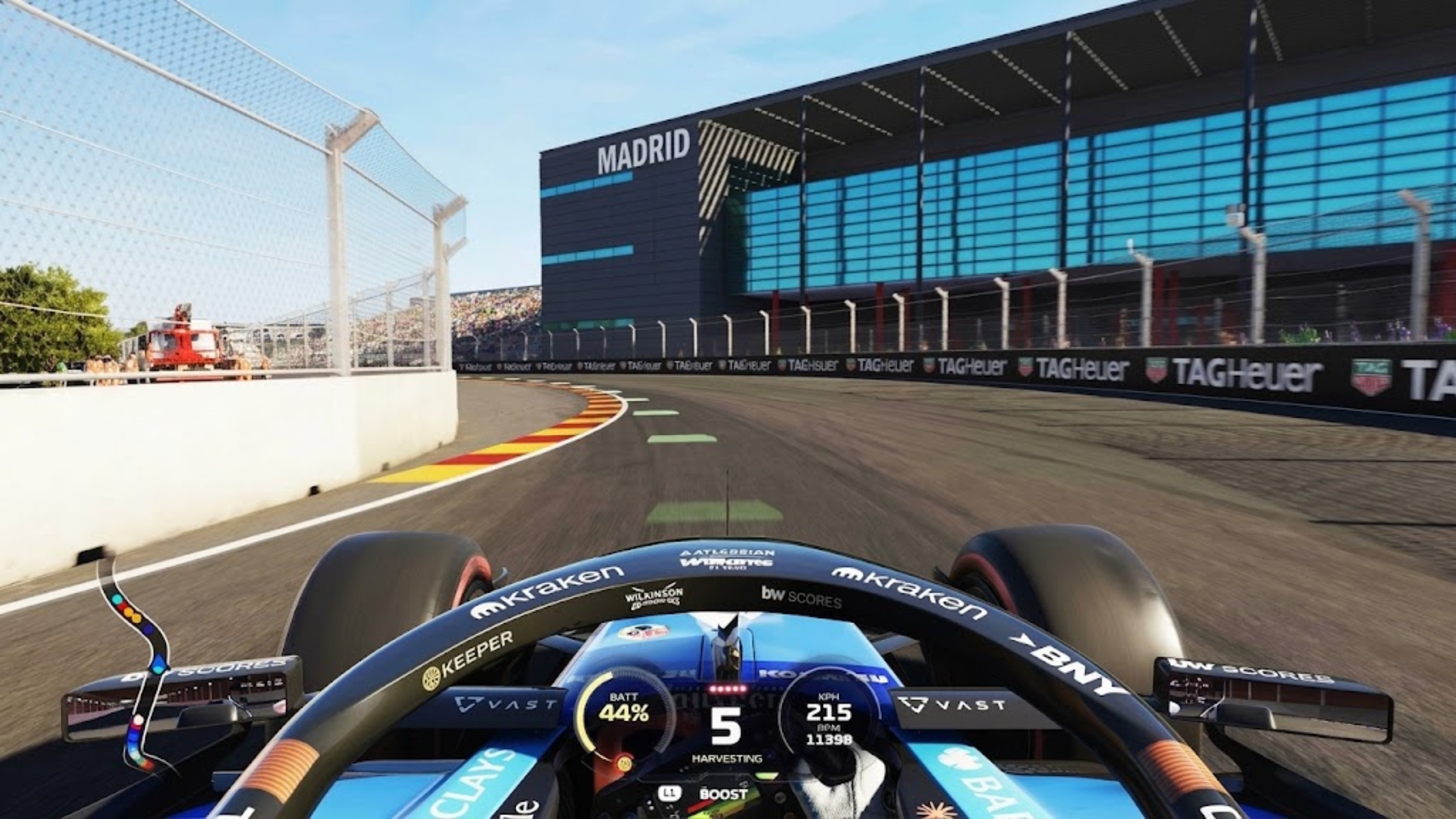
The Madring opened in August, a hybrid layout of street sections and purpose-built track wrapped around Madrid's IFEMA exhibition center, complete with F1's first indoor paddock and a ten-year contract running through 2035. The inaugural Spanish Grand Prix happened last weekend. By Monday, the track's own director was already telling reporters the layout would be reworked before 2027.
What actually went wrong on track
Max Verstappen's reaction after Friday practice set the tone: "If you hand me the circuit layout, I'll take care of fixing it." Williams driver Alex Albon called the race "pretty boring." Audi's Gabriel Bortoleto said he "almost fell asleep." World champion Lando Norris was blunter still, calling one section of the track "useless" and the whole thing "not a great racetrack."
The problem wasn't a lack of challenge. Drivers actually praised how demanding the Madring was over a single qualifying lap, tight, technical, unforgiving. The problem was that a track built to punish mistakes on a flying lap turned out to strangle any chance of overtaking once cars were racing each other in traffic. Fifty-seven laps produced a procession, not a race.
Why organizers are folding this fast
Madring director Luis García Abad told Motorsport that "the FIA has clearly defined how to improve the circuit layout, and we will be open to it because we will have to reconfigure the circuit for next year." That's an unusually quick concession for a venue that just spent a decade's worth of planning and construction budget getting to opening weekend.
But it also tracks with something F1 team principals pointed out almost immediately. Ferrari's Frederic Vasseur noted that Madrid has "probably more latitude" to make changes than a circuit like Monaco, precisely because it isn't bound by centuries of city streets and heritage. A hybrid circuit built partly around a modern exhibition center can, in theory, get reshaped in ways an old European street track never could.
The real question this raises for every new-era circuit
Madring is part of a wave of purpose-built, entertainment-first venues, following Miami, Las Vegas and Abu Dhabi, all designed as much for spectacle and infrastructure as for the racing itself. The tension Madrid just exposed in public is one every one of those venues has to solve privately: a circuit engineered to look spectacular on a single qualifying lap doesn't automatically produce a spectacular race once 20 cars are fighting through traffic for an hour and a half.
Toto Wolff, notably, was far more generous than the drivers, calling it "one of the best, or maybe the best" debuts he'd seen for a new venue given the constraints of a temporary layout. Whether that's genuine perspective or diplomatic spin probably depends on who you ask.
Should F1 be building circuits for the perfect qualifying lap first and figuring out the racing later, or is that exactly backwards?

Sarajevo Back at the Heart of Regional MMA: SFC Returns with Explosive Matchups

How Buzzer Karma Works: Levels, Penalties, and What They Mean

Inside Buzzer's Latest Update (and Why It Changes How You Use the App)

Buzzer Introduces Ads Console: A New Era of Advertising Across the Entire Buzzer Ecosystem

Buzzer Is Evolving: From Quantity to Quality

Buzzer Now Has a Games Hub, and Tournaments Are Coming

Al Ittihad SC's Matches Are Now Live on Buzzer

Palm City vs Gulf United Ends in 1–1 Draw in UAE Second Division League Clash

"We Don't Take the Guy With the Camera." He Built His Own Club Anyway. Now He's Coming to Find You.

Building the Infrastructure Sports Tech Forgot


