

 0
0
Two Swiss Players Got Fined for Making an Eagle With Their Hands
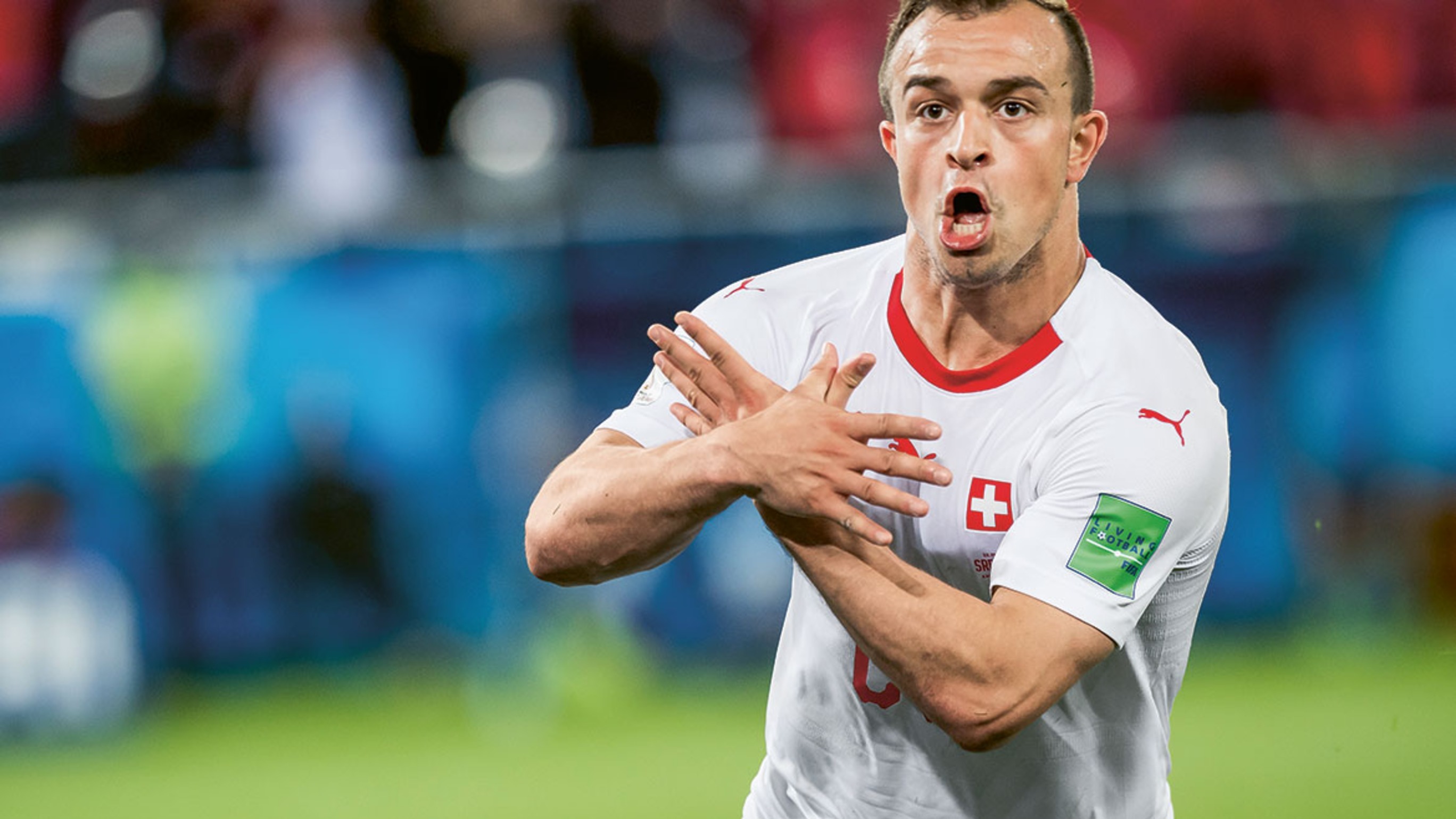
Switzerland beat Serbia 2-1 at the 2018 World Cup on a last-minute goal, and almost nobody remembers the football. What people remember is what happened after each goal: Xherdan Shaqiri and Granit Xhaka locking their thumbs together and spreading their fingers, forming the shape of the double-headed eagle on Albania’s national flag.
FIFA opened a disciplinary investigation within a day. Both players were eventually fined 10,000 Swiss francs each for unsporting behavior.
Why a hand gesture became an international incident
Shaqiri was born in Kosovo. Xhaka’s parents are Kosovo-born ethnic Albanians, and his brother plays for Albania’s national team. Serbia does not recognize Kosovo’s 2008 declaration of independence, and the wounds from the wars that broke apart Yugoslavia in the 1990s, including the Kosovo conflict specifically, were still raw enough in 2018 that a hand gesture during a World Cup match read as a genuine political statement rather than pure goal celebration.
Both players wore visible reminders of that history throughout the tournament. Shaqiri had boots with the Swiss flag on one heel and the Kosovo flag on the other.
A third Swiss player of Kosovar Albanian heritage, Valon Behrami, has a tattoo of the Kosovan eagle on one calf and the flags of both Kosovo and Switzerland on his arm.
A team built entirely from the region’s displacement
What made the moment resonate beyond a single match was the roster it happened on. Switzerland’s national team in 2018 included multiple players of Kosovar Albanian background, all products of the same wave of families who fled the Balkan wars of the 1990s and rebuilt their lives in Switzerland. Their success on the biggest stage in football was, in a very direct sense, a story about displacement turning into achievement one generation later.
Shaqiri and Xhaka insisted afterward that the gesture wasn’t aimed at provoking anyone. “This is a victory for my family, for Switzerland, Albania, Kosovo,” Xhaka said. “The gesture was for everyone who has supported me.” Swiss government ministers publicly defended both players, with the country’s sports minister noting how easy it is to understand strong emotion in a moment like that.
The part that’s worth sitting with
FIFA’s punishment treated the gesture as a breach of neutrality, the kind of political statement the organization officially bars from its tournaments. But there’s a real tension in asking players whose entire identity was shaped by a specific, recent, deeply personal history of war and displacement to somehow leave that history at the door the moment they step onto a football pitch.
Nobody suggested Xhaka or Shaqiri invented their backgrounds for dramatic effect. The eagle gesture wasn’t a costume. It was two players from families who survived something, expressing that survival in the biggest moment of their careers, in front of the exact country their families had fled.
Should football’s rules against political statements apply the same way to a gesture rooted in personal family history as they do to a deliberately staged protest, or does that distinction matter at all under the current rules?