




 0
0
The Six-Year-Old Who Watched His Grandfather Get Executed, Then Captained a World Cup Final
Before Luka Modrić lifted a Golden Ball or won six Champions League titles with Real Madrid, he was a six-year-old refugee whose grandfather had just been murdered in front of the family home.
December 1991. Croatia’s war of independence was underway, and Serbian forces attacked the area around Modrić’s home village of Modrići, in the hills above Zadar. His grandfather, also named Luka, was taken by armed men while tending his cattle and executed along with several others nearby. The family’s home was burned. Signs warning of landmines still stand near the ruins today.
Modrić’s family fled to Zadar and spent years living as refugees, much of it in a converted hotel called the Hotel Kolovare, later the Hotel Iz. Running water and electricity weren’t always guaranteed. Modrić learned to play football in the hotel’s parking lot, sometimes with the sound of artillery in the background.
The weight he still carries
Modrić rarely discusses this at length. When he has, the details are precise in a way that suggests they’ve never really faded. He’s described his father asking him, as a small boy, to kiss his grandfather’s body in the casket. He’s talked about the specific fear of the unknown that came with nightly sirens, never sure if the next strike would be the one that mattered.
What he hasn’t done is turn any of it into bitterness he performs publicly. “Things that aren’t nice happen, but I don’t have hate,” he’s said. His father, who joined the Croatian army during the war, apparently never spoke of revenge either, and Modrić credits that example for shaping his own outlook.
The final that meant more than a trophy
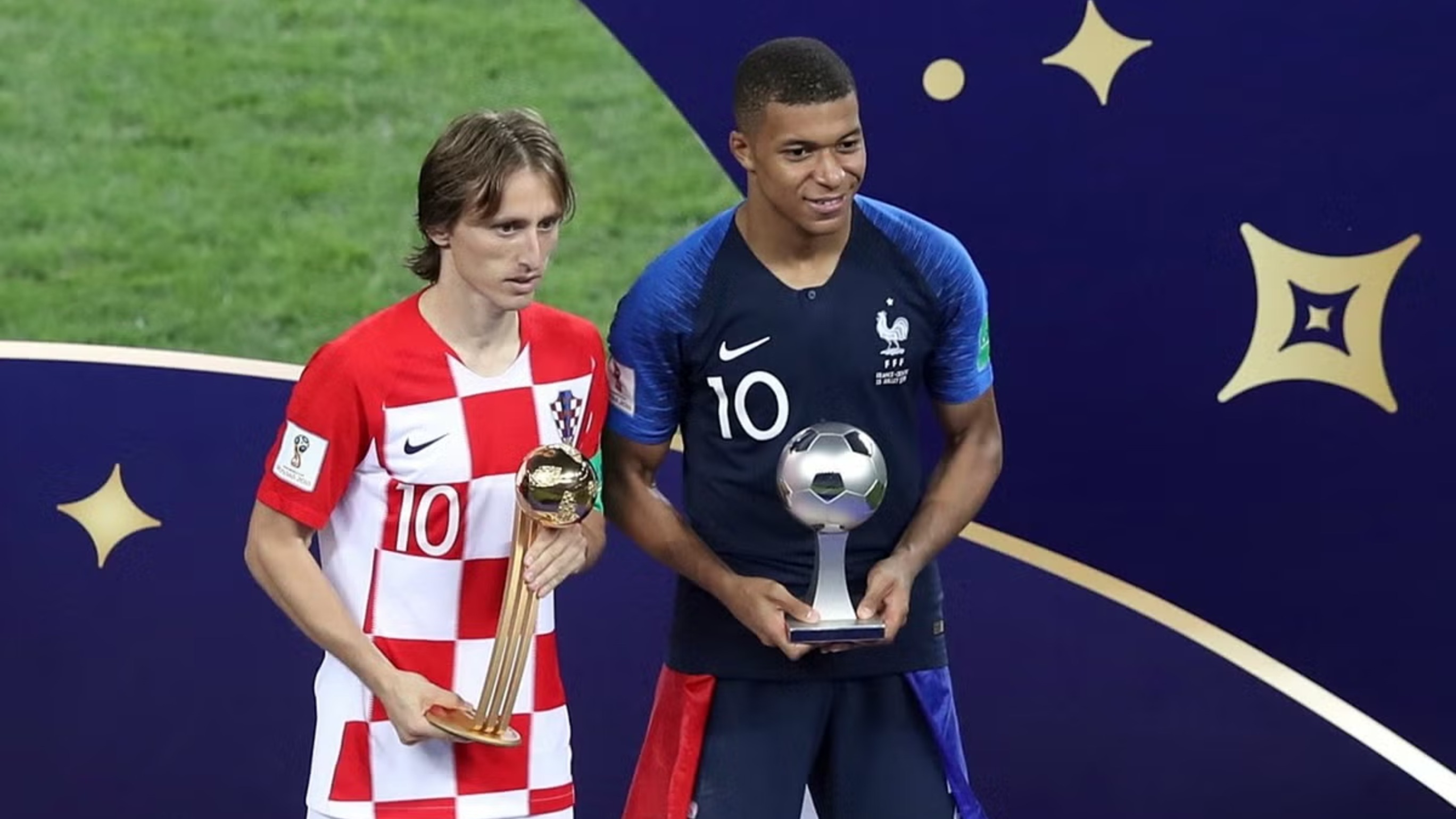
By the time Croatia reached the 2018 World Cup final against France, Modrić was 32 and had spent 15 years as a persistently underrated midfielder, undersized, doubted at Tottenham, eventually recognized only after years at Real Madrid. Croatia lost that final 4-2. Modrić still won the Golden Ball as the tournament’s best player, and when the team returned home, roughly half a million Croatians turned out in Zagreb to greet them.
Football writers love a redemption arc. Modrić’s genuinely qualifies, but it’s worth resisting the urge to flatten it into a simple triumph-over-adversity story. The reality is messier. A refugee childhood didn’t guarantee greatness. It was followed by years of being written off as too small, too slight, not physically suited for the modern game, before a decade and a half of relentless work at the highest level finally forced everyone to reconsider.
The parking lot in Zadar explains something about where his toughness came from. It doesn’t explain the touch, the vision, or the stamina that kept him elite into his late thirties. That part was built through pure repetition, year after year, long after the war ended and long after most assumed his ceiling had already been reached.
How much of an athlete’s mental toughness do you think is genuinely forged by early hardship, and how much of that narrative do we simply project backward once someone succeeds?


