

 0
0
Indonesia’s Most Decorated Olympian Isn’t a Badminton Player
Indonesia’s Olympic identity runs through badminton almost entirely. Ask any Indonesian sports fan to name their country’s greatest Olympian, and the answer will almost always come from a badminton court.
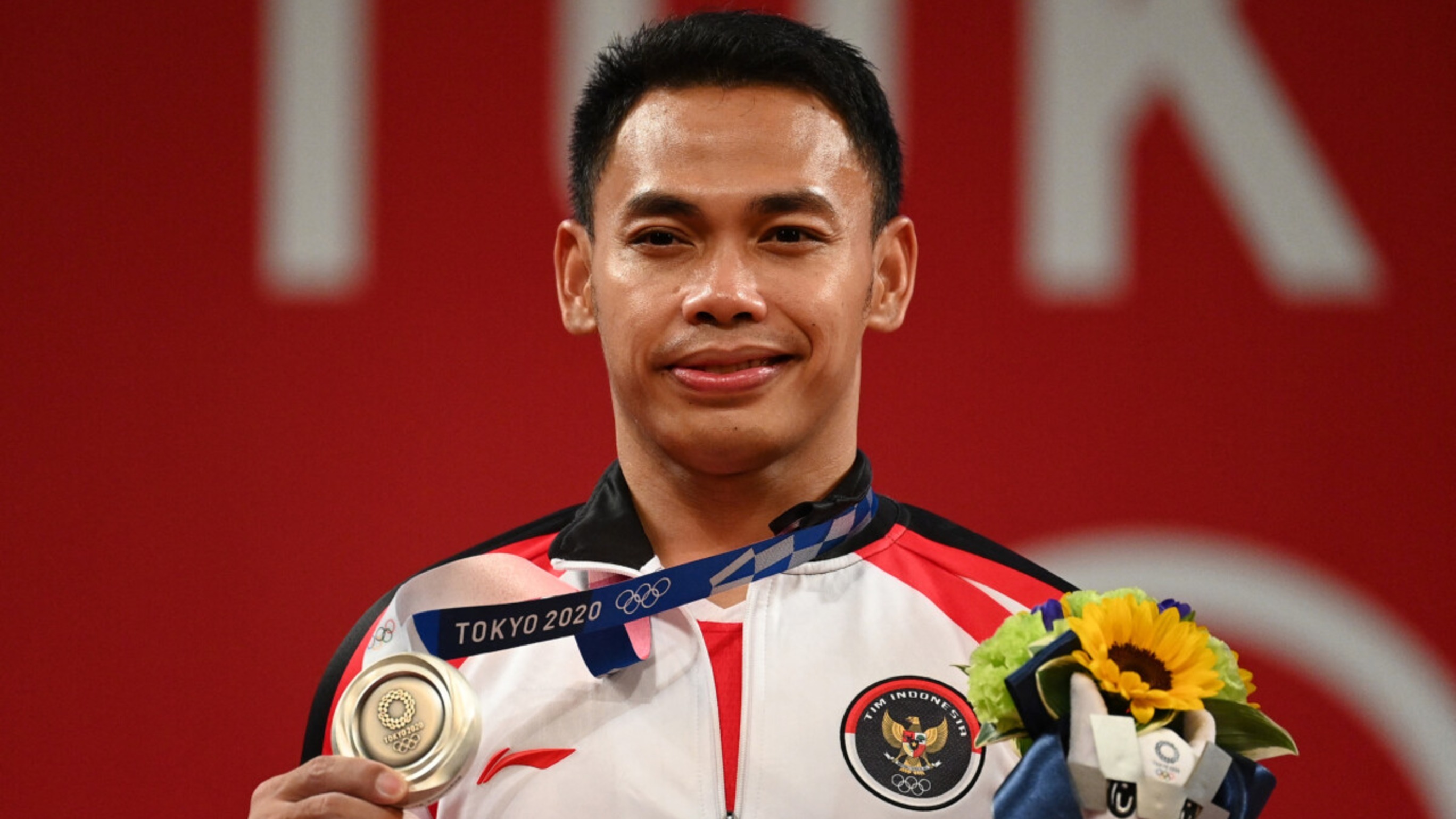
The actual record book tells a different story. Eko Yuli Irawan, a weightlifter who stands 5 feet 3 inches tall, is Indonesia’s most decorated Olympian by medal count, with two silvers and two bronzes across four consecutive Olympic appearances between 2008 and 2020, before competing at a fifth Games in Paris in 2024.
A childhood built entirely around necessity
Irawan’s path to weightlifting had nothing to do with glamour. His father drove a paddle rickshaw for a living. His mother sold vegetables. He took up the sport at age eleven after friends brought him to watch weightlifters practicing at a gym near his family’s house, and it stuck.
By 2007, at just eighteen, he’d already won junior world gold. His senior international career began in earnest in Beijing 2008, where he won bronze in the 56kg category, becoming Indonesia’s first weightlifting medalist in that Olympic cycle. He followed it with bronze in London 2012, then silver in Rio 2016 and silver again in Tokyo 2020, a remarkable stretch of sustained excellence across three different Olympic quadrenniums and two different weight classes.
The medal count that gets overlooked
Weightlifting actually ranks as Indonesia’s second most successful Olympic sport by total medal count, trailing only badminton, with 16 medals including one gold. Irawan alone accounts for four of those. He became the first Indonesian athlete to compete in five consecutive Olympic Games, and set multiple world records along the way, including in the clean and jerk at the 2018 World Championships in Ashgabat.
Compare that resume to how Indonesian media and fans actually talk about Olympic legacy, and the gap is striking. Badminton stars like Susi Susanti and Taufik Hidayat are treated as genuine national icons, their gold medals recounted constantly in Indonesian sports media. Irawan’s four-medal, five-Olympics career gets a fraction of that attention, despite an arguably stronger claim to being Indonesia’s greatest ever Olympian by pure achievement.
Why the gap exists
Part of the explanation is straightforward. Badminton delivers gold medals more consistently and dominantly, and gold captures public imagination in a way silver and bronze rarely do, regardless of how difficult they were to earn. Badminton is also more widely played and watched across Indonesia, giving fans an easier emotional connection to the sport itself.
But there’s something worth sitting with in the fact that a five-time Olympic medalist, competing in a sport that demands a completely different kind of physical sacrifice than badminton, remains a relatively quiet name outside dedicated sports circles in his own country. Weightlifting doesn’t offer the same visual spectacle or crossover appeal, and Irawan himself has never sought the spotlight the way some athletes do.
Rizki Juniansyah, a younger Indonesian lifter, finally delivered the sport’s first Olympic gold in Paris 2024, the same Games where Irawan’s own remarkable run came to an end without a medal. It felt fitting that the torch passed within Indonesian weightlifting itself, largely unnoticed by a country still watching badminton.
Should a country’s greatest Olympian be measured by total medals and consistency, or does the emotional weight of a gold medal fairly earn a sport more lasting recognition?


 1
1