





 0
George Russell Won Baku. Oscar Piastri Left With Nothing. That's The Brutality Of Modern F1
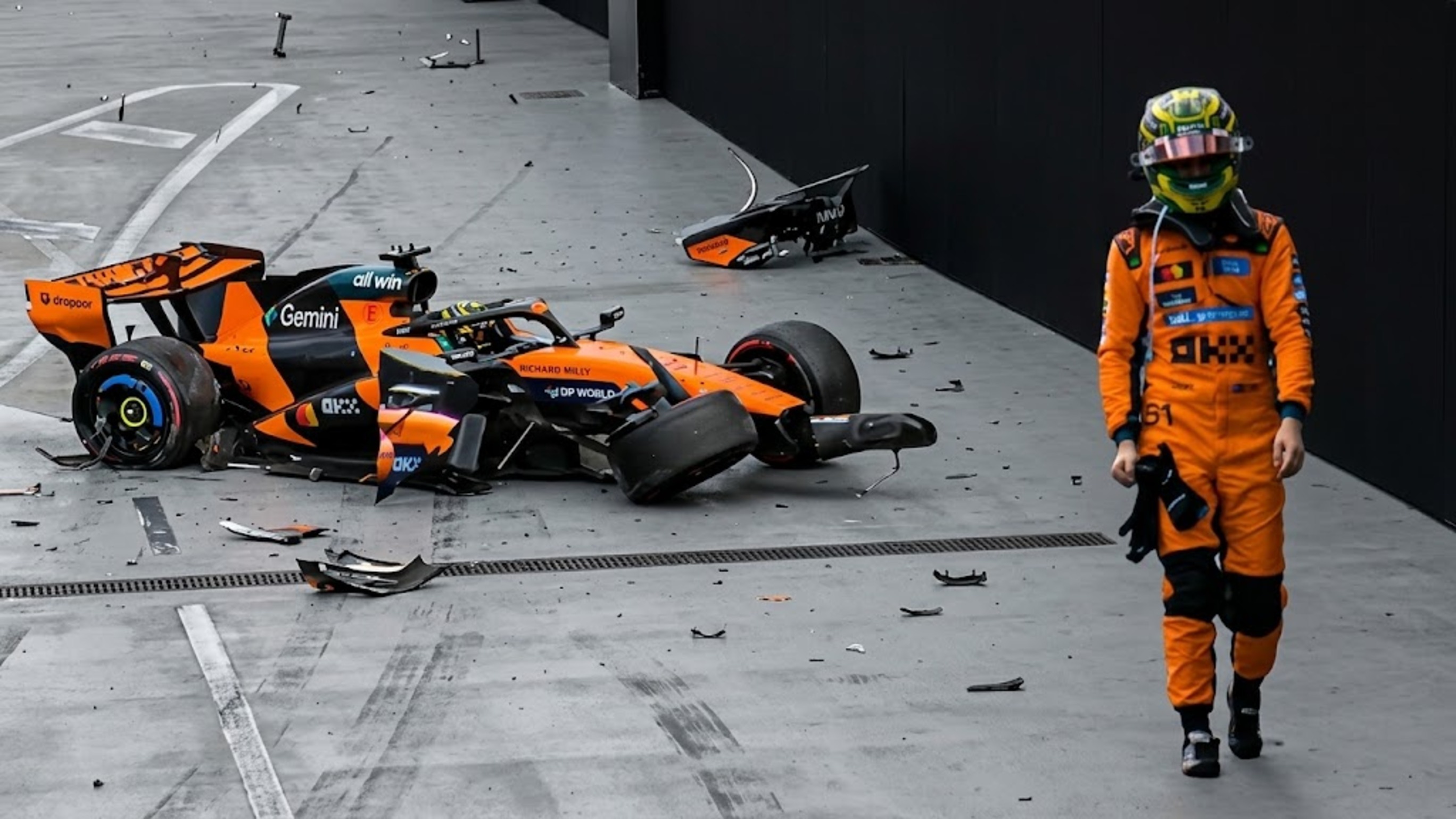
Oscar Piastri was on the podium for most of the Azerbaijan Grand Prix. Then, about a lap and a half after the final restart, he braked at the end of the front straight and locked both front tyres. He slid through the run-off, dropped out of the top ten and finished 14th.
A third place worth 15 points became a result worth none. No other team sport hands out that kind of penalty for a single mistake.
The race he was winning
Piastri qualified third, missing a front-row start by a thousandth of a second, and jumped to second at the start. He then ran second for much of the first half, keeping Max Verstappen and Isack Hadjar behind him even though McLaren's car was slow on the straights. It was a strong drive, and Piastri said afterwards that the first stint was really strong for the team.
Verstappen passed him at the first safety car restart, so Piastri was third when the race went green for the last time on lap 39. A podium was in front of him. The next lap and a half undid that.
Piastri said afterwards that he didn't think he'd braked especially late or hard. The car just locked both fronts instantly. The flat spots on the tyres then dropped him to the back of the pack, and he recovered only as far as 14th.
Why F1 punishes so hard
The scoring is the first reason. F1 pays 25 points for a win and 15 for third, and nothing at all outside the top ten. Piastri fell from third to 15th, twelve places in a matter of seconds, and there's no partial credit for having led the race and held second for half of it. The points system has no memory.
The second reason is the field. Restarts bunch the cars together, and Baku had two safety cars, so the pack was compressed when Piastri made his mistake. In a stretched-out race, a lock-up costs a couple of places. In a compressed one, it costs a dozen, because every car behind you is right there.
The third is the tyre. A lock-up flat-spots a tyre, which makes the car vibrate and slow, and the driver can't fix it without pitting. Even a recovery drive on damaged rubber is a slow drive through traffic.
Compare that with football, where a midfielder's poor pass might cost a chance. A defender's error might cost a goal. But the team still has 89 minutes and the rest of the match to recover. In F1, the price of an error is paid instantly and in full.
Was it his fault?
That's where the argument gets complicated. Sky's Jacques Villeneuve criticised Piastri for concentrating on defending against Hadjar rather than finding his braking point. Andrea Stella disagreed, at least partly. He said McLaren hadn't given its drivers a car that was fast enough on the straights, which meant they were under pressure all afternoon.
Both readings can be true. A driver under pressure can still make a mistake, and a car that puts him under pressure is part of why. But F1's scoring doesn't distinguish between the two. It only counts where the car finishes.
Meanwhile, Lando Norris never got the chance to make a mistake, because a collision between the two Alpines at the restart ended his race. McLaren left Baku with zero points, while Russell won by 0.196 seconds and Ferrari took 20.
That's the brutal arithmetic of modern F1. A car that doesn't finish scores nothing. A driver who's 12 places down scores nothing. And a team can do 90 percent of a race right and still leave with the same total as a team that stayed at home.
Some fans will say that's exactly what makes the sport thrilling, and there's truth in that. The margin for error is what makes a clean lap matter.
Would you rather have a sport where one lock-up can cost a driver 15 points, or would you trade some of that drama for a system that's a bit kinder?

Sarajevo Back at the Heart of Regional MMA: SFC Returns with Explosive Matchups

How Buzzer Karma Works: Levels, Penalties, and What They Mean

Inside Buzzer's Latest Update (and Why It Changes How You Use the App)

Buzzer Introduces Ads Console: A New Era of Advertising Across the Entire Buzzer Ecosystem

Buzzer Is Evolving: From Quantity to Quality

Buzzer Now Has a Games Hub, and Tournaments Are Coming

Al Ittihad SC's Matches Are Now Live on Buzzer

Palm City vs Gulf United Ends in 1–1 Draw in UAE Second Division League Clash

"We Don't Take the Guy With the Camera." He Built His Own Club Anyway. Now He's Coming to Find You.

Building the Infrastructure Sports Tech Forgot


