





 0
Thailand Got Its First Asian Games Men's 100m Champion In 48 Years. What Changed?
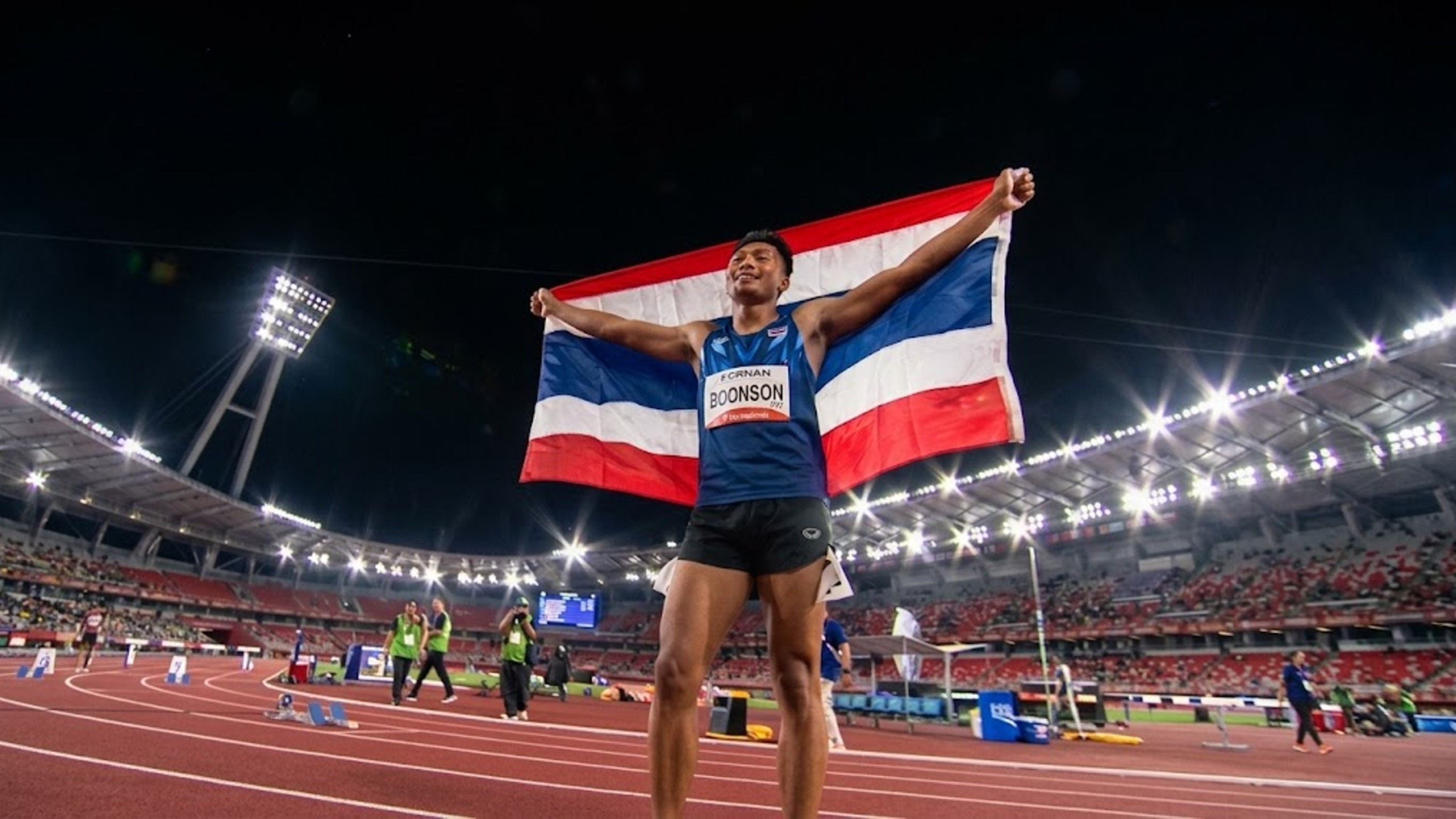
Suchart Jairsuraparp won Thailand's last Asian Games 100m gold in Bangkok in 1978. Puripol Boonson wasn't born for another 22 years.
On September 25 in Nagoya, the 20-year-old Boonson ran 9.90 seconds to win the event, finishing well clear of the Omani pair of Ali Al-Balushi and Malham Al-Balushi. He'd already broken his own Games record in the semifinal with a 9.91, eclipsing the mark China's Su Bingtian had set at the 2018 Jakarta Games. Then he lowered it again in the final.
The making of a 9.90 sprinter
Boonson's rise wasn't sudden. He won three golds at the 2021 SEA Games as a teenager, then repeated the sweep at the 2025 edition in Bangkok, taking the 100m, 200m and 4x100m relay each time. His personal best had crept down steadily, from 9.94 seconds in December 2025 to 9.91 and then 9.90 within the space of a single evening in Nagoya.
That kind of progression, shaving hundredths off a national record every few months rather than years, is what separates a fast regional sprinter from someone who can trouble the continent's best. Boonson has done both jobs at once. He's been the dominant sprinter in Southeast Asia for several seasons, and this year he made the jump to being the fastest man in Asia on the day that mattered most.
What a 48-year gap says about a sprint programme
A gap that long isn't really about one athlete missing. It's about a country going most of five decades without producing a sprinter who could get close to the continent's best, while nations like China, Japan, Qatar and Bahrain built systems around imported talent, better facilities or simply larger athlete pools.
Thailand's recent success looks different. Boonson trains within a domestic pipeline that's produced repeated SEA Games sweeps, and the 4x100m relay he's part of set a national record in December 2025. That's a team building depth around one exceptional talent rather than importing a single star.
The broader context helps explain why now. Thailand went into the meet with seven golds so far in Aichi-Nagoya, its best showing in years, and its first three actually came in teqball, a sport making its Asian Games debut. That's a country investing across a wider spread of disciplines than it used to, and a sprint programme that's been quietly improving is part of the same push.
The honest caveat
The crowd at Nagoya City Mizuho Park Athletic Stadium was only about a quarter full for the men's and women's 100m finals on the same evening China's Chen Yujie also broke a Games record. That's worth noting, because it's easy to overstate how much attention a result like this generates outside the athletics community, even when the numbers are genuinely historic.
What it is, without much argument, is a genuine breakthrough for Thai athletics. Boonson isn't finished either. He's set to chase a fifth Asian Games gold in the 5,000 metres relay later in the competition, an unusual double for a pure sprinter that says something about the depth of talent Thailand is now working with.
What does it actually take for a national sprint programme to go from decades of near-misses to producing a genuine continental champion: better facilities, better coaching, or simply one athlete willing to keep shaving hundredths off his own record?

Sarajevo Back at the Heart of Regional MMA: SFC Returns with Explosive Matchups

How Buzzer Karma Works: Levels, Penalties, and What They Mean

Inside Buzzer's Latest Update (and Why It Changes How You Use the App)

Buzzer Introduces Ads Console: A New Era of Advertising Across the Entire Buzzer Ecosystem

Buzzer Is Evolving: From Quantity to Quality

Buzzer Now Has a Games Hub, and Tournaments Are Coming

Polo Al Taco Expands Its Global Reach Through Weekly Livestreams on Buzzer Arena TV

Al Ittihad SC's Matches Are Now Live on Buzzer

Palm City vs Gulf United Ends in 1–1 Draw in UAE Second Division League Clash

"We Don't Take the Guy With the Camera." He Built His Own Club Anyway. Now He's Coming to Find You.


