





 1
The Caitlin Clark Effect Is Becoming Bigger Than Caitlin Clark
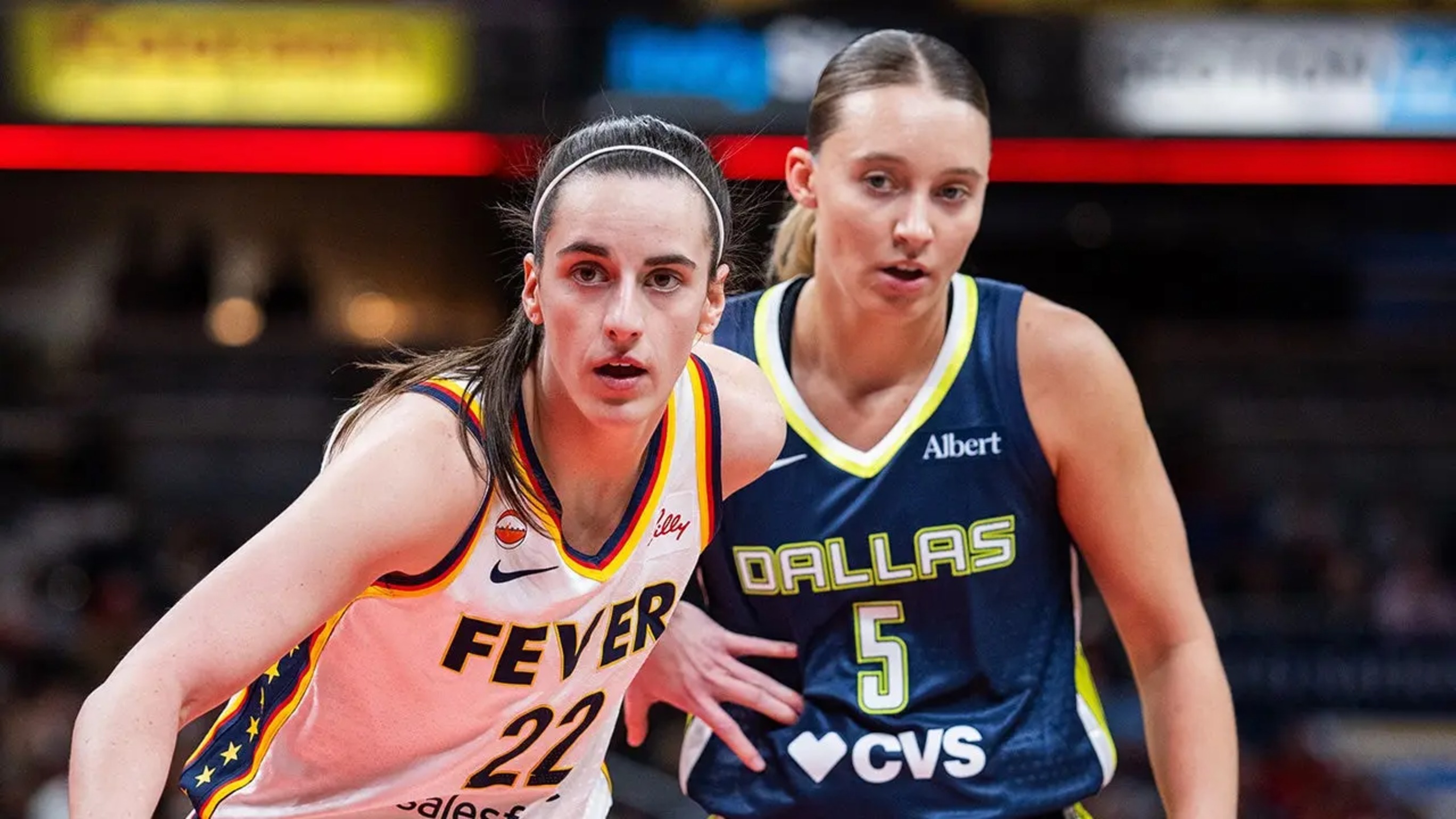
Paige Bueckers finished first in All-Star fan voting this year. Caitlin Clark finished second.
Two seasons ago that sentence would have seemed impossible, not because Bueckers wasn't good, but because nobody was pulling attention away from Clark.
Now she's got company, and the WNBA's growth story is starting to look less like one supernova and more like an entire constellation.
A constellation of stars
The 2026 All-Star Game itself was basically a highlight reel of exactly this shift.
A'ja Wilson, the league's leading scorer and a four-time MVP, went in round one. Breanna Stewart went right behind her. Angel Reese got scooped up early in the reserve draft, prompting her old college coach turned honorary GM to visibly wince picking against her former player.
Then there's Marina Mabrey, the Toronto Tempo's first ever All-Star, who scored 53 points in a single game this season and tied the WNBA's all-time single-game scoring record along the way.
Toronto is an expansion team. This is their first year of existence.
Why one face was never going to be enough
There was a real fear a couple of years back that the WNBA's surge in popularity was entirely one player deep, that the moment Clark cooled off or got hurt, attention would evaporate with her.
That fear made sense given how lopsided broadcast scheduling and media coverage were early on. It doesn't hold up nearly as well now.
Napheesa Collier came back from absence and immediately helped push Minnesota onto its first ten-game win streak in a decade. Olivia Miles walked into her rookie season and made the All-Star Game as a starter. Dominique Malonga did the same as a first-timer at center.
The talent pipeline isn't producing one generational star every few years anymore. It's producing several at once.
The gravity is spreading, not shrinking
What's genuinely new is that these players are pulling attention toward each other rather than competing for a single spotlight.
Clark and Bueckers finishing one-two in fan voting isn't a zero-sum outcome, it's two fanbases showing up at the same time. Reese generates conversation independent of anything Clark does. Wilson's chase for another MVP doesn't need Clark in the frame at all.
The league now has enough separate storylines running simultaneously that no single injury or slump threatens the whole enterprise.
That's a genuinely healthier foundation than what the WNBA had even two seasons ago, when so much of the growth narrative hinged on one rookie's box office pull.
A league with six or seven players capable of headlining a broadcast on their own is a league that can survive a bad month from any one of them.
Clark's still enormous business for the WNBA, no argument there. But watching Mabrey tie a scoring record in her expansion team's inaugural year, or Miles make an All-Star roster as a rookie, makes it pretty clear the league's next chapter isn't going to be written by just one name.
It's going to be written by whoever the cameras happen to catch on a given night, and increasingly, that's a genuinely long list.
Is a league with this many simultaneous stars actually more sustainable long term, or does spreading the spotlight this wide risk making it harder for any single player to become the transcendent, sport-defining figure the WNBA still needs?

Sarajevo Back at the Heart of Regional MMA: SFC Returns with Explosive Matchups

How Buzzer Karma Works: Levels, Penalties, and What They Mean

Inside Buzzer's Latest Update (and Why It Changes How You Use the App)

Buzzer Introduces Ads Console: A New Era of Advertising Across the Entire Buzzer Ecosystem

Buzzer Is Evolving: From Quantity to Quality

Buzzer Now Has a Games Hub, and Tournaments Are Coming

Polo Al Taco Expands Its Global Reach Through Weekly Livestreams on Buzzer Arena TV

Al Ittihad SC's Matches Are Now Live on Buzzer

Palm City vs Gulf United Ends in 1–1 Draw in UAE Second Division League Clash

"We Don't Take the Guy With the Camera." He Built His Own Club Anyway. Now He's Coming to Find You.


