




 0
0
The English Channel Is 21 Miles Wide. He Swam Nearly 40
The English Channel measures roughly 21 miles at its narrowest crossing point.
When Captain Matthew Webb became the first person to swim it in 1875, he was in the water for nearly 22 hours and covered close to 39 miles, almost double the straight-line distance, because the tide had other plans for him.
A former sea captain with an unlikely obsession
Webb was a 27-year-old merchant navy captain from Shropshire, one of twelve children, who'd learned to swim as a boy in the River Severn.
He became fixated on the Channel crossing after reading about a failed attempt by another swimmer, and he quit his job to train for it, first in London's public baths, then in the cold, unforgiving waters of the Thames and the Channel itself.
His first attempt, on 12 August 1875, ended after high winds and rough seas forced him to abandon the swim more than halfway across.
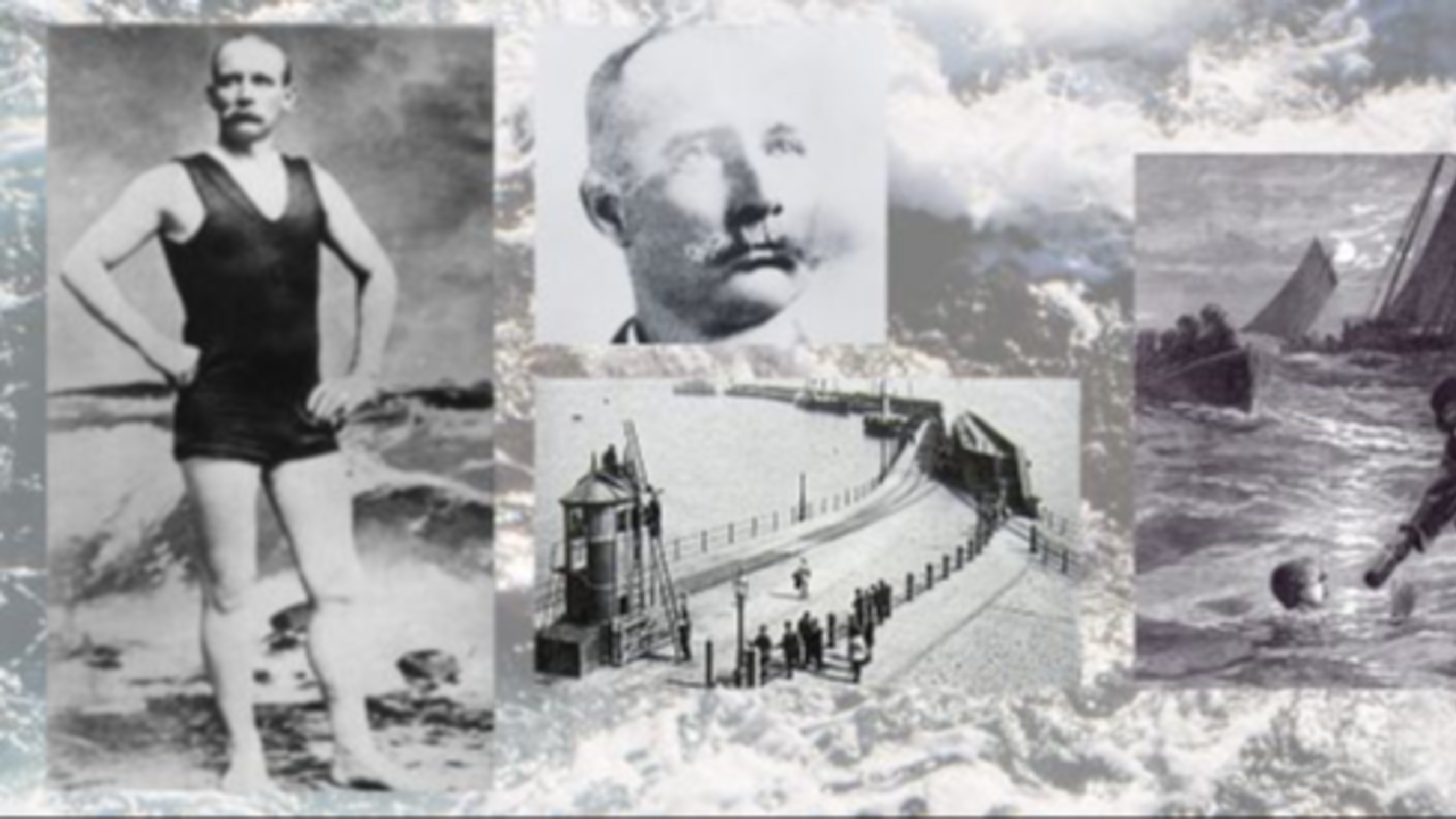
Twelve days later, coated in porpoise oil for insulation and warmth, he tried again, diving off Dover's Admiralty Pier just before 1pm on 24 August.
A tide that dragged him sideways for hours
Webb swam breaststroke the entire way, at a steady 26 strokes a minute, sustained by brandy, coffee and beef tea passed to him from an accompanying boat.
He was stung by a jellyfish partway across but kept going.
The real problem came late in the swim: with the French coast in sight and only around seven or eight miles left, the tide turned and swept him sideways along the coastline for roughly five hours, forcing him to swim parallel to the shore he could already see rather than toward it.
By the time he finally staggered onto the beach near Calais at 10:41am on 25 August, exhausted and delirious, he'd been swimming for 21 hours and 45 minutes and had covered an estimated 39 miles zigzagging against currents that had no intention of taking him in a straight line.
An instant national hero
The reaction was immediate.
The Daily Telegraph called him the best-known and most popular man in the world.
Queen Victoria sent personal congratulations, and when Webb returned to his hometown in Shropshire, crowds reportedly uncoupled the horses from his carriage and pulled it themselves.
His feat stood unmatched for 36 years, until the next successful crossing in 1911, a gap that says everything about how far beyond reasonable his swim was considered at the time.
Webb's fame didn't end well for him.
Chasing further glory and money eight years later, he attempted to swim the rapids below Niagara Falls and drowned in the attempt, aged 35.
But the Channel swim he pioneered became a permanent fixture of endurance sport, with tides and currents still forcing every swimmer who attempts it today to cover considerably more than the 21 miles a map would suggest.
A challenge that still humbles modern swimmers
More than a century of advances in training, nutrition and open-water technique haven't erased the basic problem Webb ran into that night off Cap Gris-Nez.
Every serious Channel attempt today is still built around navigating the same shifting tides, with swimmers and their support boats plotting a zigzag course based on the exact timing of the crossing rather than aiming in a straight line at all.
Some swimmers still end up covering thirty miles or more depending on conditions, even with modern forecasting to help time their attempt.
Thousands of swimmers have completed the crossing since Webb's first success, and a small group have done it dozens of times over, but the basic physics he discovered the hard way, that the Channel decides how far you're really swimming, not the map, has never gone away.
Does knowing the real distance change how you think about "swimming the Channel," when the tide can nearly double what any swimmer actually has to cover?


