

 0
0
Why Every Olympic Pool Is Exactly 50 Meters, Down to the Centimeter
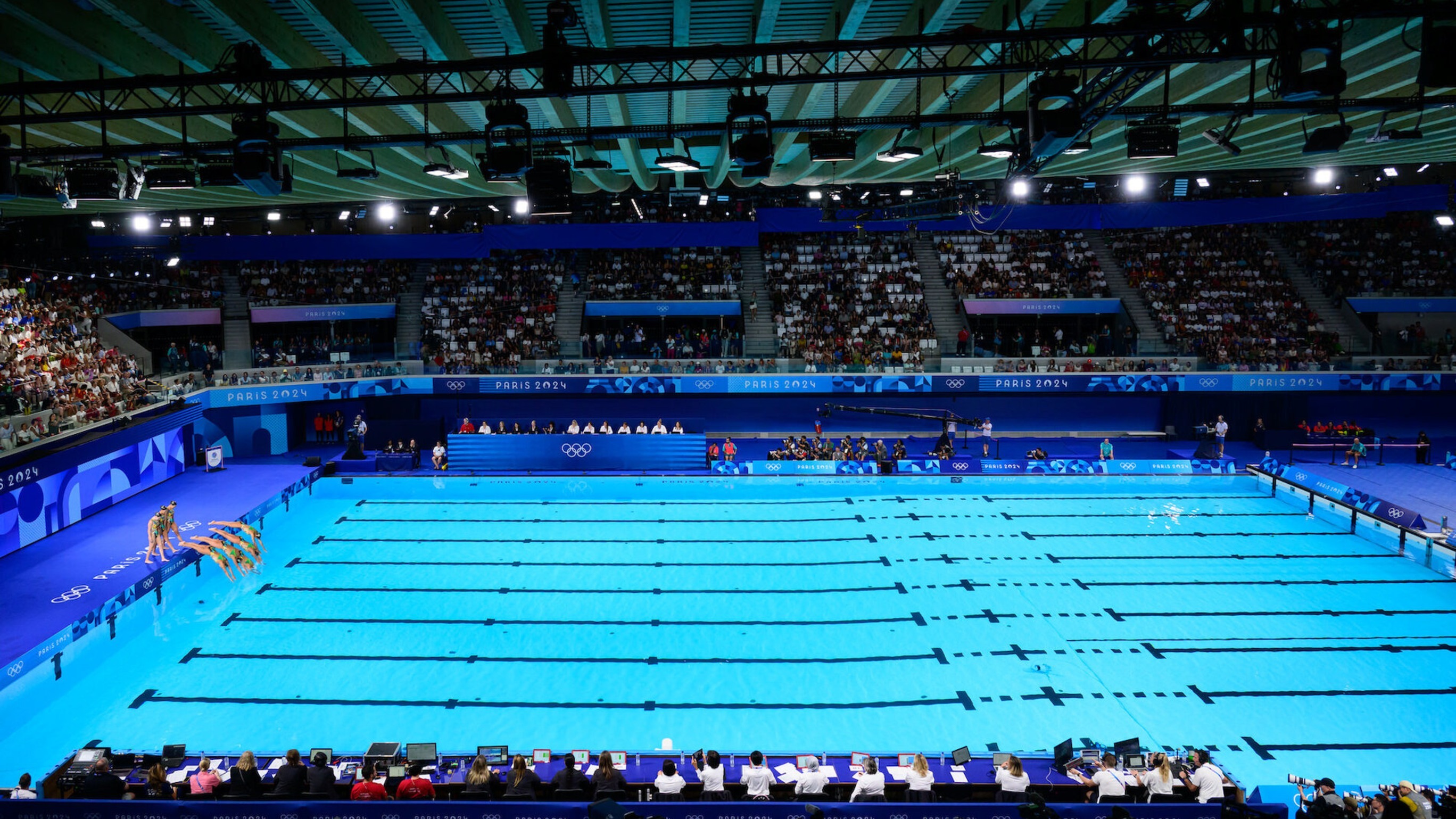
Every Olympic swimming pool measures exactly 50 meters, verified down to fractions of a centimeter by certified surveyors before every major competition. That precision isn’t decorative. It’s the entire reason swimming world records actually mean something when compared across different countries and different decades.
It wasn’t always this way, and the mess that came before explains why the standard matters so much now.
Racing in whatever water was available
Swimming has been part of the Olympics since the very first modern Games in 1896, but for the first several editions, there was no standardized pool at all. That first Olympics held its swimming events in the open water of the Bay of Zea in Greece, a natural harbor rather than any constructed course.
British pools at the time typically ran in imperial units, commonly 22 or 55 yards depending on the facility, while other countries used entirely different local standards.
Without a consistent length, comparing swimming performances across different venues was close to meaningless. A fast time in one country’s pool told you almost nothing reliable about how it stacked up against a fast time somewhere else, since pool lengths, and therefore turn counts and race dynamics, varied significantly from place to place.
1924 fixed the problem for good
The Fédération Internationale de Natation, founded in 1908 specifically to bring order to competitive swimming, pushed for metric standardization as international competition grew more serious after World War I. The 1924 Paris Olympics delivered the fix: the first purpose-built 50-meter pool with proper lane markers, at a venue called the Piscine des Tourelles.
That single decision has held for exactly a century now. Every Olympic Games since 1924 has used a 50-meter pool as the standard for long-course competition, and the length remains the global benchmark that every serious swimming record gets measured against, regardless of which country or continent the race takes place on.
Precision as sport’s quiet backbone
Modern Olympic pools carry remarkably exact specifications: minimum depths that reduce wave turbulence, energy-absorbing lane ropes, and gutters engineered to minimize disruptive water movement, all layered on top of that core 50-meter length requirement. Even tiny discrepancies get taken seriously.
At the 2016 Rio Olympics, a photo finish controversy involving swimmer Chad le Clos triggered an emergency review after officials discovered the pool’s official length certification had technically expired weeks earlier. Certified surveyors confirmed the pool remained within tolerance, but the incident showed how rigorously the standard gets protected even now.
Why unglamorous standardization matters this much
Nobody gets excited discussing pool measurement tolerances. But that dry, precise standardization is exactly why a world record set in Tokyo can be meaningfully compared to one set decades earlier in a completely different country, on a completely different continent. Swimming’s records carry weight specifically because the conditions producing them have been locked down to the centimeter for a hundred years running.
Plenty of sports still struggle with less standardized playing conditions affecting how comparable their records really are. Swimming solved that problem in 1924 and simply never had to revisit it.
Are there other sports you follow where inconsistent playing conditions make record comparisons across years or venues less meaningful than fans generally assume?


 1
1