





 0
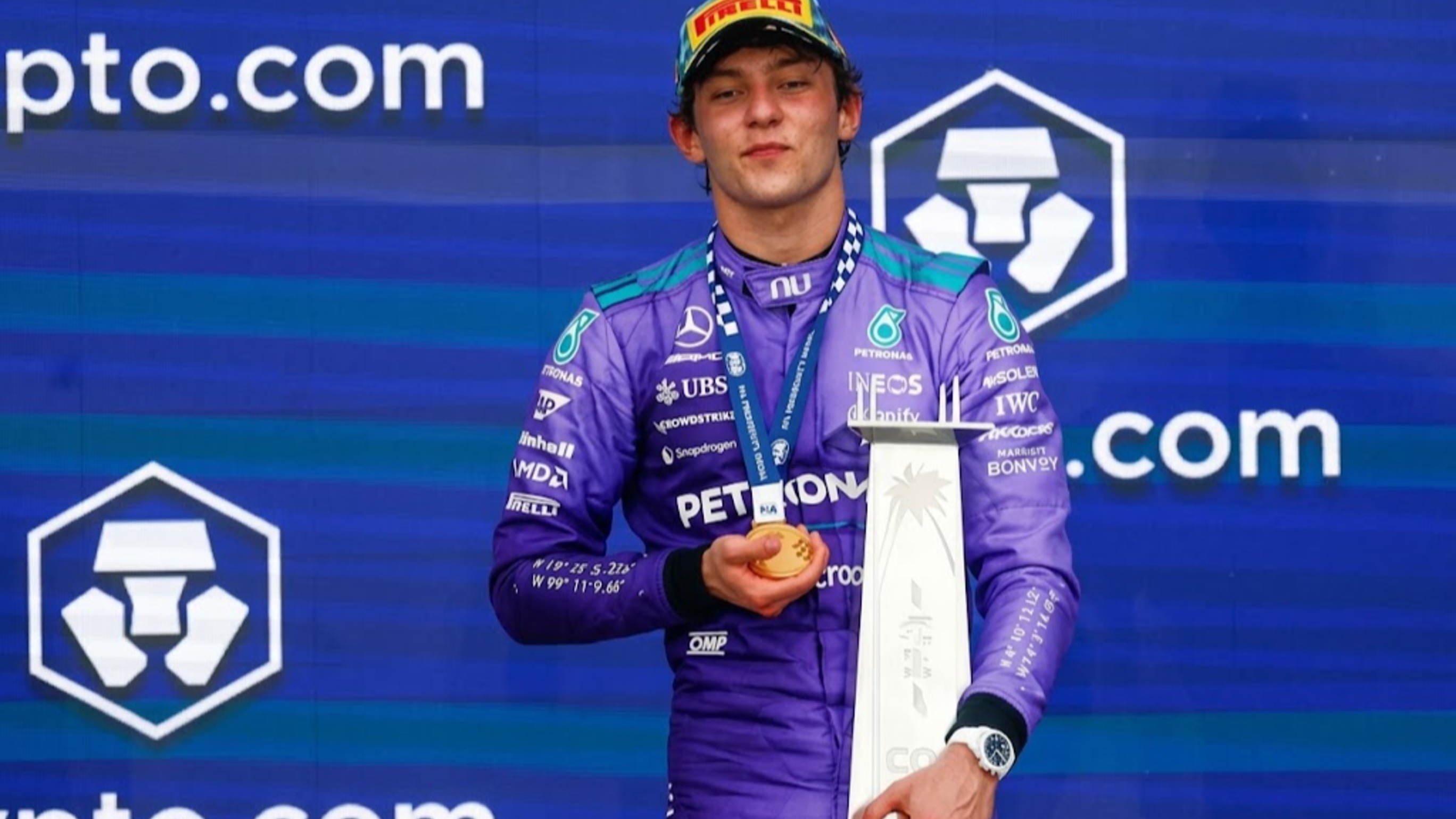
Kimi Antonelli Has an 81-Point Lead. F1's Real Question Is How Early This Title Race Could End
Kimi Antonelli is 20 years old, has never finished a Formula 1 season, and is currently 81 points clear of his own teammate with nine rounds still to go.
That's not a lead anymore. That's a moat.
The gap that stopped being a race
After his eighth win of the year at the Spanish Grand Prix, Antonelli's advantage over George Russell stretched to 81 points. Lewis Hamilton, in third, sits more than 100 points back. Even Hamilton, who has spent two decades being the man other drivers had to catch, told Sky Sports there was no stopping the Italian and Mercedes this season.
When a seven-time champion says that out loud, in public, before the season is even finished, it isn't a compliment. It's a surrender flag with his name on it.
Antonelli would become the youngest world champion in Formula 1 history if he closes this out, and he's the first Italian to lead the standings since Giancarlo Fisichella in 2005. Mercedes team boss Toto Wolff has been the one voice publicly refusing to relax, warning about what he called black swan events, the freak accidents and mechanical failures that can undo a season nobody saw coming.
What an 81-point cushion actually buys you
A gap this size changes how a driver has to race, whether he wants it to or not. Antonelli doesn't need to fight for every point anymore. He needs to avoid the one disaster that costs him fifty at once.
That's a strange kind of pressure. Racing flat out is simple. Racing conservatively while still winning, weekend after weekend, without ever looking like you're coasting, is much harder to pull off in public. Drivers who've tried to manage a big lead have sometimes gone the other way and started making mistakes precisely because they were trying too hard not to.
Antonelli, for his part, isn't talking like a driver who thinks it's finished. After the Madrid win he said he wanted to keep pushing race by race and see where the team ended up at the year's close, which is either genuine humility or the smartest possible thing to say with a title this close.
The psychology of an early finish
Championships that get decided with races still on the calendar create a strange kind of leftover season. Fans keep watching, but the central question, who wins, has effectively already been answered. What's left is a series of undercards: who finishes second, which team wins the constructors' battle, which young driver uses the dead rubbers to state a case for next year.
F1 has seen this before. Big leads have occasionally evaporated through late-season mechanical trouble or a sudden loss of form, which is exactly the kind of history that keeps Wolff cautious even with the numbers this lopsided. Nobody at Mercedes wants to be the team that talks about a title before it's actually secured.
Still, the maths is the maths. A driver who is over a hundred points clear of two former teammates and title contenders in third and fourth has very little left to prove on pace. What he has left to prove is nerve, over nine more races, with every rival racing for scraps and every mistake magnified because there's so little left for anyone else to fight for.
If a lead this big turns the rest of the season into a formality, does it make the remaining races less interesting to watch, or does it just shift the drama somewhere else, onto the psychology of a 20-year-old trying not to blink?

Sarajevo Back at the Heart of Regional MMA: SFC Returns with Explosive Matchups

How Buzzer Karma Works: Levels, Penalties, and What They Mean

Inside Buzzer's Latest Update (and Why It Changes How You Use the App)

Buzzer Introduces Ads Console: A New Era of Advertising Across the Entire Buzzer Ecosystem

Buzzer Is Evolving: From Quantity to Quality

Buzzer Now Has a Games Hub, and Tournaments Are Coming

Al Ittihad SC's Matches Are Now Live on Buzzer

Palm City vs Gulf United Ends in 1–1 Draw in UAE Second Division League Clash

"We Don't Take the Guy With the Camera." He Built His Own Club Anyway. Now He's Coming to Find You.

Building the Infrastructure Sports Tech Forgot


