





 0
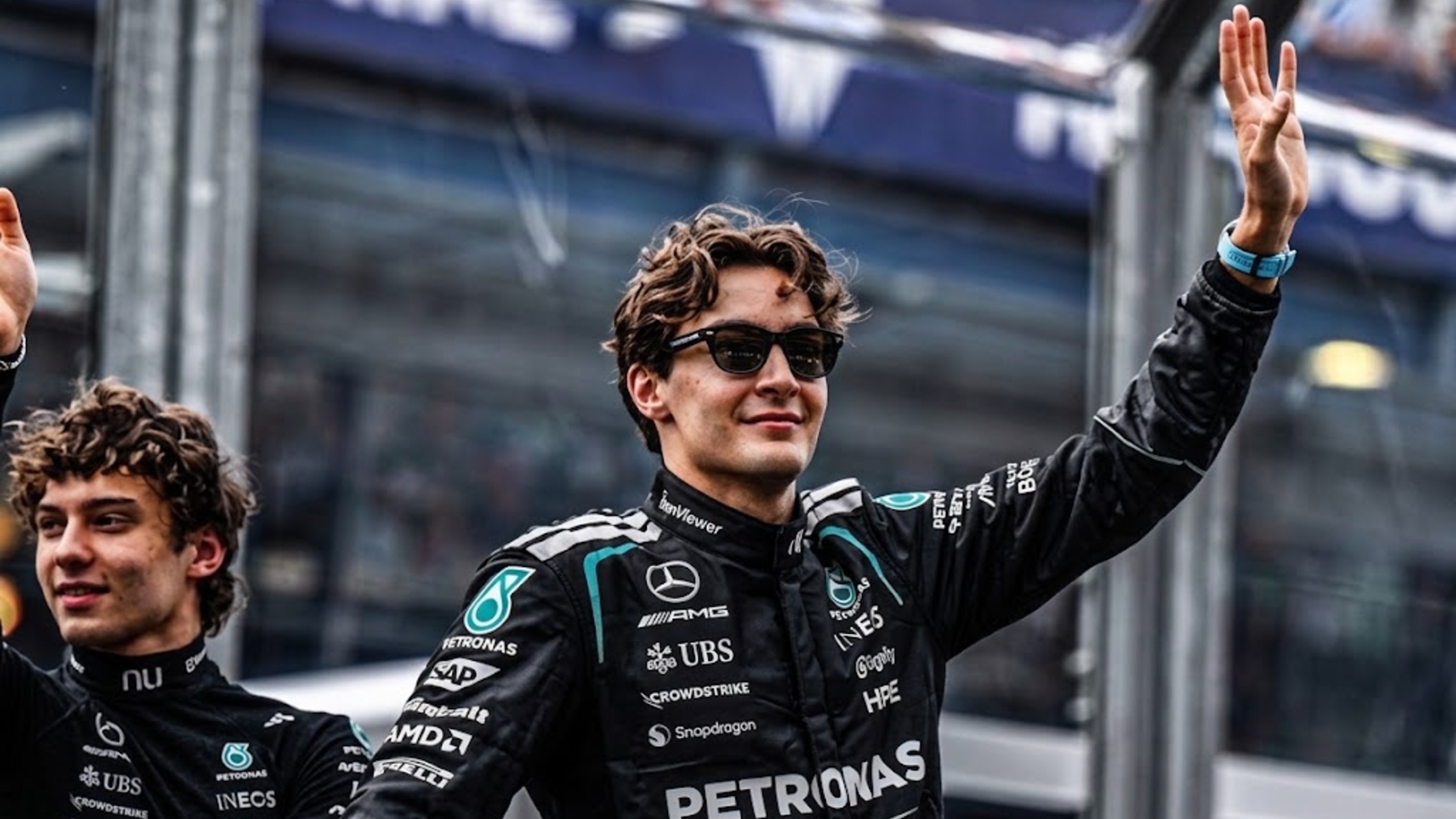
George Russell Won Baku by 0.196 Seconds. F1's Margin For Error Is Getting Tiny
For 30 laps, George Russell's Azerbaijan Grand Prix looked like a private test session. He started from pole, led from lights to flag and had an 11-second cushion when Alex Albon crashed on lap 31 and the safety car came out.
Then the cushion vanished. Russell crossed the line 0.196 seconds ahead of Max Verstappen, the closest F1 finish since the 1986 Spanish Grand Prix. It was also the first time in his career that he'd led every lap of a race.
The lead that a safety car erased
Baku is the one circuit where a big gap means very little, because the track keeps handing the field a reset. Russell's 11 seconds lasted exactly as long as it took Albon to find the wall. The safety car bunched everyone up, and when racing resumed Verstappen, who'd started eighth, snatched second from Oscar Piastri into the first corner.
Russell was still clear at that point. Not for long.
A second safety car followed after a multi-car crash, and at the second restart Verstappen was on his gearbox. From there the two traded fastest laps with nothing to separate them.
That's what makes the gap number so cruel. Russell didn't lose 11 seconds through bad driving. He lost them to a rule that exists for good reason, and he'd spent the first half of the race building a lead that the rulebook was always going to take back.
Inside the final lap
The last lap added one more twist. Valtteri Bottas crashed his Cadillac through the old town section, yellow flags came out, and Russell said he had no boost coming out of Turn 15. Verstappen closed in a hurry, and the two cars crossed the line almost side by side.
Live commentary asked whether Verstappen had slowed enough for the double yellows. That's a question for the stewards and the data, and it would be unfair to settle it from a sofa. What isn't in dispute is the size of the gap. Russell had led without a real challenge for two-thirds of the distance and still needed almost every hundredth of the last lap.
Modern F1 keeps producing finishes like this. The cars are close, the restarts compress the field, and the electrical boost both drivers were chasing on that final straight can decide a duel in a few hundred metres. Put those together at a street circuit and the margin between a comfortable win and a photo finish shrinks to almost nothing.
Why a tiny margin cuts both ways
It's tempting to call Baku a great race, and the final lap certainly was. But look at what the small margin says about the result. Russell did nearly everything right for 51 laps. A crash on the penultimate lap, a lapse in power and a restart he had no control over could each have flipped the win.
The points tell a similar story. Russell took 25 for the win, and Verstappen took 18 after starting from eighth and profiting from two neutralisations. Meanwhile Mercedes teammate Kimi Antonelli, who'd crashed in qualifying and started deep in the field, recovered to fifth and still leads the championship. Russell narrowed the gap to him, but not by enough to make the title fight comfortable for either.
The argument worth having is this. A margin of 0.196 seconds is thrilling television and a slightly worrying way to decide a 25-point swing. When the result hangs on the last lap's boost and a yellow flag, luck starts to look like another driver in the race.
Russell deserved the win, no question. He needed every tenth of the last lap to keep it.
Would you rather watch a driver win by 20 seconds and make the race feel over by lap ten, or one who has to fight to the line because a safety car took his cushion away?

Sarajevo Back at the Heart of Regional MMA: SFC Returns with Explosive Matchups

How Buzzer Karma Works: Levels, Penalties, and What They Mean

Inside Buzzer's Latest Update (and Why It Changes How You Use the App)

Buzzer Introduces Ads Console: A New Era of Advertising Across the Entire Buzzer Ecosystem

Buzzer Is Evolving: From Quantity to Quality

Buzzer Now Has a Games Hub, and Tournaments Are Coming

Polo Al Taco Expands Its Global Reach Through Weekly Livestreams on Buzzer Arena TV

Al Ittihad SC's Matches Are Now Live on Buzzer

Palm City vs Gulf United Ends in 1–1 Draw in UAE Second Division League Clash

"We Don't Take the Guy With the Camera." He Built His Own Club Anyway. Now He's Coming to Find You.


