




 0
0
The Sport Where Athletes Swim Through Actual Ice
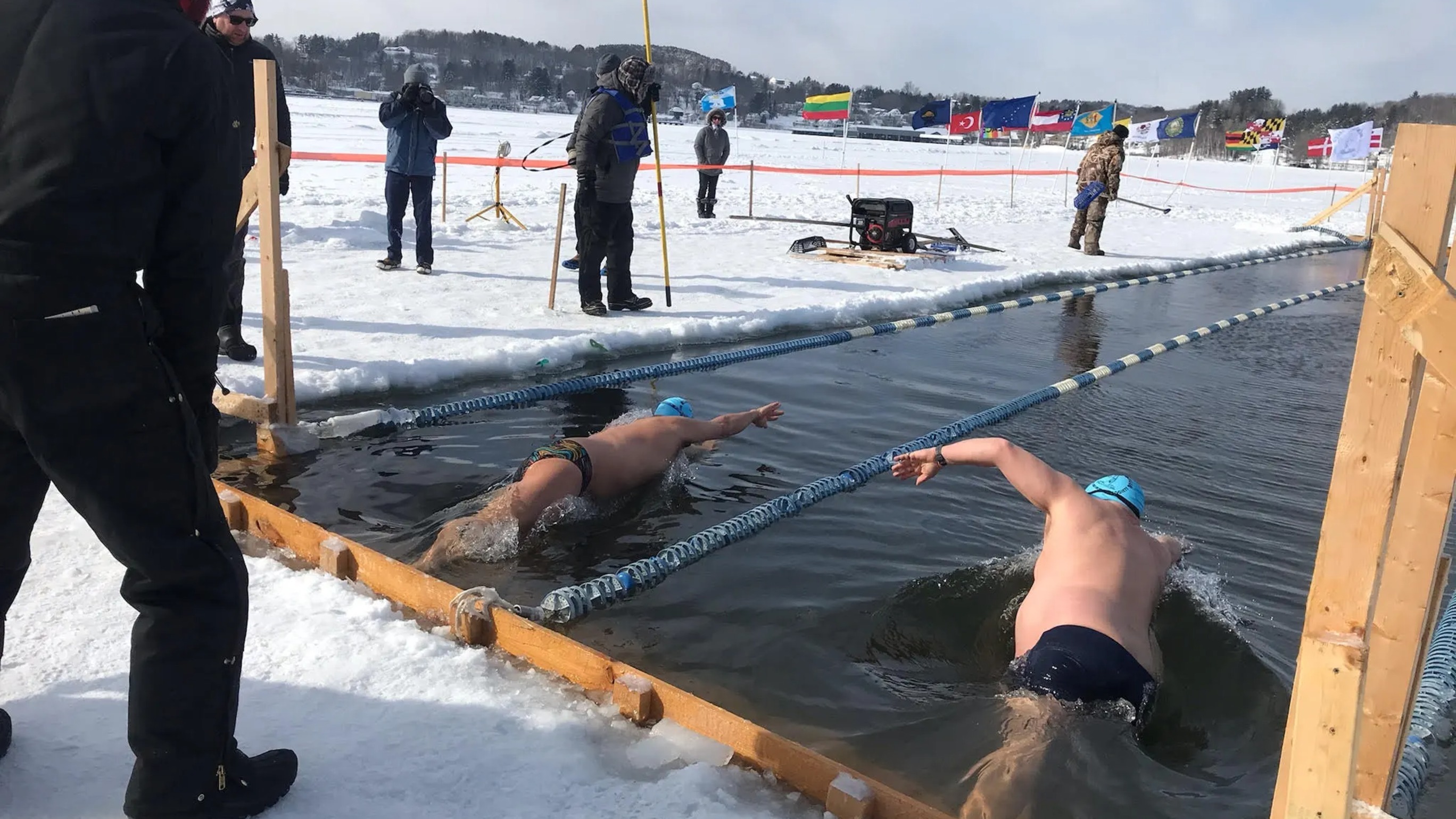
Ice swimming involves exactly what it sounds like: competitive swimming in water at or near freezing temperature, often with a hole cut directly into a frozen lake or river.
It has its own international governing body, its own world championships, and a small but genuinely dedicated global community of athletes.
The medical thresholds that define the sport
The International Ice Swimming Association classifies water as officially qualifying for ice swimming competition once it drops to 5 degrees Celsius or below.
Swimmers compete in nothing but a standard swimsuit, cap and goggles, without wetsuits, which are banned in official competition specifically because the sport's entire point is testing the body's raw tolerance for extreme cold.
What actually happens to the body
At those temperatures, cold shock response kicks in almost immediately, spiking heart rate and blood pressure while the body fights to preserve core temperature.
Elite ice swimmers train extensively to control their breathing and stay mentally calm through that initial shock, since panic in cold water is genuinely dangerous.
Events are kept relatively short, usually well under 30 minutes even for the longest distances, because prolonged cold exposure carries real hypothermia risk regardless of training.
A sport built on careful medical oversight
Because of those risks, ice swimming competitions require extensive medical staffing on site, with swimmers monitored closely before, during and after each event.
Athletes undergo cardiac screening before being cleared to compete at all.
The sport has grown steadily since the 2000s, with participants from traditionally cold-weather countries like Russia, the UK and various Nordic nations forming the core of the competitive scene.
Records measured in minutes, not seconds
Unlike most swimming disciplines built around split-second timing, elite ice swimming records are often measured by how long a swimmer can sustain effort in the cold rather than pure speed alone, with distance events testing endurance against the water temperature as much as against other competitors.
Some of the sport's most decorated athletes come from open-water swimming backgrounds first, treating ice swimming as a further test of the same cold-water tolerance they'd already built through years of training elsewhere.
The English Channel, already one of open-water swimming's most demanding tests, is sometimes treated by ice swimmers as a stepping stone rather than a final goal, given how much colder official ice swimming competition water tends to run.
The sport's growing popularity has also drawn interest from sports scientists studying cold water immersion more broadly, given its potential crossover relevance to recovery techniques already used across a range of conventional endurance sports.
Does deliberately swimming in near-freezing water for competition represent genuine athletic achievement, or does the extreme risk involved put it in a different category from conventional sport entirely?


