





 1

Swimming Races Are Often Won in the 15 Metres Nobody Watches
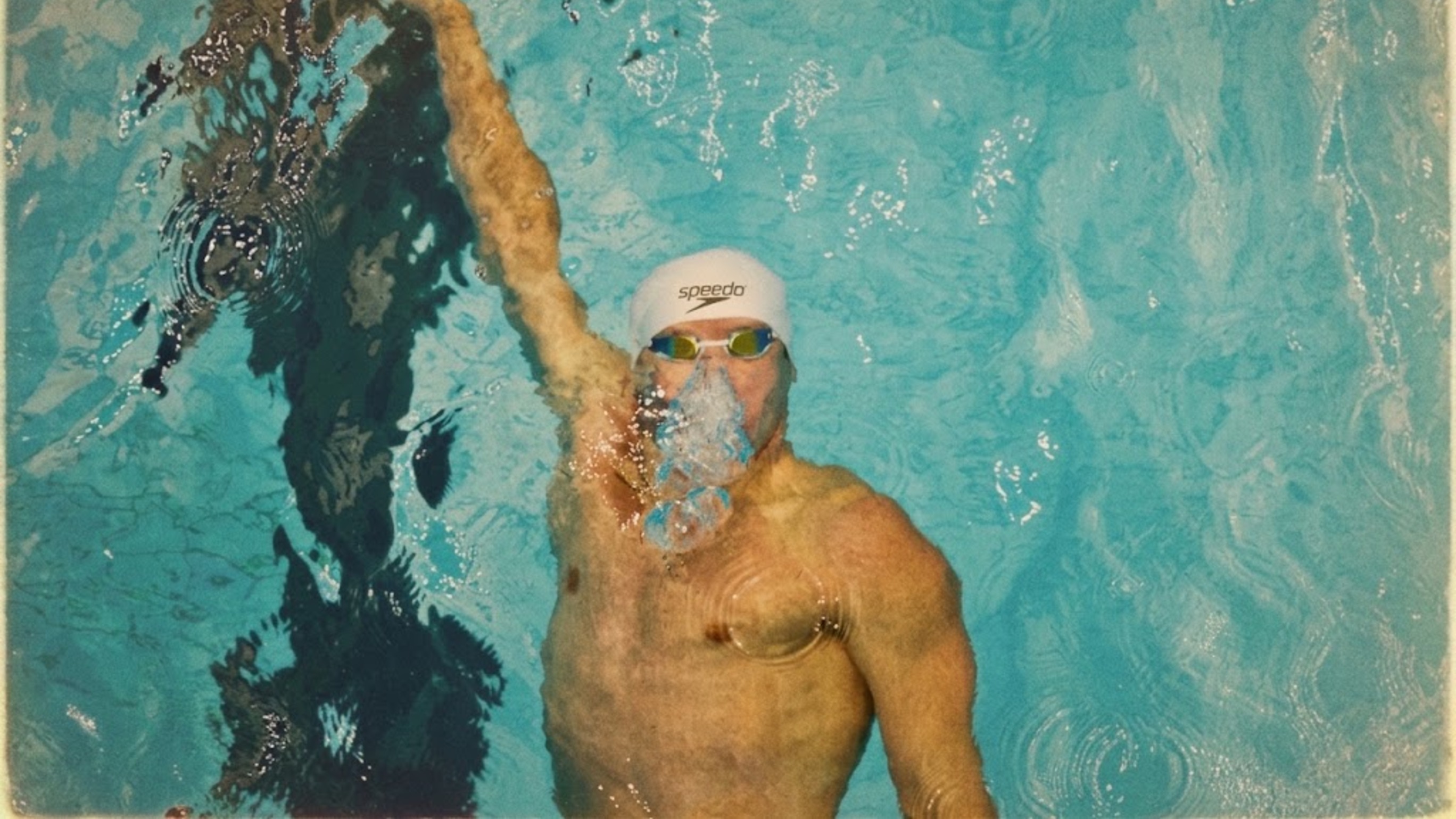
David Berkoff changed swimming at the 1988 Olympics without winning gold. He spent so much of the opening length of the backstroke underwater, kicking in a streamlined position, that the sport soon had to write a rule to deal with him.
That rule still exists. Swimmers must surface by 15 metres after a start or a turn. And the 15 metres it governs is where plenty of modern races are quietly decided.
Why turns matter more than they seem
In a 50-metre pool, a 100-metre race has one turn, a 200 has three, and a 1500 has 29. Each turn is a chance to gain or lose time. A swimmer who is a tenth of a second better at every wall can build a real lead over a long race.
Turns work because swimmers go faster off the wall than they do swimming. A push-off in a tight streamline position gives a burst of speed that stroke power can’t match. The skill is carrying that speed for as long as possible before the first stroke breaks the surface.
That is why elite coaches track the time between the flags on either side of the wall, not just the lap time. It isolates the part of the race that is nearly all technique.
The anatomy of a good turn
It starts before the wall. A swimmer who slows down to prepare will lose time, and one who arrives at full speed and tumbles cleanly will gain it. The approach speed is part of the turn.
Then comes the tumble itself, the push-off, and the underwater phase. A tight streamline reduces drag, and a strong dolphin kick keeps the body moving. The aim is to hold the best speed for the longest time within the legal limit.
The last part is the breakout. A swimmer who surfaces too early gives up the underwater advantage, and one who stays down too long starts to slow. The timing of the first stroke is the final piece of the puzzle.
The underwater controversy
The 15-metre limit means the question is how far a swimmer can go in that space. Swimmers who are especially good at underwater kicking can gain a body length or more over rivals who surface early.
Léon Marchand won four individual gold medals at the 2024 Paris Olympics, across the 200 butterfly, 200 breaststroke, 200 individual medley and 400 individual medley. Those events involve many turns, and a swimmer who is strong at the wall has more opportunities to build a lead.
That raises a long-running argument about whether the sport is rewarding the right skills. A race is supposed to test who swims fastest, and the underwater phase tests something slightly different. Some coaches argue that it adds depth to the sport, while others think it has become too dominant.
What the sprint events show
Shorter races push the importance of the start and the turn even higher. In a 50-metre sprint there is no turn, so the dive and the first 15 metres carry much of the race. A swimmer who gets that right can gain a lot before the first stroke.
David Popovici’s 100 freestyle world record in 2022 was built on that kind of efficiency. The best sprinters combine a fast start, strong underwater work and a clean stroke, and each part contributes to a final time that can be separated by hundredths of a second.
That is why swimming results can seem harsh. Two swimmers can look the same through the middle of the race, and one of them turns slightly faster each time. By the end, that adds up.
How to watch like an expert
Next time you watch a race, try ignoring the stroke for a lap and watch the wall. Who is turning fastest? Who comes out in front after the underwater phase? Who surfaces early and who stays down?
You will often see a pattern, with a swimmer gaining half a body length on every turn and then seeming to cruise. The lead looks effortless on screen, but it was built in the moments most commentators skim over.
It also changes how you judge a swimmer’s talent. Some of the best athletes in the sport are far better underwater than their stroke would suggest, and some excellent stroke technicians lose time at every wall. Both types can win, but the margin is thin.
Should swimming tighten the 15-metre limit, since the best underwater kickers are arguably winning races with their legs rather than their strokes?

Sarajevo Back at the Heart of Regional MMA: SFC Returns with Explosive Matchups

How Buzzer Karma Works: Levels, Penalties, and What They Mean

Inside Buzzer's Latest Update (and Why It Changes How You Use the App)

Buzzer Introduces Ads Console: A New Era of Advertising Across the Entire Buzzer Ecosystem

Buzzer Is Evolving: From Quantity to Quality

Al Ittihad SC's Matches Are Now Live on Buzzer

Polo Al Taco Expands Its Global Reach Through Weekly Livestreams on Buzzer Arena TV

Buzzer Now Has a Games Hub, and Tournaments Are Coming

Palm City vs Gulf United Ends in 1–1 Draw in UAE Second Division League Clash

"We Don't Take the Guy With the Camera." He Built His Own Club Anyway. Now He's Coming to Find You.


