

 2
2
Football Got Its Yellow and Red Cards From a Traffic Light in London
For decades, football referees had only vague, verbal ways of communicating serious disciplinary decisions to players, coaches, and crowds, often relying on gestures or simply telling a player directly they’d been booked or sent off, with real potential for confusion in a loud stadium or, worse, across a language barrier between officials and players from different countries.
The system that eventually fixed this traces back to English referee Ken Aston, and, according to the story he told himself, a traffic light in London.
A World Cup that made the problem obvious
At the 1966 World Cup, held in England, a notoriously chaotic quarterfinal between hosts England and Argentina ended with Argentina’s captain sent off amid genuine confusion about exactly what had happened and why, with players and journalists from different countries struggling to understand precisely what disciplinary action had actually been taken and for what reason.
Aston, serving in a senior refereeing role for that World Cup, recognized the communication problem clearly: a system that depended entirely on verbal explanation and gesture simply didn’t scale to a genuinely international tournament with players, officials, and audiences who didn’t all share a common language.
Driving home through London afterward, Aston reportedly stopped at a traffic light and had the realization that would eventually reshape football officiating worldwide: yellow means caution, red means stop. A simple, universally understood visual system that required no shared language at all.
From idea to implementation
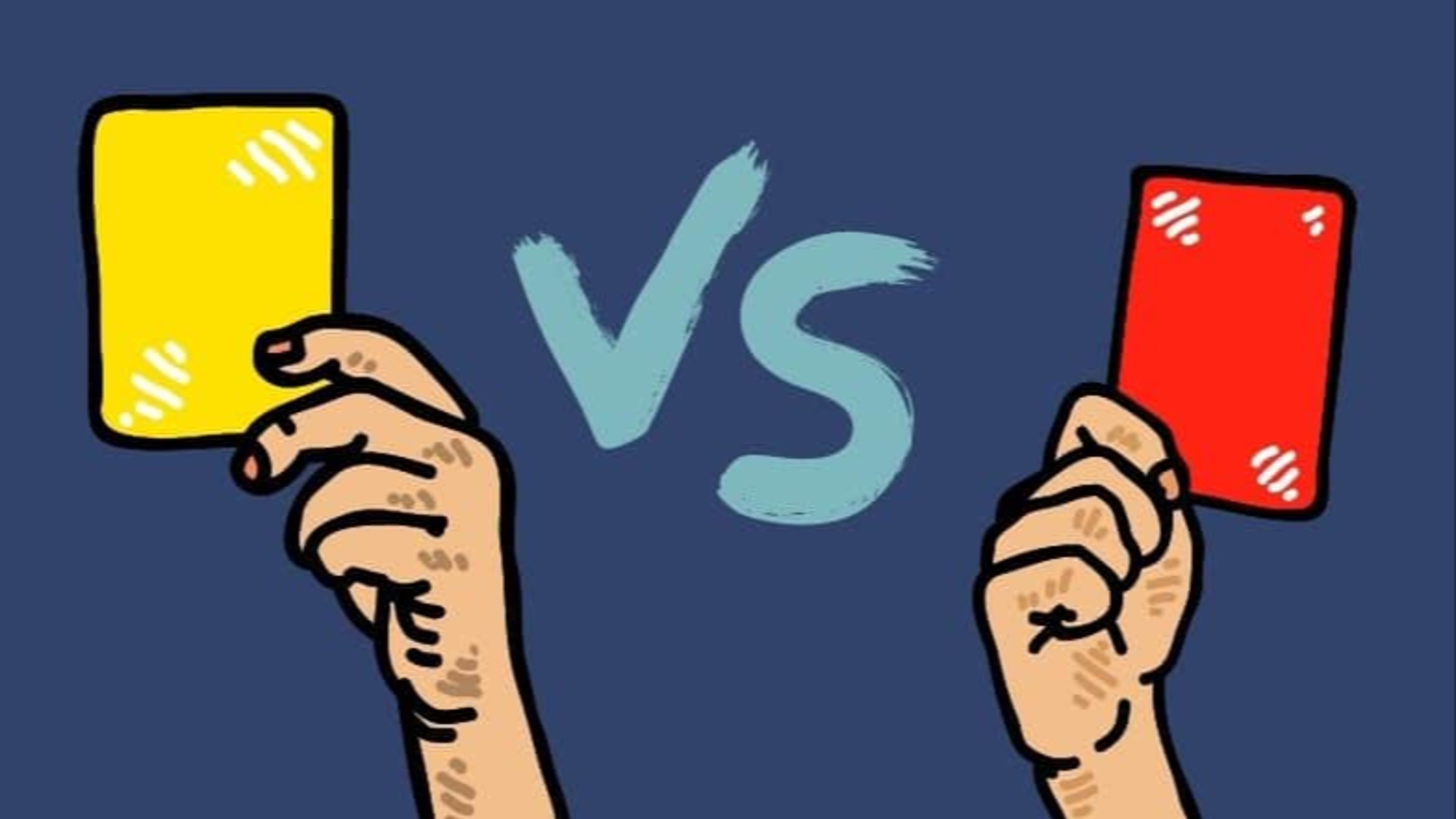
Aston’s yellow and red card system wasn’t adopted immediately after that traffic light moment. It debuted at the 1970 World Cup in Mexico, four years after the incident that inspired it, giving referees a simple, visually unambiguous way to signal a caution or a sending-off that any player, coach, or spectator could instantly understand regardless of what language they spoke or which country they were watching from.
The system’s genius was its total simplicity. It required no translation, no lengthy explanation, and no ambiguity about severity, a yellow card meant one thing everywhere on earth, and a red card meant something unmistakably more serious, instantly recognizable from anywhere in a stadium or on a television broadcast.
A fix that spread far beyond its original sport
The yellow and red card system proved so intuitively effective that it’s since been adopted, in some form, by other sports entirely, including field hockey and rugby league, each borrowing football’s color-coded severity system rather than inventing their own from scratch. That’s a genuinely rare outcome for a sport-specific officiating innovation, most disciplinary systems remain tightly bound to the particular sport that developed them.
What makes the story particularly appealing, beyond the system’s obvious practical success, is how mundane its actual origin was. Football’s global disciplinary language didn’t emerge from a committee spending months debating officiating theory. It came from one referee sitting at a red traffic light after a frustrating, chaotic tournament match, noticing a visual system that already existed everywhere and realizing his own sport could simply borrow it wholesale.
Given how effective and universally understood the yellow and red card system became, are there other everyday visual or communication systems outside of sport that might translate just as cleanly into solving a different sport’s officiating problem?


 2
2