





 0
The Wizards Have A New Big Three. Can Talent Actually Repair A Broken Franchise?
The Washington Wizards haven't made the playoffs since 2021 and haven't won 20 games in any of the past three seasons. They've lost nearly 200 games in that stretch. So naturally, they decided to build a Big Three.
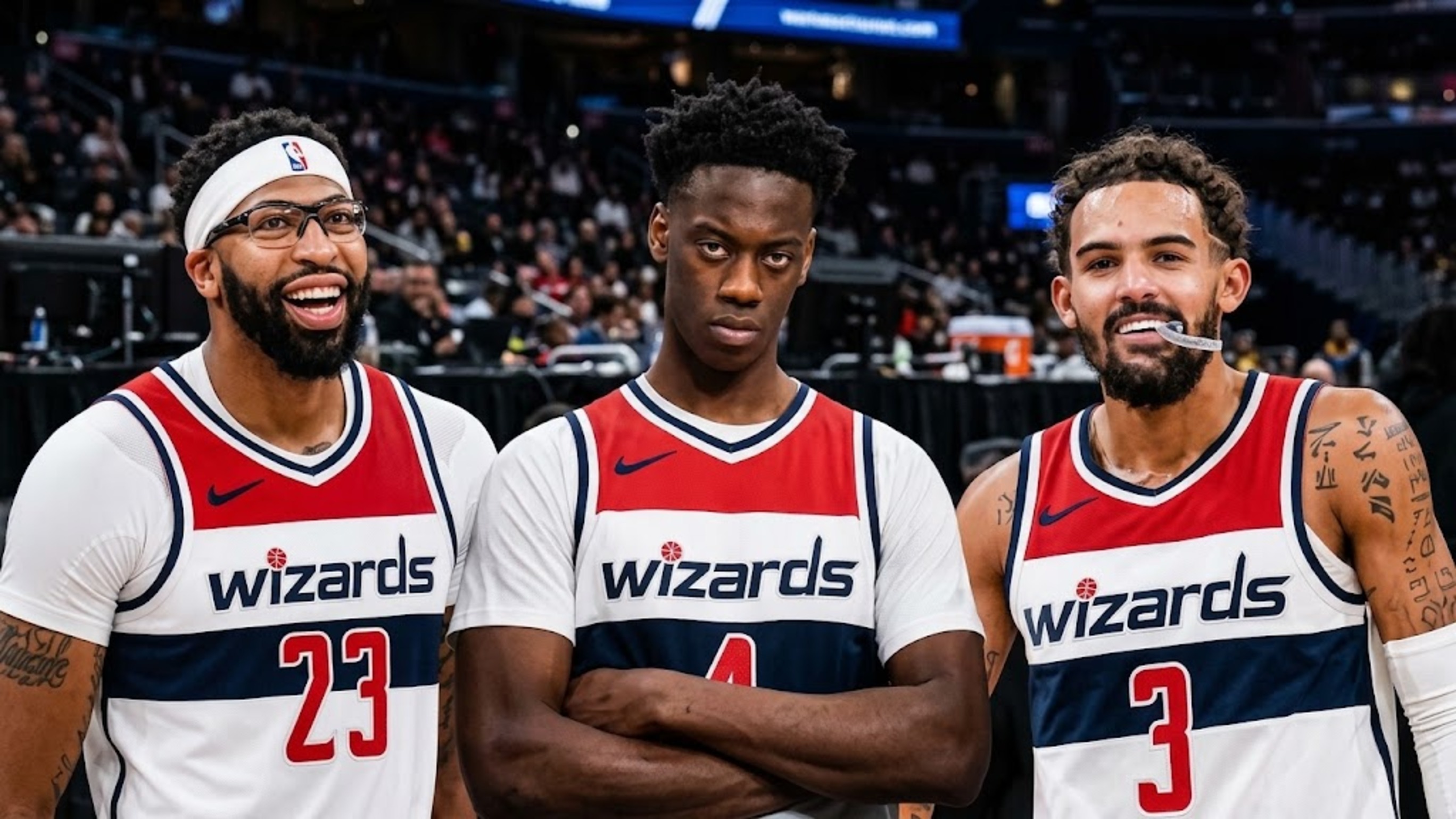
Trae Young, Anthony Davis and No. 1 pick AJ Dybantsa shared a media-day photo this week with a caption that said it all: this is going to be fun. Maybe it will be. My argument is that talent was never the only problem in Washington, and adding more of it doesn't fix the rest.
How the Big Three got here
The build came in stages. Washington traded for Young in a blockbuster deal early in 2026, then acquired Davis from Dallas in an eight-player trade in February. In June, the Wizards used the first pick on Dybantsa, the BYU forward who led college basketball at 25.5 points per game.
Young then signed a four-year, $212 million contract during the offseason, locking him in as the face of the offense. Davis, 33 and a ten-time All-Star, is the open question. He told reporters he plans to finish the season before deciding on any extension.
The last time Washington held the top pick was 2010, when it took John Wall. John Wall's career has been remembered fondly in the city, but the Wizards didn't win a playoff series with him as often as fans hoped. History is a hard teacher.
The structural problem
Talent can't fix everything, and this is the part I think matters most. A roster built around a ball-dominant guard, a high-usage wing and a veteran big has to decide who gets the shots, who sets the defense and who stays healthy. Those decisions are hard for any team, and they're harder for a franchise that hasn't won in years.
The Wizards also have a young group that hasn't developed yet. Alex Sarr, Kyshawn George, Tre Johnson, Will Riley, Bub Carrington and Bilal Coulibaly are all part of the plan, and ESPN noted that management has emphasized defense for the new franchise pick. Defense is the part of the plan that takes patience.
Davis' health matters here as well. When healthy he's one of the league's best two-way players. But he turns 34 next year, and the Wizards have to decide whether another big contract makes sense while younger players need room to grow.
What the veterans can fix
There's a better case for optimism than the record suggests. Dybantsa told reporters he doesn't feel much pressure because of the veterans around him, including Khris Middleton and DeAndre Ayton. Young has carried a team to a conference final. Ayton has played in ten playoff series.
That's real experience, and it's the kind a young star can borrow. Washington isn't asking Dybantsa to rescue the franchise by himself. It's asking him to learn from players who've been through the grind.
Culture is the soft word for it, but culture is also a practical thing. A team that expects to lose in February plays differently from one that expects to win. The Wizards' clearest shot at repair is to change what a bad night means.
There's also a funny irony. A franchise that spent years being told it needed stars now has them, and the next question is whether stars actually change a team's habits. Will the Wizards be a team with three famous players, or a famous team?
Here's what I'd ask. When a franchise has been broken for years, does the first fix come from adding a star, or from changing the way the team handles the long, ordinary nights nobody remembers?

Sarajevo Back at the Heart of Regional MMA: SFC Returns with Explosive Matchups

How Buzzer Karma Works: Levels, Penalties, and What They Mean

Inside Buzzer's Latest Update (and Why It Changes How You Use the App)

Buzzer Introduces Ads Console: A New Era of Advertising Across the Entire Buzzer Ecosystem

Buzzer Is Evolving: From Quantity to Quality

Buzzer Now Has a Games Hub, and Tournaments Are Coming

Al Ittihad SC's Matches Are Now Live on Buzzer

Palm City vs Gulf United Ends in 1–1 Draw in UAE Second Division League Clash

"We Don't Take the Guy With the Camera." He Built His Own Club Anyway. Now He's Coming to Find You.

Building the Infrastructure Sports Tech Forgot


 1


