
 0
0
Penalty Shootouts Aren’t a Lottery, and the Data Proves It
Commentators love calling penalty shootouts a lottery, as if the outcome comes down to pure chance once the whistle blows. The research says otherwise, and it says so pretty emphatically.
Start with the raw numbers. Since 1997, players have converted 74.6 percent of penalties taken in international shootouts. England, over that same stretch, converted just 65 percent and lost seven of eight shootouts they took part in. Germany, by contrast, ran an 85 percent success rate across six major tournament shootouts between 1982 and 2006. If shootouts were genuinely random, national teams wouldn’t show this kind of durable, decades-long gap between each other.
It’s pressure, not skill, driving the gap
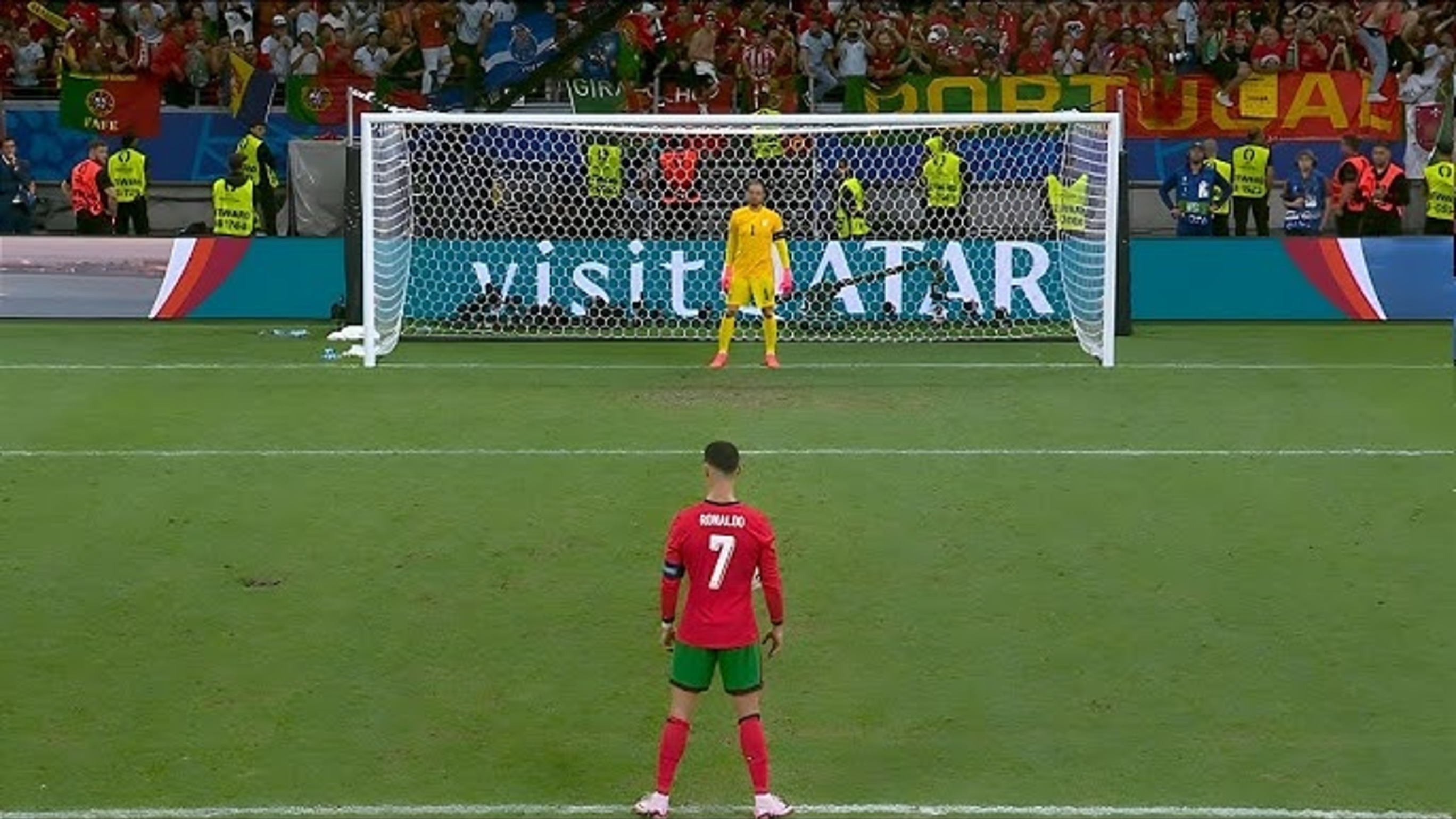
Professional footballers score roughly 85 percent of penalties taken during normal play, when there’s no shootout pressure attached. Put the same kick into a shootout and that number drops to around 76 percent. Drop it further into a pressure cooker: if a player’s kick will win the shootout outright, conversion actually jumps to 92 percent. But if missing means the team loses immediately, conversion collapses to under 60 percent.
That asymmetry lines up with what psychologists call loss aversion, the well-documented tendency for the fear of losing something to weigh more heavily on decision-making than the prospect of an equivalent gain. A shootout isn’t one uniform pressure. It’s a series of psychologically distinct moments, and how a player experiences each kick depends heavily on exactly what’s riding on it.
Researchers have also identified something called the explicit monitoring effect, where pressure causes players to consciously think through movements that are normally automatic for a professional, and that conscious interference is often what causes a technically excellent striker to miss a kick they’d convert in their sleep during training.
England’s specific problem, and how it got studied
England’s shootout struggles became such a recurring national embarrassment that researchers specifically studied English players’ penalty-taking behavior under pressure. One consistent finding: English players have historically rushed their penalties more than players from other nations, taking their run-up and shot noticeably faster once the referee blows the whistle, a pattern consistent with anxiety pushing players to get the moment over with rather than staying composed through it.
Steven Gerrard captured the instinct in his own autobiography, describing his frustration waiting for the referee’s whistle before a kick: “why do I have to wait for the bloody whistle?” That’s the pressure talking, not a lack of skill.
England eventually broke the pattern somewhat, winning a shootout against Colombia at the 2018 World Cup after six straight tournament shootout losses, reportedly after deliberately incorporating structured penalty practice and sports psychology work into their preparation.
What separates the teams that handle it
There’s also a real tactical layer here that has nothing to do with mental toughness. Analysis of over 1,300 penalty kicks across 129 shootouts found that teams shooting first win the shootout 60.5 percent of the time, a big enough edge that winning the pre-shootout coin toss carries genuine strategic weight, not just symbolic value.
None of this means shootouts are fully predictable. Football remains football, and any given kick can still go either way. But the idea that shootouts are a coin flip doesn’t survive contact with the actual data. Some nations, and some individual players, are demonstrably better at handling that specific kind of pressure than others, and it shows up consistently enough to be measured.
Knowing shootout performance correlates this strongly with preparation and psychology, should international teams be investing more heavily in dedicated penalty training, or does that risk overcoaching a moment that’s supposed to stay instinctive?


 1
1