





 0
Jessica Shepard Changed Teams And Became The WNBA's Most Improved Player. What Actually Changed
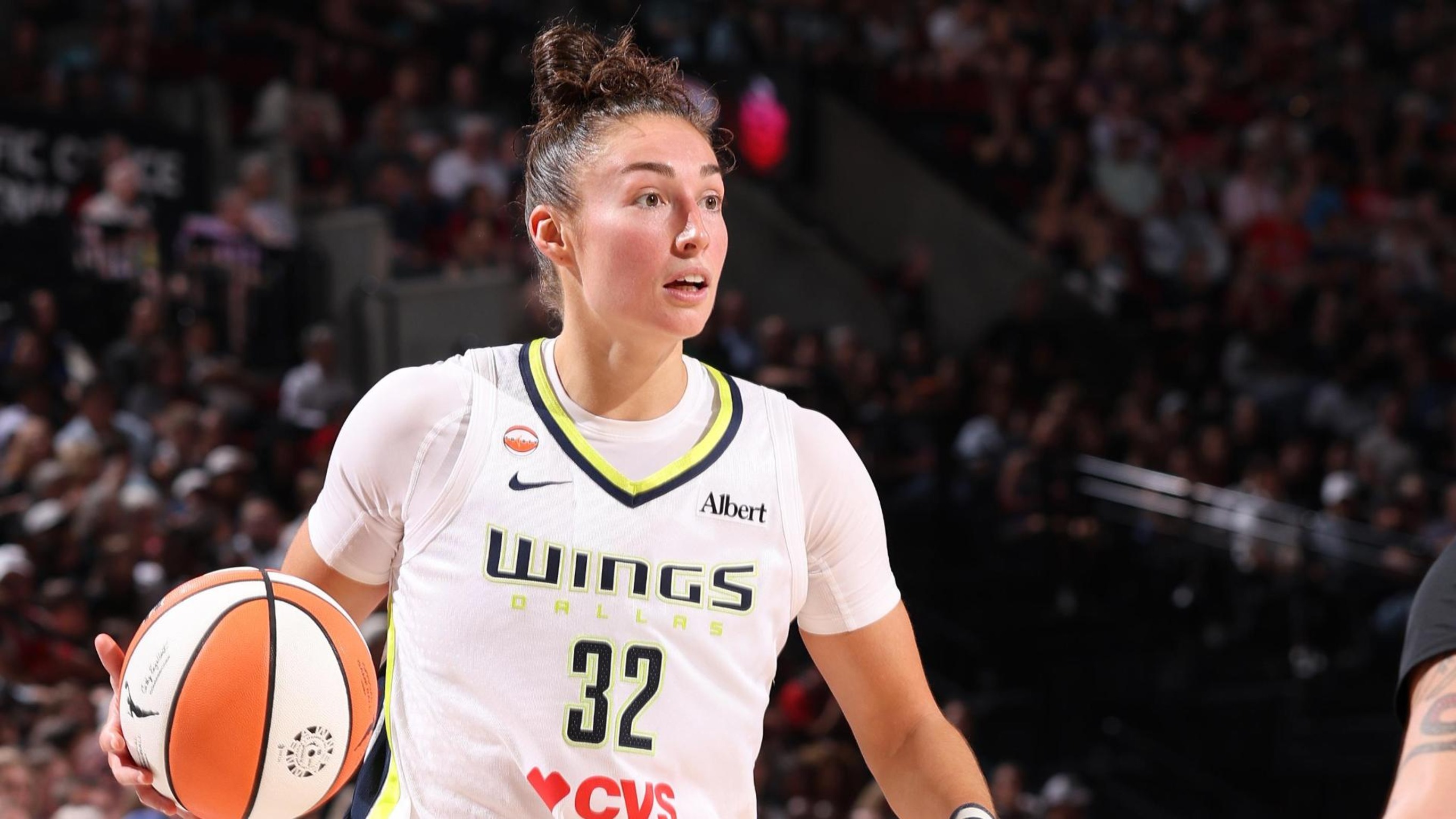
Jessica Shepard entered 2026 with exactly one triple-double in 125 career games. She finished the season with six, the most in the league, and tied for the second-most in any WNBA season.
She left Minnesota after five seasons, signed with the Dallas Wings in April, and was named Most Improved Player on Wednesday, hours before an elimination game. My argument is that her story is mostly about opportunity, and that the award's name undersells how much the player stayed the same.
The numbers that jumped
Shepard averaged career highs of 14.5 points, 11.1 rebounds and 5.3 assists in 31.7 minutes. A year earlier, with the Lynx, she'd averaged 8.0 points, 7.3 rebounds and 2.6 assists in 20.9 minutes.
She started all 42 of her games, made her first All-Star team, and recorded 25 double-doubles after posting 10 the year before. Her 467 rebounds were the second-highest single-season total in league history, behind Angel Reese's 521 this season.
On May 28, she put up 22 points, 20 rebounds and 10 assists against the Las Vegas Aces, only the second 20-20-10 game in WNBA history after A'ja Wilson's in 2024. If you needed a single night to explain the award, that was it.
What actually changed?
Here's the part I find most interesting, and it comes from my own arithmetic on those averages. Her rebounding per minute is almost identical in both seasons: about 0.35 per minute in 2025 and about 0.35 in 2026. The rate barely moved.
What changed was the minutes. She went from roughly 21 a night to nearly 32, and the points and assists followed. Scoring per minute rose by about a fifth, and assists rose by roughly a third, which suggests a bigger role also gave her more chances to pass.
That doesn't mean she didn't improve. A jump from one triple-double to six doesn't happen by accident, and Dallas deserves credit for putting the ball in her hands as a creator. But it does mean the biggest change was the opportunity.
Why environment matters so much
Minnesota's roster was crowded with stars, which meant the minutes weren't there. Dallas, by contrast, had room. Shepard became a high-usage forward, and the Wings led the league with 22.3 assists per game as a team.
I think that matters for how we judge players in general. A bench player on a great team and a starter on a developing team can produce very different numbers without very different skill. Talent evaluators know this in theory, but fans tend to forget it.
And there's a flip side. The Lynx, who let her go, just got swept out of the first round by the Liberty. That doesn't mean Minnesota made a mistake, because they had a full roster and a 33-11 season. But it's a reminder that every roster decision has a cost somewhere else.
Dallas also earned its first playoff berth since 2023 as the No. 7 seed, and Shepard was a big part of it. She became only the second Wings player to win the award, after Satou Sabally in 2023, and she beat Shakira Austin and Carla Leite in a close vote.
The harder question for teams is this. When a player's numbers jump after changing teams, how much of it is the player getting better, and how much is the new team finally giving her room to show what she could already do?

Sarajevo Back at the Heart of Regional MMA: SFC Returns with Explosive Matchups

How Buzzer Karma Works: Levels, Penalties, and What They Mean

Inside Buzzer's Latest Update (and Why It Changes How You Use the App)

Buzzer Introduces Ads Console: A New Era of Advertising Across the Entire Buzzer Ecosystem

Buzzer Is Evolving: From Quantity to Quality

Buzzer Now Has a Games Hub, and Tournaments Are Coming

Polo Al Taco Expands Its Global Reach Through Weekly Livestreams on Buzzer Arena TV

Al Ittihad SC's Matches Are Now Live on Buzzer

Palm City vs Gulf United Ends in 1–1 Draw in UAE Second Division League Clash

"We Don't Take the Guy With the Camera." He Built His Own Club Anyway. Now He's Coming to Find You.


 1


