





 2
Usain Bolt's 100m World Record Is 17 Years Old and Getting Harder to Touch, Not Easier
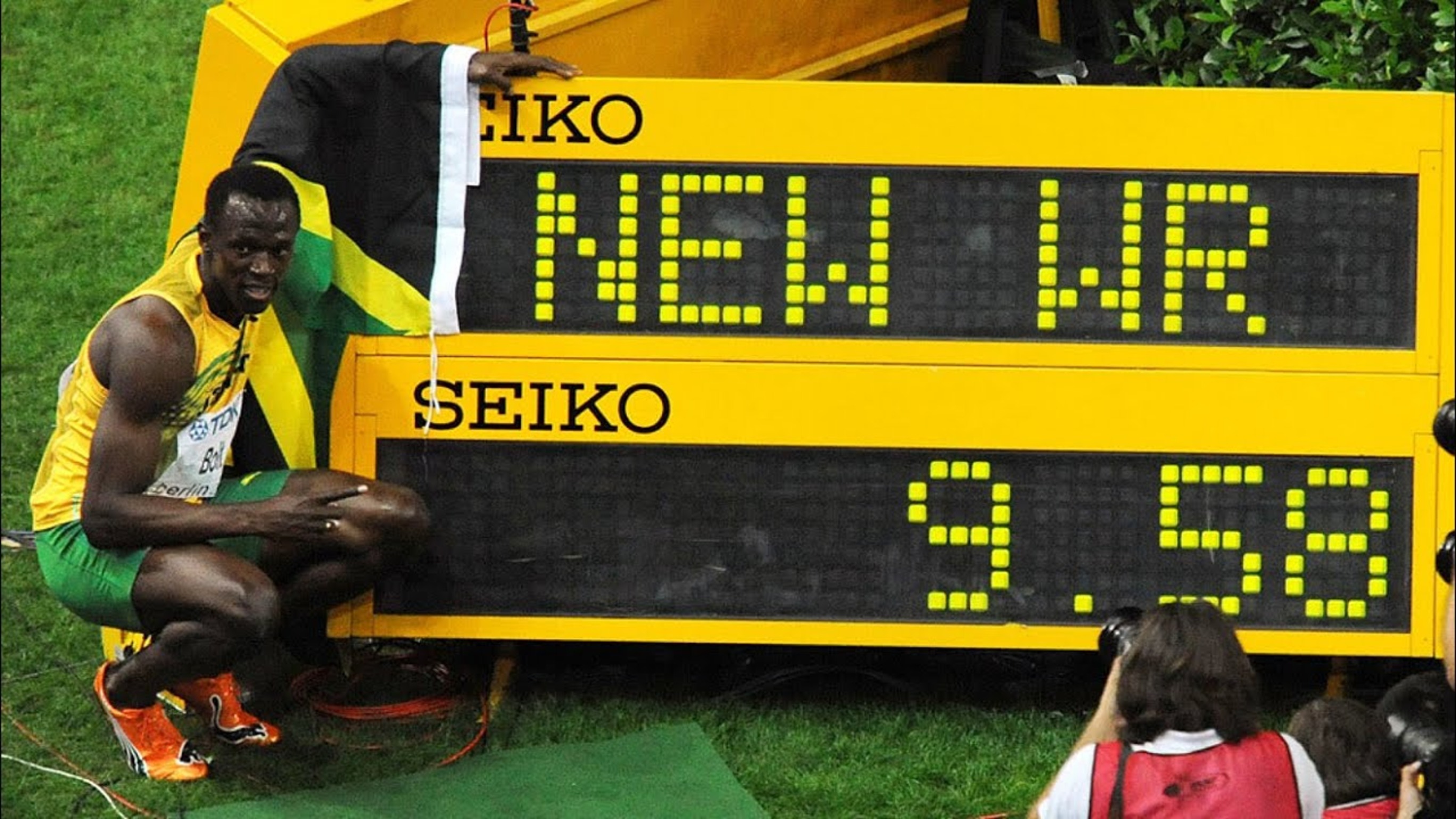
Usain Bolt ran the 100m in 9.58 seconds at the 2009 World Championships in Berlin. He also holds the 200m world record from that same meet, at 19.19 seconds, set the following night in front of a crowd that had already started to expect the impossible from him.
Both marks have now outlasted his entire retirement. Nobody's genuinely threatened either one.
The gap that hasn't closed
Since Bolt retired in 2017, the fastest 100m time by anyone else sits meaningfully behind 9.58. Sprinters like Noah Lyles have won Olympic and World titles in that window without getting near the actual number, often winning gold with times that would have left them well behind Bolt even in a race he wasn't trying particularly hard to win.
That's unusual for a track record. Most sprint marks get chipped at gradually as training, nutrition, and shoe technology improve. This one has mostly just sat there, occasionally approached, never seriously challenged, even as spike and track surface technology has generally improved across the sport since 2009.
Why this one might be different
Bolt wasn't just fast, he was built unusually for the event. At 6-foot-5, he was enormous by sprinter standards, which should theoretically cost a runner time out of the blocks and off the line. He turned that build into an advantage in the second half of the race instead, covering ground per stride that shorter sprinters simply can't replicate no matter how well they train or how hard they push their turnover.
Coaches have talked for years about how hard that specific combination is to find in another athlete. Height, top-end speed, and start technique rarely show up together in one body, and scouting systems across multiple countries still haven't reliably identified another candidate with the same profile.
The final 40 metres changed everything
The most striking part of Bolt's 9.58 wasn't even his start. He was only around fourth at the early stages of the race before his stride length began eating into the gap. By the final 40 metres, he had separated himself from the field and was still accelerating while others were already fighting to maintain their speed. That is what makes the record so difficult to chase: a future sprinter doesn't just need a better start or faster turnover. They need to find several tiny improvements across an entire race that was already run at a level the sport has rarely seen.
A record built to last, not broken deliberately
Bolt himself has said in interviews that he believes the record can be broken. He's just also been clear he doesn't think it'll happen soon, and nothing in the years since retirement has really contradicted that.
Track and field constantly promises the next great rival is coming, every Olympic cycle producing a fresh name tipped to finally close the gap. Seventeen years on from Berlin, that rival still hasn't shown up, and the record now feels less like a target and more like a fixture of the sport itself.
Does a record standing this long mean it was simply run by the best sprinter the sport has ever produced, or does it say more about a sport that hasn't found the next outlier body type yet?

Sarajevo Back at the Heart of Regional MMA: SFC Returns with Explosive Matchups

How Buzzer Karma Works: Levels, Penalties, and What They Mean

Inside Buzzer's Latest Update (and Why It Changes How You Use the App)

Buzzer Introduces Ads Console: A New Era of Advertising Across the Entire Buzzer Ecosystem

Buzzer Is Evolving: From Quantity to Quality

Buzzer Now Has a Games Hub, and Tournaments Are Coming

Polo Al Taco Expands Its Global Reach Through Weekly Livestreams on Buzzer Arena TV

Al Ittihad SC's Matches Are Now Live on Buzzer

Palm City vs Gulf United Ends in 1–1 Draw in UAE Second Division League Clash

"We Don't Take the Guy With the Camera." He Built His Own Club Anyway. Now He's Coming to Find You.


