




 3
3Hockey Uncovered: From Ancient Fields to Frozen Arenas
Hockey is not just a single sport, but a diverse family of games all united by the simple idea of moving a ball or puck with a stick toward a goal. Its origins trace back thousands of years, making hockey one of humanity’s oldest competitive traditions. From ancient civilizations to modern professional leagues, hockey has evolved into multiple forms, each shaped by environment, culture, and athletic requirements, offering unique styles of play and strategy.
The earliest roots of hockey appear in ancient Egypt, Greece, and Persia, where stick-and-ball games were played for recreation, ritual, and competition. Egyptian wall carvings nearly four thousand years old show figures striking balls with curved sticks. Similar games were seen across Europe, Asia, and the Americas, forming conceptual foundations for organized hockey. These games emphasized coordination, teamwork, and tactical thinking, qualities central to modern hockey.
Field hockey is considered the oldest modern form. Developed in nineteenth-century England, it standardized rules and formed clubs. Played on natural grass and later artificial turf, it emphasizes skill, precision passing, tactical movement, and endurance. Field hockey became an Olympic sport in 1908 and gained popularity in India, Pakistan, the Netherlands, Australia, Germany, and England. Prestigious tournaments like the Men’s and Women’s Hockey World Cups and the Olympics highlight national teams and the global reach of the sport.
Ice hockey emerged later in nineteenth-century Canada on frozen lakes and indoor rinks. Played on ice with skates and a puck, it is fast, highly physical, and intense. Professional leagues such as the NHL and international competitions including the IIHF World Championships and Winter Olympics feature elite players. Its speed, checking, and gameplay differ from field hockey, illustrating the diversity within the hockey family.
Roller hockey developed for indoor and urban play using quad or inline skates and hard surfaces, popular in Europe, North and South America. Street hockey emerged informally in neighborhoods, often played with a ball and local rules, making the sport accessible without formal infrastructure. Para ice hockey, introduced at the 1994 Winter Paralympics, allows athletes with disabilities to compete at high levels, expanding hockey’s inclusivity and global representation.
Today, hockey exists on grass, turf, ice, concrete, and indoor rinks worldwide. Governed by international federations and supported by professional leagues, it balances tradition with innovation. Whether on frozen arenas, sunlit fields, streets, or indoor rinks, hockey remains a universal language of speed, skill, and competition, connecting generations and cultures through passion and athletic spirit. Modern rules, technology, youth development programs, and professional leagues continue to expand hockey’s influence and maintain its relevance across continents for generations to come.

🔥 READ THIS BLOG UNTIL THE END… THE REASON MAY SURPRISE YOU 🔥

💡 How to Earn Money from Writing Blogs on Buzzer: Turn Your Words into Real Income! 💰📝

The Importance of Sports: Building Health, Discipline, and Community

🏀 The Ultimate History of Basketball: From Humble Beginnings to a Global Phenomenon 🌍✨
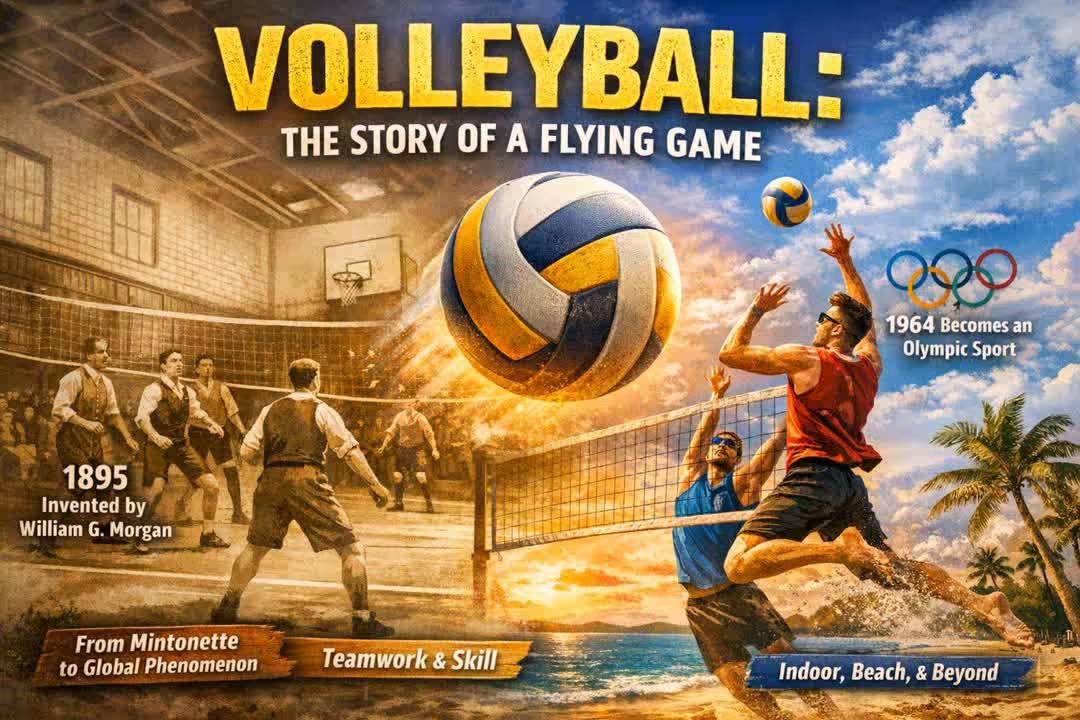
Volleyball: The Story of a Flying Game
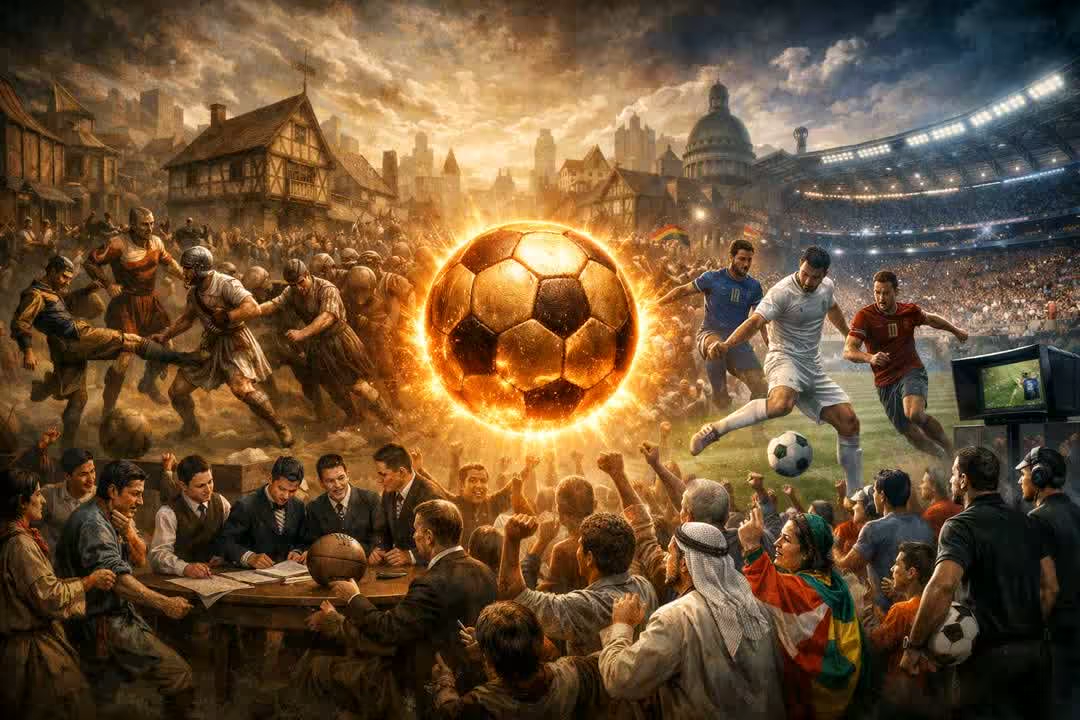
The Comprehensive History of Football: From Ancient Rituals to a Global Phenomenon
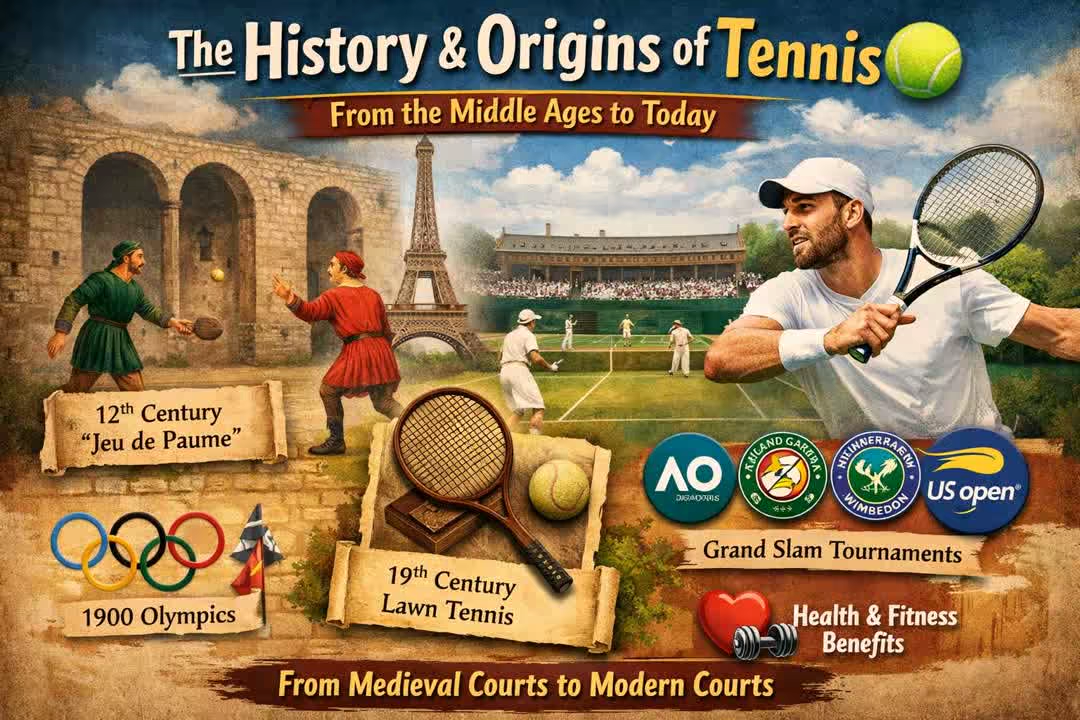
The History and Origins of Tennis 🎾


 31
31  10
10 
