





 1
F1 Just Found Out Madrid's New Track Might Be Too Hard for Its Own Good
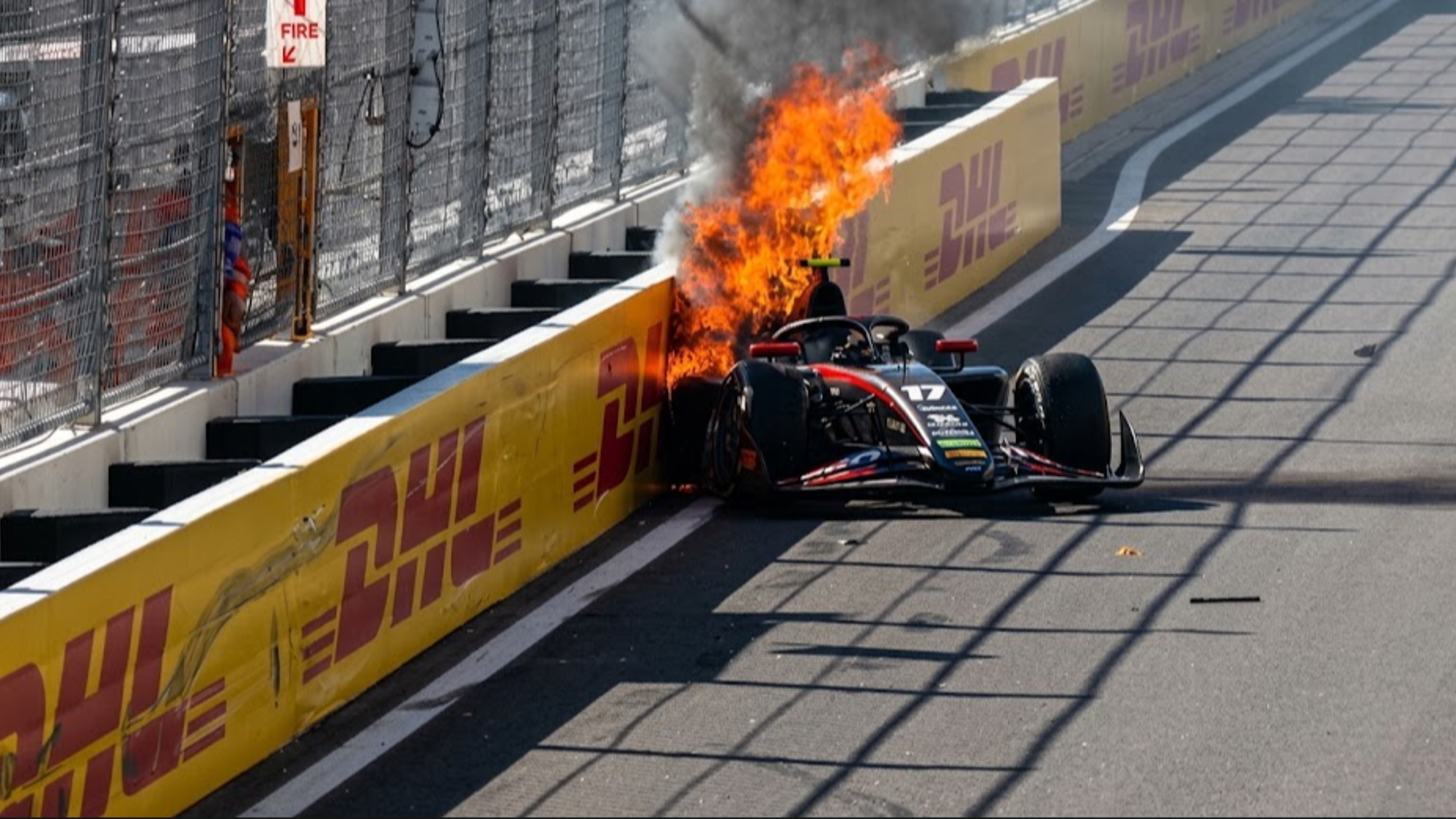
Formula 1 arrived in Madrid this weekend for the sport's first-ever race at the new Madring circuit, and within two practice sessions, two different drivers had already hit the wall.
The crashes tell you what the drivers were already saying
Arvid Lindblad became the first F1 driver ever to crash at Madring, sliding into the barriers at Turn 13 during second practice while running an impressive fourth place. Lewis Hamilton followed in final practice, hitting the wall hard enough to damage his Ferrari's front wing so badly he initially tried to drive it back to the garage unaware the wing was dragging underneath the car.
Both drivers described the same thing afterward. Lindblad called it "not an easy track." Kimi Antonelli, who topped both sessions, put it more precisely: "A real challenge for us as drivers, with lots of high-speed corners and walls close by. You need to be very precise with your lines and good on the brakes." That's not a complaint, exactly, but it's not a compliment either.
The difference between spectacular and actually good for racing
A circuit can look incredible on television, tight, fast, dramatic, and still be a poor racing surface if it punishes small mistakes too severely or makes overtaking nearly impossible. Barriers sitting close to the racing line at high speed sections don't just create dramatic crash footage, they discourage drivers from attacking a corner at the limit, which can flatten out the racing rather than improve it.
The best modern circuits tend to balance three things that pull against each other: enough width and run-off to let drivers push without instant, race-ending consequences for a small error, corner sequences that create genuine overtaking opportunities rather than just single-file processions, and enough visual drama that broadcasters and fans still find it compelling to watch.
What Madring gets right, even with the crashes
It's worth saying plainly, a tough opening weekend doesn't automatically mean a bad circuit. Several genuinely great tracks, Suzuka and Spa among them, built their reputations partly on being unforgiving. The early verdict from most drivers isn't that Madring is badly designed, it's that it's hard, and hard isn't automatically the same as flawed.
The real test comes Sunday. If qualifying and the race produce genuine battles rather than a procession punctuated by red flags, Madrid's inaugural weekend becomes a circuit fans want F1 to keep visiting. If Saturday and Sunday look like more of Friday, penalized mistakes and little else, the conversation shifts fast.
There is also a driver-safety trade-off F1 cannot ignore. A circuit that rewards absolute precision can produce spectacular racing, but when the penalty for a tiny mistake is immediate contact with a barrier, the line between demanding and unnecessarily dangerous becomes much harder to defend.
Should F1 keep adding tight, unforgiving street-style circuits like Madring to chase spectacle, or has the sport already learned from tracks like this that difficulty and good racing aren't the same thing?

Sarajevo Back at the Heart of Regional MMA: SFC Returns with Explosive Matchups

How Buzzer Karma Works: Levels, Penalties, and What They Mean

Inside Buzzer's Latest Update (and Why It Changes How You Use the App)

Buzzer Introduces Ads Console: A New Era of Advertising Across the Entire Buzzer Ecosystem

Buzzer Is Evolving: From Quantity to Quality

Buzzer Now Has a Games Hub, and Tournaments Are Coming

Polo Al Taco Expands Its Global Reach Through Weekly Livestreams on Buzzer Arena TV

Al Ittihad SC's Matches Are Now Live on Buzzer

Palm City vs Gulf United Ends in 1–1 Draw in UAE Second Division League Clash

"We Don't Take the Guy With the Camera." He Built His Own Club Anyway. Now He's Coming to Find You.


 2


