





 0
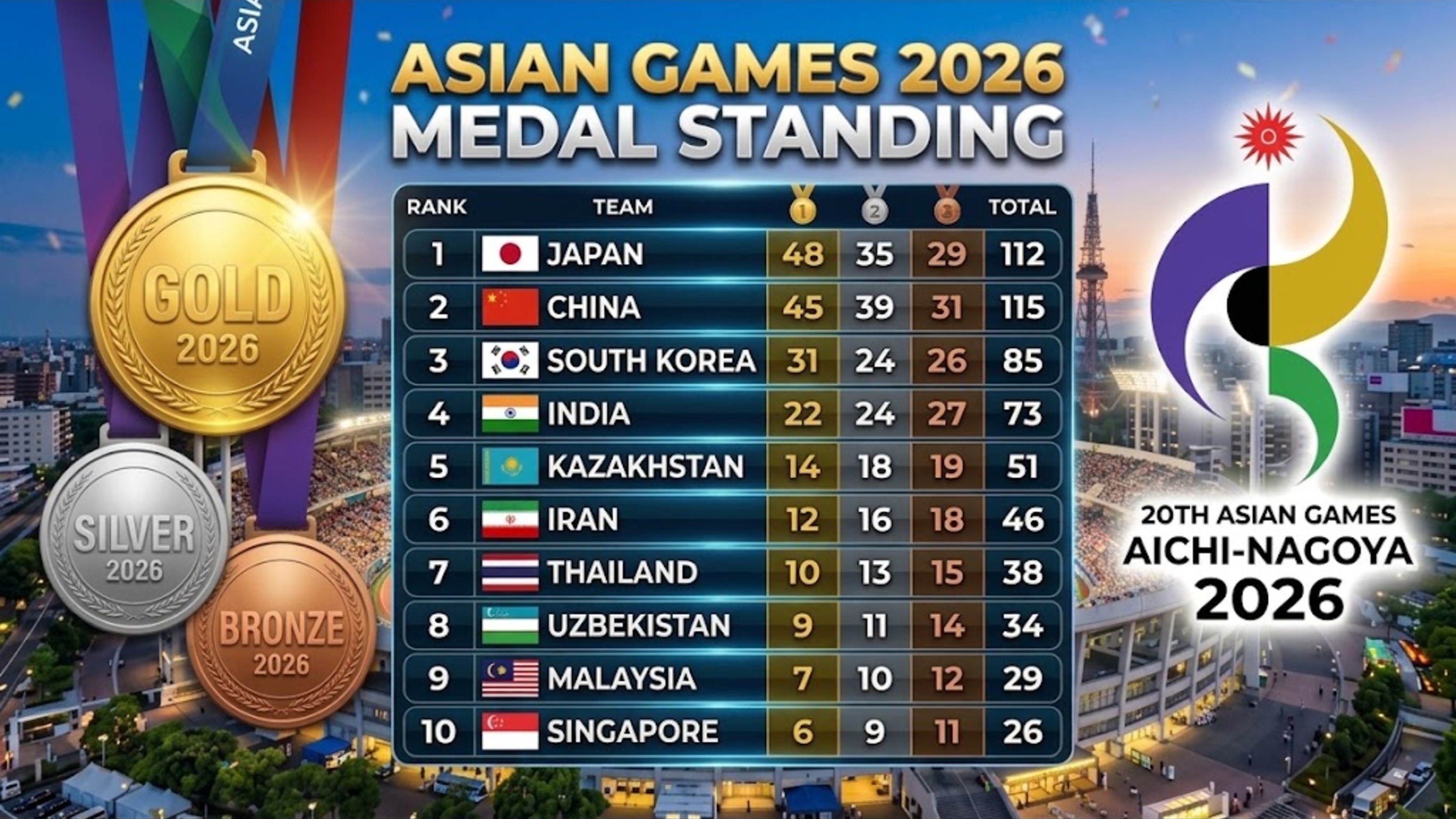
Forget the Asian Games Medal Table. The Real Story Is What Each Country Chose to Send.
Look past the gold-silver-bronze columns at Aichi-Nagoya and a different picture emerges: which sports each of the 45 participating nations chose to invest their strongest delegations in reveals far more about their sporting cultures and development priorities than any medal count ever could. India sending its full-strength women's cricket squad. China fielding a 13-year-old already dominant enough to beat Olympic medalists. Indonesia and China both treating badminton as close to a national institution. None of that shows up as a single number on a medal table, and all of it matters more than the table does.
That's the actual value the Asian Games offers beyond its function as a simple continental leaderboard.
Why medal tables flatten what's actually interesting
A medal table treats every gold medal as equivalent, a badminton title worth the same single point as a swimming title or a wrestling title. That equivalence obscures something genuinely revealing: which sports a country chooses to prioritize with its best available talent and resources says far more about that nation's sporting identity and development infrastructure than the medal itself does.
China sending Yu Zidi, a 13-year-old already training at a level that beats grown Olympic medalists, reflects a systemic youth development apparatus built to identify and fast-track elite talent years ahead of most countries' comparable systems. That infrastructure story doesn't appear anywhere on a medal table, even though it's arguably the more significant long-term signal.
What a country's delegation choices actually reveal
India fielding its genuine first-choice women's cricket squad, rather than a reserve team, at an event it once treated as optional, reflects a specific strategic calculation tied to cricket's Olympic return at LA28, not simply a desire to win Asian Games gold for its own sake. That's a data point about institutional priorities and long-term planning, not really about cricket itself.
Japan's own accommodation crisis, thousands of athletes housed in hotels, a cruise ship, and undersized temporary containers after organizers decided against a traditional athletes' village, reveals something about hosting priorities and cost management that has nothing to do with which countries win medals, yet says something genuinely important about how a nation approaches staging a mega-event on this scale.
Why this framing matters for how the Games should actually be covered
Reducing an event this large to a running gold-count tally misses almost everything actually interesting about it: development systems, cultural priorities, institutional strategy, and genuine human stories like a 13-year-old phenom or a refugee team competing for the first time in the event's history. None of those threads live inside a medal table, and all of them explain far more about Asian sport's current state than knowing which country finished with the most golds.
Does treating the Asian Games primarily as a medal-count competition actually undersell what the event reveals about the 45 participating nations' sporting cultures and priorities, or is a clean, comparable leaderboard still the fairest and most useful way to measure what actually happened across two weeks of competition?

Sarajevo Back at the Heart of Regional MMA: SFC Returns with Explosive Matchups

How Buzzer Karma Works: Levels, Penalties, and What They Mean

Inside Buzzer's Latest Update (and Why It Changes How You Use the App)

Buzzer Introduces Ads Console: A New Era of Advertising Across the Entire Buzzer Ecosystem

Buzzer Is Evolving: From Quantity to Quality

Buzzer Now Has a Games Hub, and Tournaments Are Coming

Polo Al Taco Expands Its Global Reach Through Weekly Livestreams on Buzzer Arena TV

Al Ittihad SC's Matches Are Now Live on Buzzer

Palm City vs Gulf United Ends in 1–1 Draw in UAE Second Division League Clash

"We Don't Take the Guy With the Camera." He Built His Own Club Anyway. Now He's Coming to Find You.


 1


