





 0
Cricket Is Back at the Asian Games. For Japan, Just Fielding a Team Is the Real Achievement.
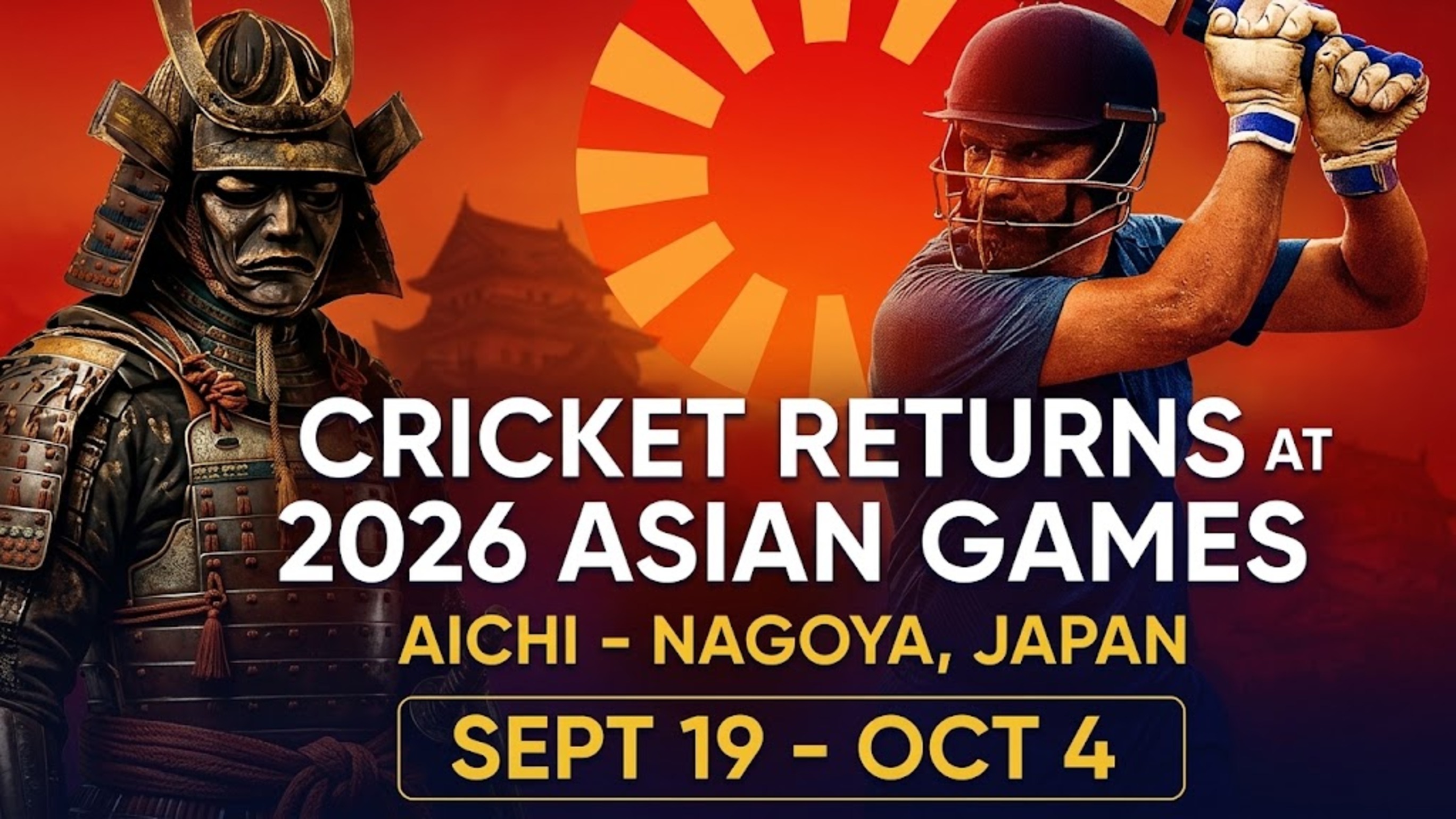
Cricket returns to the Asian Games program in Aichi-Nagoya this year, part of the sport's broader push back toward global relevance ahead of its return to the Olympics in Los Angeles in 2028, for the first time since 1900. For most competing nations, that's a story about elite performance. For Japan, it's a story about simply having a team capable of showing up.
Japan's men's team, ranked 42nd in the world, and women's team, ranked 43rd, are entirely amateur. The national cricket association operates out of a disused high school roughly 100 kilometres outside Tokyo.
What building the sport from nothing actually looks like
Kurumi Ota is part of Japan's squad for these Games, having first represented the country at the 2010 Asian Games, where Japan won bronze, and again in 2014. Her international appearances since have come in occasional bursts rather than a continuous career, a pattern common among Japan's cricketers, who fit competition around full-time jobs and lives that have nothing to do with the sport.
Japan's men's squad has included players like Shogo Kimura, a former professional baseball player who took up cricket in 2017 after a 14-year career in some of Japan's biggest baseball organizations, well into adulthood and with zero prior cricket background. That's not the profile of a development pathway. It's the profile of a sport still actively recruiting athletes from other games entirely.
Why the Olympics matters more to Japan than to most
Captain Mai Yanagida was direct about what visibility actually means for a sport this far from the mainstream in its home country. "It will be in the news as an Olympic sport so the media can help the name cricket become more widely known," she said. For established cricket nations, Olympic inclusion is a nice-to-have. For Japan, it may be the single biggest lever available to grow a fan base that barely exists yet.
Qualifying for Los Angeles 2028 remains a genuinely tall order given Japan's current world rankings. Association officials have openly acknowledged that organizing matches against teams outside Asia is logistically difficult when the sport has so little established infrastructure to work with.
What Asian Games inclusion actually buys
For India, Sri Lanka and Pakistan, this tournament is a chance to compete at full strength on home continental turf. For Japan, it's something closer to survival oxygen: a rare opportunity to play internationally, in front of domestic media, at a moment when the sport's Olympic return could finally give it a reason to exist beyond a handful of committed amateurs training out of a repurposed school building.
For Japan, every international appearance is therefore less about winning now and more about proving the sport can build a future.
What would it actually take for a genuinely amateur cricket program like Japan's to become competitive on the world stage, and is Olympic inclusion enough on its own to build that infrastructure, or does it just buy the sport a few more years of visibility while the real work stays undone?

Sarajevo Back at the Heart of Regional MMA: SFC Returns with Explosive Matchups

How Buzzer Karma Works: Levels, Penalties, and What They Mean

Inside Buzzer's Latest Update (and Why It Changes How You Use the App)

Buzzer Introduces Ads Console: A New Era of Advertising Across the Entire Buzzer Ecosystem

Buzzer Is Evolving: From Quantity to Quality

Buzzer Now Has a Games Hub, and Tournaments Are Coming

Polo Al Taco Expands Its Global Reach Through Weekly Livestreams on Buzzer Arena TV

Al Ittihad SC's Matches Are Now Live on Buzzer

Palm City vs Gulf United Ends in 1–1 Draw in UAE Second Division League Clash

"We Don't Take the Guy With the Camera." He Built His Own Club Anyway. Now He's Coming to Find You.


 1


