




 0
0
Why Did F1 Stop Racing on the Tracks It Used to Love?
The original Spa-Francorchamps circuit in Belgium stretched roughly 14 kilometres through public roads and forest, a lap so long that drivers could spend nearly four minutes flat out before crossing the line again.
The version F1 races on today is 7.004 kilometres, half the length. Spa isn’t unusual in that regard. Some of the sport’s most famous tracks have been cut down dramatically from what they used to be, and the reason almost always comes down to the same word: safety.
The Nürburgring’s Green Hell
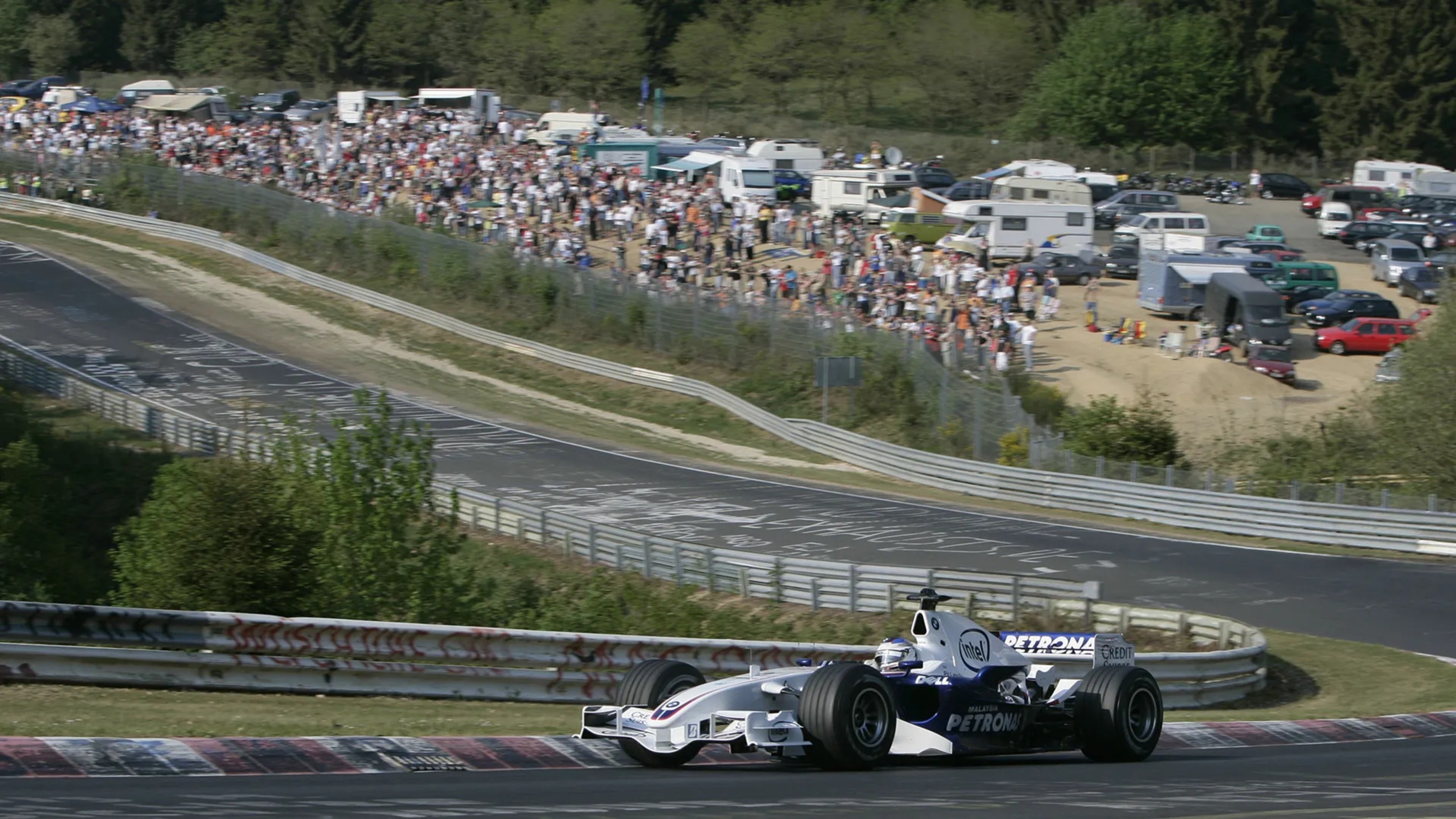
No circuit illustrates the shift better than the Nürburgring. The original Nordschleife, nicknamed the Green Hell by Jackie Stewart, ran for roughly 22.8 kilometres through the forests of the Eifel mountains, packed with blind crests and corners where a crash could leave a driver waiting minutes for help to arrive.
Niki Lauda’s horrific fiery crash there in 1976, which nearly killed him and left him permanently scarred, effectively ended F1’s relationship with the full circuit. The sport moved to a much shorter, purpose-built Grand Prix circuit nearby, just over 5 kilometres long, with proper run-off areas and quick access for medical crews.
A pattern repeated at circuit after circuit
Spa went through its own version of this. The old circuit’s high-speed public road sections, including the notorious Masta Kink, a full-throttle chicane between farmhouses, produced a string of fatal and near-fatal accidents through the 1960s. F1 stopped racing there entirely for several years before a shorter, safer layout reopened in 1983.
Monza added chicanes to slow cars through what used to be pure high-speed banking and straights. Silverstone has been redesigned multiple times since the 1990s, adding tighter, more technical sections in place of the flat-out corners that once made it one of the fastest circuits on the calendar.
In nearly every case, the change followed the same pattern: a serious accident, sometimes a fatal one, followed by a redesign that prioritised runoff space and slower entry speeds over raw length and speed.
A trade fans still argue about
The safety case is straightforward and difficult to argue with. Modern circuits have saved lives that the old layouts almost certainly would have cost, especially as cars have gotten dramatically faster over the decades.
But something has been lost too. Older fans who remember watching cars disappear into the Ardennes forest at Spa or vanish over blind crests at the old Nürburgring often describe those tracks with a kind of reverence modern circuits rarely earn, precisely because they demanded a form of bravery that’s no longer part of the sport.
F1 still visits a shortened version of Spa every year, and the Nürburgring’s old Nordschleife survives today mostly as a tourist attraction and a testing ground for road cars, open to the public on weekends in a way it never quite was for Grand Prix drivers.
The old Nordschleife in particular has taken on a strange second life. Car manufacturers now use it constantly to test road cars under punishing conditions, since a lap that once terrified F1 drivers is considered an excellent stress test for suspension and brakes on production vehicles. Enthusiasts pay to drive their own cars around it on public track days, chasing the same corners that once ended championship campaigns, just at speeds and with safety margins the sport’s original drivers never had available to them.
Is it worth losing some of the sport’s most legendary, dangerous circuits if it means drivers walk away from crashes that once would have killed them?


