





 2
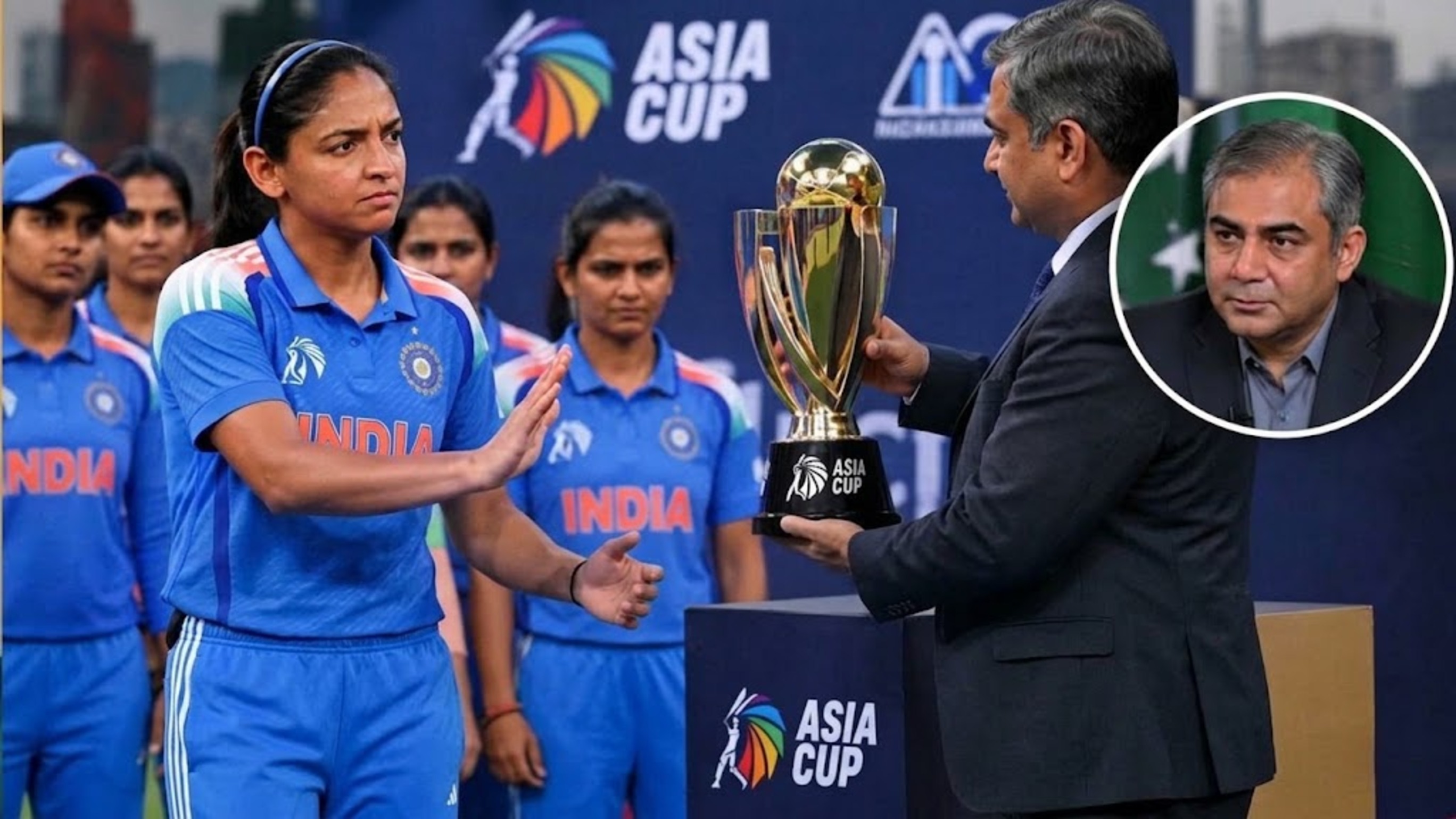
India Won the Asia Cup. Nobody Came for the Trophy. why?
India beat Sri Lanka by 72 runs in Dubai on Sunday to win a record eighth Women's Asia Cup title. Harmanpreet Kaur's side dominated from the first innings, and by the time the match ended, there was no real argument about who deserved to lift the trophy.
What happened next delayed the celebration by close to 50 minutes.
A presentation that never finished
Asian Cricket Council president Mohsin Naqvi, who also chairs the Pakistan Cricket Board and serves as Pakistan's interior minister, was on the dais to hand over the trophy. India's players stayed in the dressing room. Sri Lanka collected their runners-up medals and cheque from Naqvi without issue. The India side didn't come out at all.
Reports at the time suggested Indian officials were willing to accept the trophy from a different ACC representative, but Naqvi remained the designated presenter and the standoff never resolved. The ceremony eventually ended with no trophy handed over and no Indian players on the stage.
This has happened before
The scene echoed the men's Asia Cup final in Dubai just under a year earlier, when India beat Pakistan and their players similarly declined to receive the trophy from Naqvi. BCCI secretary Devajit Saikia said at the time that the board had "decided not to take it from him," directly citing Naqvi's political role rather than anything to do with the cricket itself. That trophy sat unclaimed at ACC headquarters in Dubai for weeks afterward, part of a wider dispute that eventually reached an ICC meeting.
A near-identical scene playing out twice in under a year, in the same city, over the same official, is no longer a one-off. It's become the expected outcome whenever an India-organized Asia Cup final and Naqvi's presence collide.
The awkwardness is bigger than one missing photo. Trophy presentations are supposed to be the simplest part of a final: the match is over, the result is settled, and the winning captain gets the silverware. Instead, the Asia Cup has now created a second ritual, where everyone waits to see whether the ceremony itself can survive the politics surrounding it.
Where the sport and the politics actually meet
Cricket boards, particularly the ACC, exist specifically to keep the game functioning across a region where several of its member nations have complicated, sometimes openly hostile, diplomatic relationships. Most of the time that arrangement works quietly in the background. Twice now, it hasn't.
What makes this genuinely difficult for cricket is that there's no clean administrative fix sitting behind it. Naqvi holds his ACC position through the normal channels member boards agreed to. India's objection isn't about how he does that job. It's about a title he holds entirely outside cricket.
India are, on the field, the record eighth-time Women's Asia Cup champions, and nothing about Sunday's ceremony changes that. What it does change is how the next handover gets planned, and whether the ACC finds a structure that lets the cricket end with an actual trophy in the winning captain's hands.

Sarajevo Back at the Heart of Regional MMA: SFC Returns with Explosive Matchups

How Buzzer Karma Works: Levels, Penalties, and What They Mean

Inside Buzzer's Latest Update (and Why It Changes How You Use the App)

Buzzer Introduces Ads Console: A New Era of Advertising Across the Entire Buzzer Ecosystem

Buzzer Is Evolving: From Quantity to Quality

Buzzer Now Has a Games Hub, and Tournaments Are Coming

Polo Al Taco Expands Its Global Reach Through Weekly Livestreams on Buzzer Arena TV

Al Ittihad SC's Matches Are Now Live on Buzzer

Palm City vs Gulf United Ends in 1–1 Draw in UAE Second Division League Clash

"We Don't Take the Guy With the Camera." He Built His Own Club Anyway. Now He's Coming to Find You.


 1


