




 1
1
The Racing Car That Was Too Good for Its Own Sport
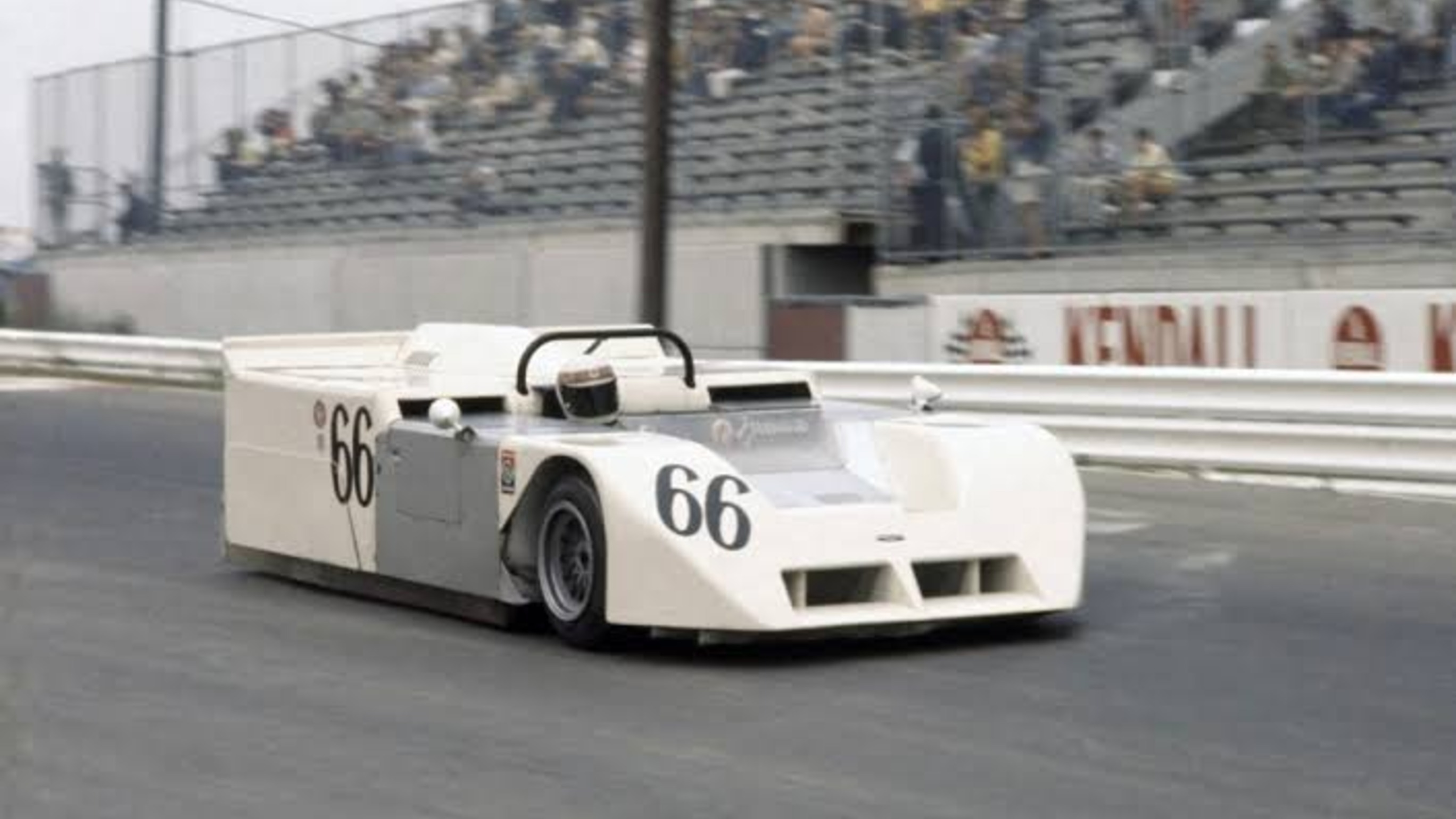
In 1970, a Texas oilman named Jim Hall built a race car with two engines. One powered the wheels. The other, a small snowmobile engine mounted at the back, drove a pair of large fans whose only job was to suck air out from underneath the car and physically press it down onto the track.
It worked so well that rivals nicknamed it the vacuum cleaner and was banned only after a single season.
An idea that shouldn’t have worked as well as it did
Hall’s Chaparral 2J competed in the Can-Am series, a wide-open sports car championship that allowed teams enormous freedom to experiment with radical engineering.
The 2J sealed its sides to the ground with flexible plastic skirts, then used its fan system to create a low-pressure zone underneath the entire car, generating downforce that had nothing to do with wings or body shape and almost everything to do with a machine that was, quite literally, sucking itself onto the road.
When it worked, nothing else on the grid came close. The car regularly qualified seconds ahead of the previously dominant McLarens, an almost unheard-of margin in a series stacked with serious factory-backed competition. Reliability problems with the fan system’s small auxiliary engine meant it didn’t always finish races, but when it ran clean, it was simply a different category of fast.
Banned for being unbeatable
Rival teams complained loudly, and officially the concerns raised were about safety, since the fans could pick up loose track debris and fire it out behind the car at high speed toward following drivers.
Unofficially, most observers at the time understood the real issue: the Chaparral 2J had exposed a loophole nobody else had thought to exploit, and it was making the rest of the field look outdated. Before the start of the 1971 season, the sport’s governing body banned engines used for anything other than directly powering the car, effectively outlawing the 2J’s entire concept in a single rule change.
An idea too good to stay buried
The concept didn’t disappear so much as go quiet for a few years. In 1978, Formula 1 designer Gordon Murray revived essentially the same fan-car principle with the Brabham BT46B, built for Niki Lauda and Ferrari’s John Watson’s teammate at the time. It won its very first race, the Swedish Grand Prix, before rival F1 teams protested loudly enough that Brabham withdrew the design entirely rather than fight a prolonged battle over its legality.
Both cars share the same basic story: a piece of engineering so effective that it didn’t just win races, it forced the people who wrote the rules to intervene and shut it down before it could win anything else. It’s one of the clearest examples in motorsport history of a car being banned not because it was dangerous or against the spirit of the rules, but simply because nobody had built anything capable of beating it.
A legacy that outlived the ban
The idea has never fully gone away since. Engineers have revisited fan-generated downforce in concept cars and even road-going hypercars decades later, treating the Chaparral 2J’s basic principle as a kind of forbidden fruit worth returning to whenever regulations allow it.
Jim Hall himself moved on to a long, successful career in IndyCar racing after retiring the Chaparral sports car programme, but the 2J remained the car most associated with his name, a machine that spent barely a season on track yet is still discussed more than fifty years later.
That’s the strange afterlife of a banned innovation: it never got the chance to prove itself over a full career, so its reputation is built almost entirely on a handful of races where it looked genuinely unbeatable, and on the rule change that made sure nobody would ever find out just how far ahead of the field it really was.
Should a sport ban an innovation purely because it’s too dominant, even when it isn’t clearly breaking any rule that existed before it arrived?


