

 0
0
People Sleep in Tents for Days to Buy Tickets They Could Get Online
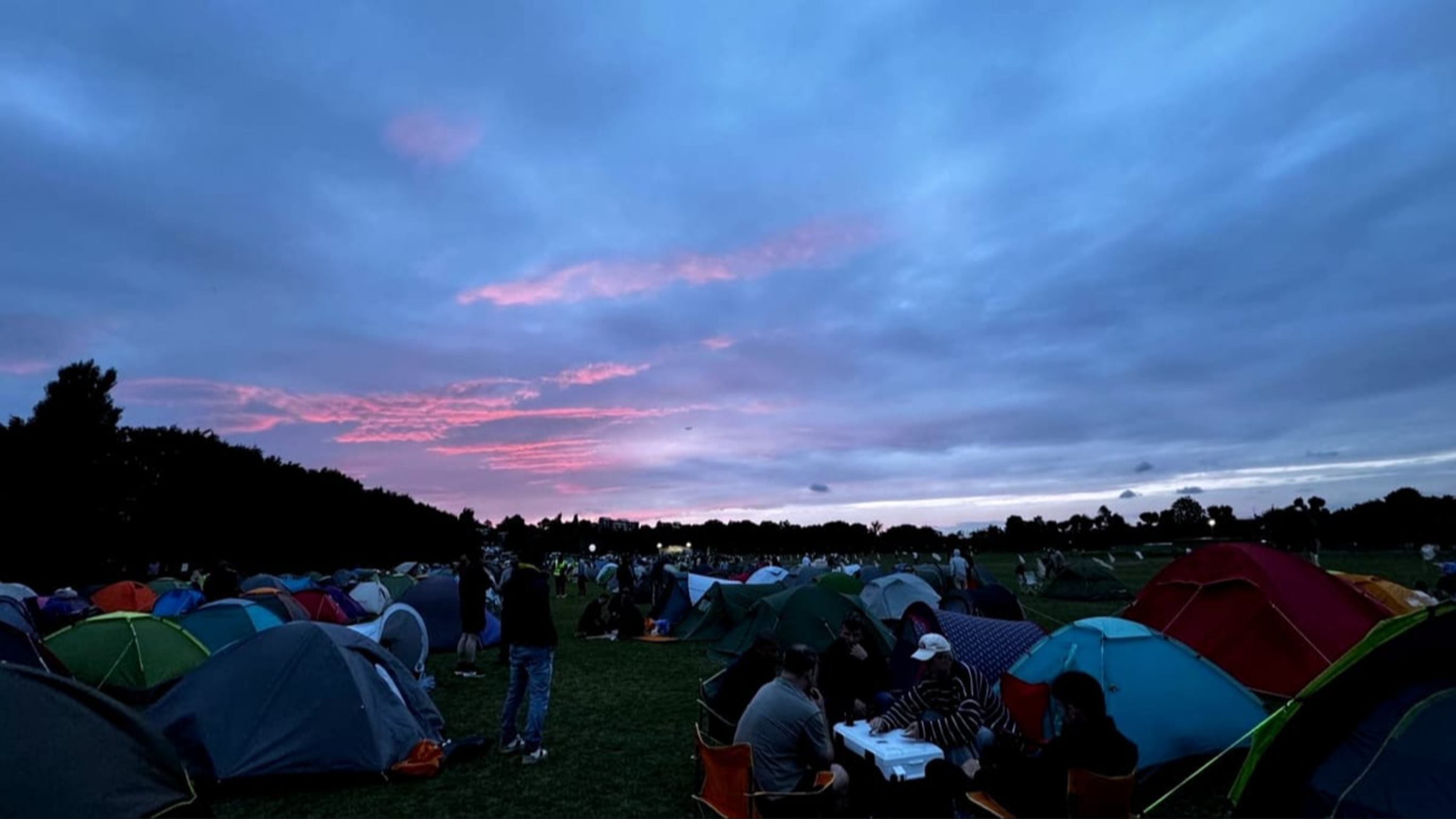
Every year during Wimbledon, thousands of tennis fans voluntarily camp overnight in a field, sometimes for multiple nights running, for the chance to buy same-day tickets to matches most of them could theoretically try to access through other channels.
Historian Richard Jones has traced documented evidence of people queuing to watch Wimbledon back to at least 1927, when over 2,000 people were reportedly turned away for lack of space.
Nearly a century later, in an era of instant online ticketing and mobile apps for practically everything, the queue hasn’t just survived. It’s become one of the tournament’s most beloved traditions in its own right.
More organized chaos than it looks
For decades, the queue operated informally, tents pitched directly on the sidewalk outside the All England Club’s gates, growing steadily less manageable as popularity increased.
Nick Pearce, the club’s chief steward, has described the practical problem plainly: “It was great, but it wasn’t terribly comfortable for people, and potentially the stewards might have got hit by cars.” In 2008, the entire operation moved to the more spacious Wimbledon Park, where it’s since been formalized into a genuinely elaborate system.
Arriving fans now receive a numbered Queue Card marking their position, and stewards enforce strict rules, including a 30-minute limit on how long anyone can leave their tent unattended before facing removal from the line entirely.
Since 2026, joining requires downloading the official Wimbledon app and creating an account before arrival, a modern layer of digital infrastructure wrapped entirely around an analog tradition that predates the smartphone by roughly eighty years.
Why people keep choosing to do this
The practical explanation is straightforward: Wimbledon reserves a genuine allotment of same-day tickets, including premium seats on Centre Court and Court One, specifically for people willing to queue, tickets that aren’t otherwise available through the public ballot system. For fans who miss out on that ballot months in advance, the queue remains one of the only realistic paths to watching marquee matches in person.
But the practical explanation only tells part of the story. Viv Kean, a 69-year-old fan who’s attended nearly every year since 1983, described her relationship to the tradition in terms that go well beyond ticket access: “I spent my 50th birthday and my 60th birthday out here. It’s almost more about the queue than about the tennis these days.”
Harry Taylor, a pub owner who’s joined every year since 1992, has built genuine lasting friendships with people he only ever sees in that specific field once a year, people from Australia, New Zealand, and America who happen to reconvene at the same patch of grass every summer.
A tradition that resists modernization on purpose
What makes Wimbledon’s queue genuinely unusual is how deliberately the tournament has preserved it rather than simply digitizing the process entirely, which would be technically trivial for an organization running one of the world’s most prestigious sporting events. No other major sporting event maintains anything quite like it. There’s no comparable tent city outside a Super Bowl stadium or Augusta National’s gates.
The All England Club appears to understand something about why the queue works that a purely efficient digital alternative would lose entirely: the shared discomfort, the overnight camaraderie between strangers, the sense of having earned a ticket through genuine physical commitment rather than a lucky refresh of a webpage.
In an era when nearly every other inconvenience in modern life has been engineered away, Wimbledon has chosen to preserve one on purpose.
Would something valuable be lost if Wimbledon eventually replaced the physical queue with a purely digital system, or is the tradition worth preserving specifically because it resists the convenience every other part of modern life optimizes for?


 1
1