





 0
What Happens to an Athlete's Body After Two Years Away From Competition?
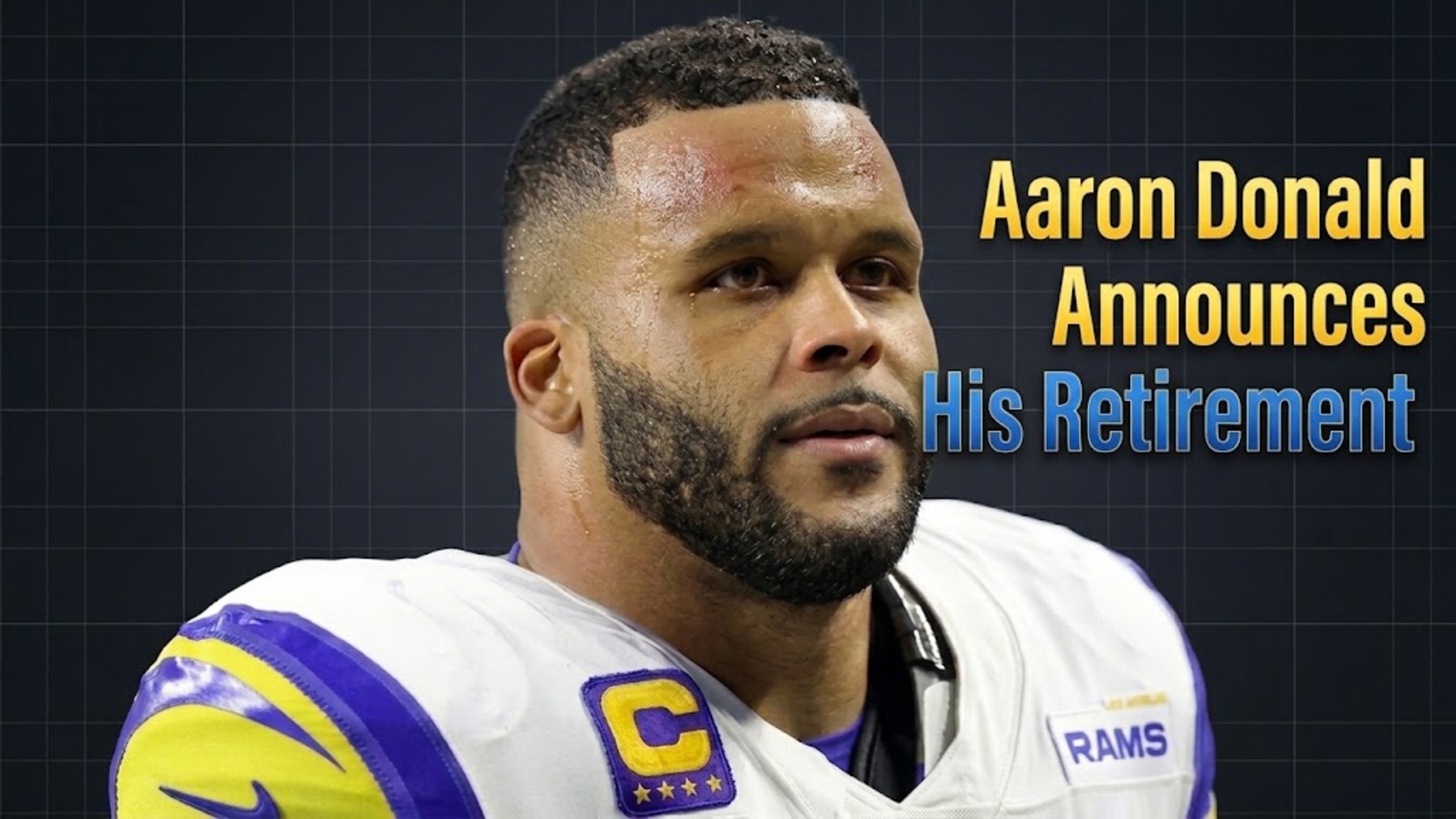
When Aaron Donald retired from the NFL in 2024, it appeared to be the end of one of the most dominant defensive careers of his generation. More than two years later, the 35-year-old is back with the Los Angeles Rams, preparing to return to one of the world's most physically demanding sports. His comeback raises a fascinating question: what actually happens to an elite athlete's body when competition suddenly stops?
The Body Does Not Simply Forget
Elite athletes spend years adapting their bodies to extraordinary workloads. Strength, cardiovascular fitness, movement efficiency and sport-specific coordination are built through repeated training, and when that stimulus disappears, some of those adaptations begin to decline.
Research on detraining shows measurable losses in aerobic fitness and muscular strength after periods away from structured training. The longer the break, the more complicated the challenge becomes because an athlete must rebuild performance without overwhelming a body that has become accustomed to a different level of stress.
Two Years Is a Different Challenge
A professional athlete taking several weeks away from competition is not facing the same problem as someone returning after multiple years. For a football player, the challenge is particularly demanding because the body must handle explosive movements, rapid changes of direction and repeated collisions.
That is why Donald's return has involved a controlled preparation process rather than simply stepping back onto the field. The Rams have been monitoring his conditioning and football-specific work as they determine whether his body can handle the demands of an NFL season.
Muscle Memory Helps, But It Isn't Magic
One advantage elite athletes possess is that they are not starting from zero. Years of technical practice create deeply established movement patterns, while previous strength and conditioning experience can make rebuilding easier than beginning from scratch.
But muscle memory cannot erase ageing or inactivity. Tendons, joints, connective tissue and recovery systems still have to cope with elite competition, particularly when an athlete is returning in their mid-30s.
The Biggest Test May Not Be Strength
For Donald, the question isn't simply whether he can lift weights or complete a conditioning session. It is whether his body can repeatedly absorb the explosive movements of an NFL game, recover between plays and then recover again in the days that follow.
Training and competition are not identical. An athlete can look physically impressive in controlled workouts while still needing time to rediscover the reactions, timing and physical tolerance required when everything happens at full speed.
Can Time Away Actually Help?
Retirement isn't necessarily entirely negative for an ageing athlete. Time away from competition can remove some of the accumulated physical and psychological stress of a long career, potentially giving the body an opportunity to recover from years of demanding competition.
Donald has also had the opportunity to train on his own terms before deciding whether he wanted to return. That makes his comeback less about simply reversing retirement and more about testing whether an elite athlete can rebuild enough of his old capacity to compete again.
The Comeback Is the Real Experiment
Donald has already completed the psychological step of deciding that he still wants to play. Now the real test begins when controlled preparation gives way to the unpredictable intensity of an NFL game.
His return could become another remarkable chapter in a Hall of Fame career. But it could also reveal something much bigger about elite sport: how much of greatness survives when competition stops, and how much can an athlete actually rebuild when the body has had years to change?

Sarajevo Back at the Heart of Regional MMA: SFC Returns with Explosive Matchups

How Buzzer Karma Works: Levels, Penalties, and What They Mean

Inside Buzzer's Latest Update (and Why It Changes How You Use the App)

Buzzer Introduces Ads Console: A New Era of Advertising Across the Entire Buzzer Ecosystem

Buzzer Is Evolving: From Quantity to Quality

Buzzer Now Has a Games Hub, and Tournaments Are Coming

Polo Al Taco Expands Its Global Reach Through Weekly Livestreams on Buzzer Arena TV

Al Ittihad SC's Matches Are Now Live on Buzzer

Palm City vs Gulf United Ends in 1–1 Draw in UAE Second Division League Clash

"We Don't Take the Guy With the Camera." He Built His Own Club Anyway. Now He's Coming to Find You.


