





 0
Serena and Venus Returned to the US Open and the Audience Followed
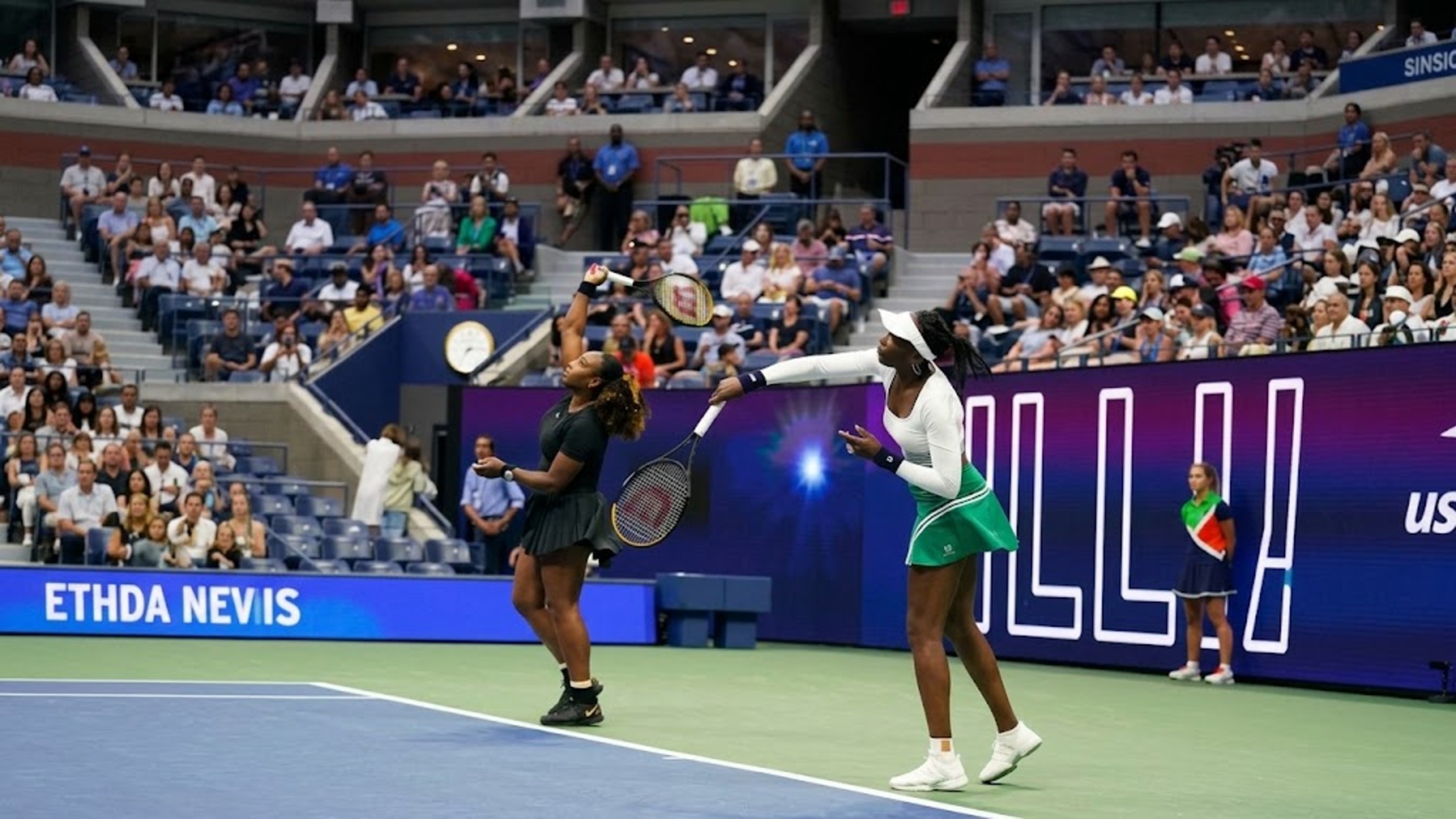
Serena and Venus Williams lost in the first round of US Open women's doubles. By any competitive measure, that's a minor result buried deep in a bracket of dozens of teams. It was also one of the most talked-about matches of the entire tournament.
That gap, between the result and the reaction, tells you something about what actually drives attention in sports right now. It isn't always the scoreline.
A reunion four years in the making
This was the sisters' first US Open match together since 2022, and their first doubles appearance as a pair at any Grand Slam in four years. They received a wildcard into the draw after playing together for the first time in that stretch at the Cincinnati Open, and Serena, at 44, is mid-comeback after several years away from the sport entirely following an injury-forced Wimbledon withdrawal.
The match itself delivered genuine drama. Facing Hao-Ching Chan and Maya Joint, the sisters blew a 5-0 lead in a deciding tiebreak before falling 6-3, 6-7(6), 7-6(10-7). Three hours of tennis, a raucous Arthur Ashe crowd, and a result that meant nothing for the draw but everything for the room.
Why the crowd showed up for a doubles match
Serena and Venus won 14 major doubles titles together and a combined 30 singles titles, including two US Open doubles crowns in 1999 and 2009 on this exact court. That history doesn't disappear because one player is 44 and the other, at 45 or 46 depending on the tournament, is playing what could be her final singles appearance in New York.
Crowds don't just show up for current ranking. They show up for stakes they understand emotionally, and few storylines in tennis carry more emotional weight than watching two of the sport's defining figures share a court one more time.
The business logic underneath the sentiment
Wildcards for aging legends often get dismissed as sentimental gestures that dilute competitive integrity. But a doubles match generating this much attention, with tournament organizers actively choosing to program it prominently, suggests the calculation runs the other way. Nostalgia sells tickets and drives eyeballs in a way plenty of higher-ranked, lower-name-recognition matchups simply don't.
Tennis has fewer transcendent global stars than it used to, and the sport clearly knows it. Bringing back two of the biggest names it has ever produced, even briefly and even in doubles, is as much a business decision as a tribute.
What this says about legacy in sport generally
The Williams sisters didn't need to win this match to matter. Their presence alone reshaped what people were paying attention to that day, regardless of who advanced.
That is the strange power of sporting legacy: sometimes the biggest draw is not what an athlete might accomplish next, but everything the audience remembers them accomplishing before. The Williams sisters can still create an event simply by stepping back onto the court.
When does a legacy player's presence become more valuable to a sport than their actual competitive output, and is that a good thing or a slightly uncomfortable one?

Sarajevo Back at the Heart of Regional MMA: SFC Returns with Explosive Matchups

How Buzzer Karma Works: Levels, Penalties, and What They Mean

Inside Buzzer's Latest Update (and Why It Changes How You Use the App)

Buzzer Introduces Ads Console: A New Era of Advertising Across the Entire Buzzer Ecosystem

Buzzer Is Evolving: From Quantity to Quality

Buzzer Now Has a Games Hub, and Tournaments Are Coming

Polo Al Taco Expands Its Global Reach Through Weekly Livestreams on Buzzer Arena TV

Al Ittihad SC's Matches Are Now Live on Buzzer

Palm City vs Gulf United Ends in 1–1 Draw in UAE Second Division League Clash

"We Don't Take the Guy With the Camera." He Built His Own Club Anyway. Now He's Coming to Find You.


 1


