




 1
1
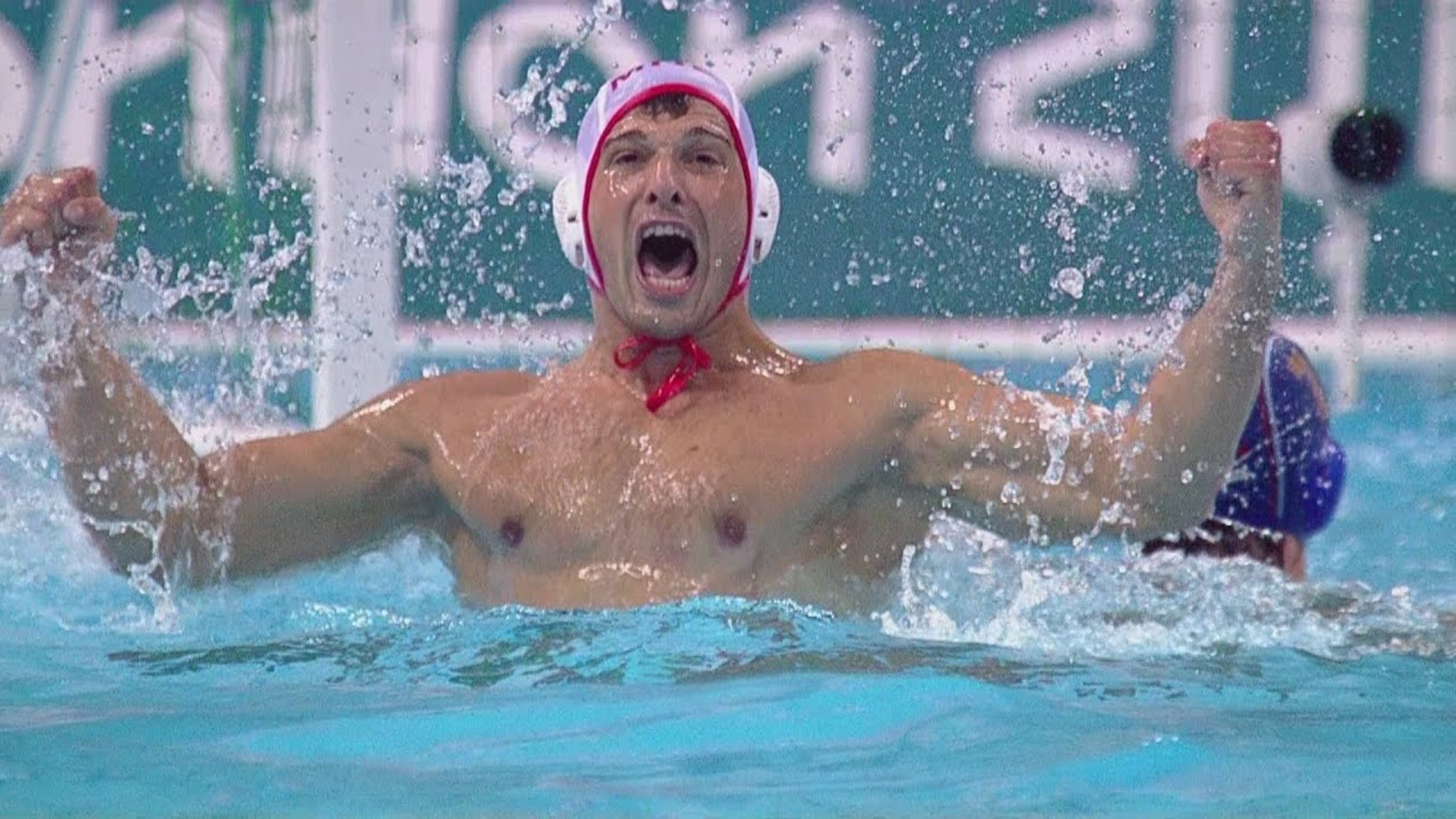
The Tiny Country That Keeps Winning Water Polo Medals
Montenegro has a population of roughly 620,000 people, smaller than many mid-sized cities.
Its men's national water polo team has repeatedly medaled at European and world championships since the country's independence in 2006, an output completely disproportionate to its size.
Inherited talent from a bigger tradition
Montenegro's water polo success didn't start from zero.
Before independence, Montenegrin players and clubs were part of the old Yugoslav water polo system, one of the most successful traditions in the sport's history.
When Montenegro became its own nation, it inherited coaches, club infrastructure and a playing culture already calibrated for elite competition, rather than having to build a water polo program from scratch the way most new countries would.
A tiny coastline doing enormous work
Much of Montenegro's water polo talent comes from a short stretch of Adriatic coastline around towns like Kotor and Budva, where the sport is treated as a genuine community institution rather than a niche pursuit.
Local clubs in that region have produced a striking number of players who go on to represent the senior national team, a concentration of output from a very small geographic area that mirrors similar water polo hotbeds elsewhere in the former Yugoslavia.
Competing against much larger neighbors
Montenegro regularly faces Serbia, Croatia and Italy, all countries with vastly larger populations and, in some cases, far greater funding for their programs.
That Montenegro continues to compete for medals against those nations rather than simply making up the numbers speaks to how deeply embedded the sport has become in the country's sporting identity, despite having a talent pool that is a fraction of its rivals' size.
A pipeline that keeps producing coaches too
Several former Montenegrin national team players have gone on to coach club and national teams elsewhere in Europe, exporting the country's tactical approach well beyond its own program.
That coaching pipeline has helped keep Montenegro's style of play relevant internationally even in years when the playing talent pool runs thinner than usual, giving the country influence in the sport disproportionate to its population in more than one way.
It's a quiet form of soft power that rarely gets discussed alongside medal counts, but shapes how the sport is taught and played across multiple countries well beyond Montenegro's own borders.
Montenegro's own domestic league remains small and underfunded relative to its national team's success, an imbalance that mirrors similar gaps seen in other small nations whose sporting reputation outpaces their actual domestic infrastructure.
Club officials have periodically raised concerns that without stronger domestic investment, the country risks eventually losing the very pipeline that has sustained its national team success for so long.
Does Montenegro's water polo success prove that population size matters less than sporting culture, or does its head start from the old Yugoslav system make the comparison unfair to other small countries starting from nothing?


