




 0
0
The Olympic Event That Used to Be Completely Different
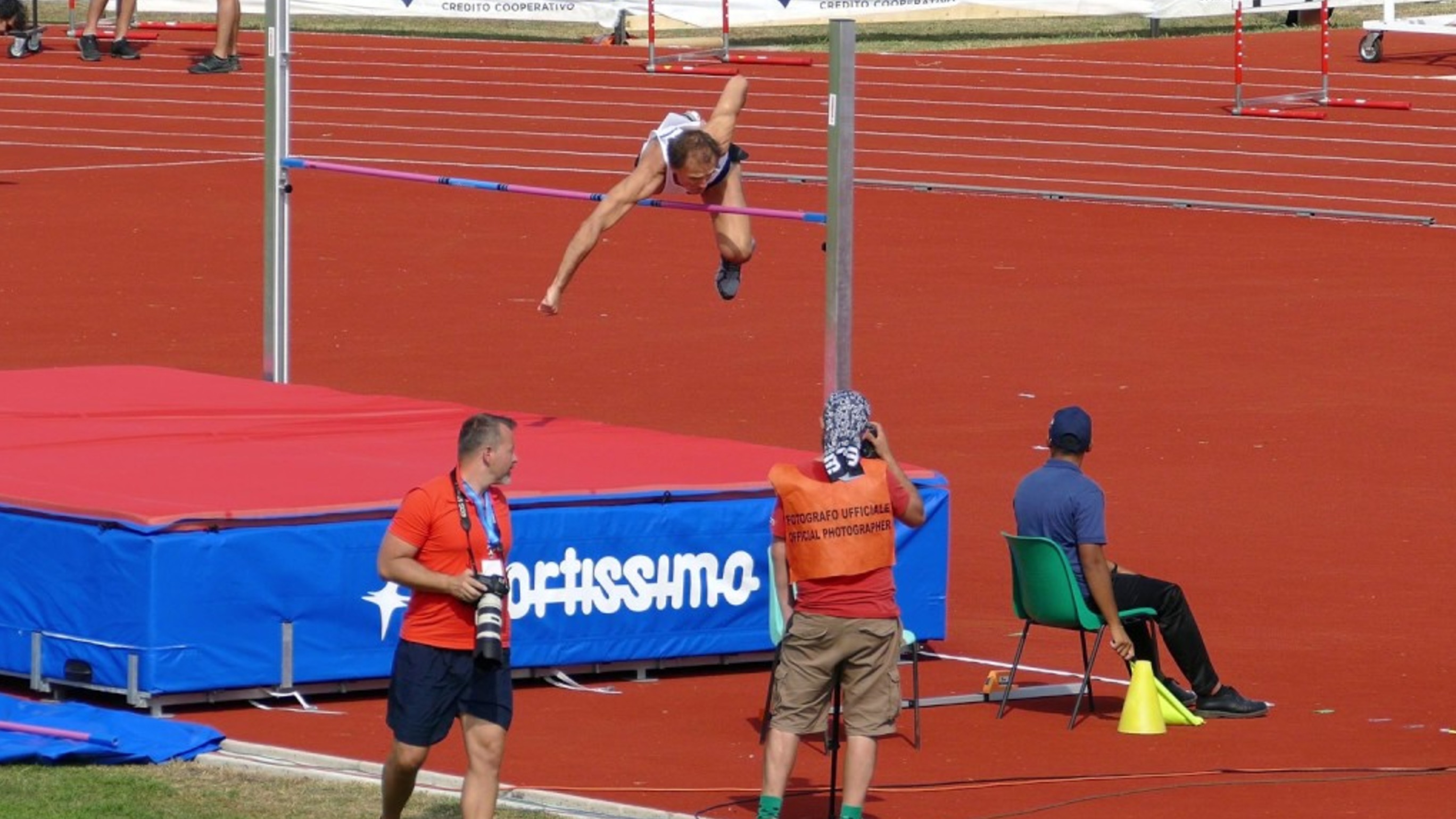
Watch any high jump competition today and every serious competitor does the same basic thing: runs in on a curve, turns their back to the bar, and arches over it head first. Before 1968, virtually nobody jumped that way.
High jump for most of the 20th century meant facing the bar and rolling or straddling over it forward. One relatively unknown American changed that permanently, in a single competition, in a way that would look almost unrecognisable to jumpers from just a few years earlier.
An unconventional technique built out of frustration
Dick Fosbury started experimenting with a backwards jumping style as a teenager in Oregon, mostly because he simply couldn’t get the traditional straddle technique to work for him.
Instead of facing the bar and rolling over it, he approached at an angle, took off from his outside foot, and arched his back over the bar with his head going first, landing on his shoulders rather than his feet or stomach. Coaches were openly skeptical, and Fosbury’s own college coach reportedly tried repeatedly to get him back onto the conventional technique.
The style only became physically viable once padded landing mats began replacing sand and sawdust pits, since landing on your back and shoulders from that height would have been genuinely dangerous on the harder surfaces used earlier in the sport’s history. That equipment shift, arriving right around the same time Fosbury was developing his technique, turned out to be exactly what made his idea possible.
One Olympic final changed everything
At the 1968 Mexico City Olympics, Fosbury entered as a relative unknown, up against what commentators at the time called one of the toughest fields ever assembled for the event. He cleared height after height using his back-first technique in front of a crowd that had never seen anything like it, eventually winning gold with a jump of 2.24 metres, setting both an Olympic and American record in the process. The technique was immediately nicknamed the Fosbury Flop by a local newspaper, and the name stuck permanently.
What happened next was remarkably fast for a sport typically slow to change technique at the elite level. By the very next Olympics in Munich in 1972, 28 of the 40 competitors in the high jump final were using some version of Fosbury’s method.
The last Olympic medal won using the older straddle technique came at the 1988 Seoul Games. Within two decades of Fosbury’s win, his once-radical, coach-baffling technique had become simply how the event was done.
A single competitor rewriting an entire sport’s technique
It’s rare for one athlete to single-handedly reshape the fundamental technique of an Olympic event within their own competitive lifetime, rather than through years of gradual coaching evolution. Fosbury didn’t just win a gold medal. He made an entire generation of high jump coaches, some of whom had spent their careers perfecting the straddle technique, watch their expertise become obsolete within a few short years.
Every elite high jumper competing today, more than half a century later, still jumps essentially the way Fosbury improvised his way into doing as a frustrated teenager who simply couldn’t master the technique everyone told him he needed to use.
Is it more impressive for an athlete to master the existing technique in a sport better than anyone else, or to invent an entirely new way of competing that changes the sport for everyone who comes after them?


