




 0
0
The Physics Trick That Makes an Old Cricket Ball Suddenly Deadly
New cricket balls swing predictably. Old, battered ones are supposed to stop moving entirely and just get easier to hit. Then reverse swing showed up and broke that entire assumption, turning a beaten up forty-over-old ball into one of cricket's most feared weapons.
Conventional Swing, Explained Quickly
Normal swing bowling relies on a shiny, polished side of the ball moving faster through the air than the rough side, creating a pressure difference that curves the ball toward the rough side while it's still relatively new.
Bowlers and fielding teams work constantly to maintain that shine on one half of the ball specifically to keep this effect alive, which is why players are so often seen polishing the ball against their trousers between deliveries.
Why Reverse Swing Flips the Script Entirely
Reverse swing happens once a ball gets old and rough enough, generally somewhere past the 40-over mark in a fifty over innings, and only at genuinely high bowling speeds, typically above 85 miles per hour.
At that point, if one side has been kept notably shinier and heavier than the increasingly rough, lighter other side, the aerodynamics flip: the ball swings toward the shiny side instead of away from it, moving in the opposite direction batters have spent the entire innings adjusting to. Because it tends to happen late and fast, batters who've built a rhythm reading the ball's earlier movement suddenly find deliveries curving the wrong way with almost no warning.
Why Some Countries Produce More of It Than Others
Climate and ball type both affect how reliably reverse swing shows up.
Subcontinental conditions in Pakistan, India, and the UAE, with drier air, abrasive outfields, and higher average temperatures, tend to rough up one side of the ball faster and more unevenly than damp English or Australian conditions do, which is part of why reverse swing became such a defining feature of Pakistani cricket specifically rather than emerging everywhere equally.
The type of ball matters too. The Kookaburra ball used in Australia has a less pronounced seam and tends to go soft and stop swinging earlier in an innings than the SG ball used in India, which reverses more reliably, or the Dukes ball used in England, known for holding its shape and seam longer into an innings than either rival.
The Pakistani Pace Duo Who Perfected It
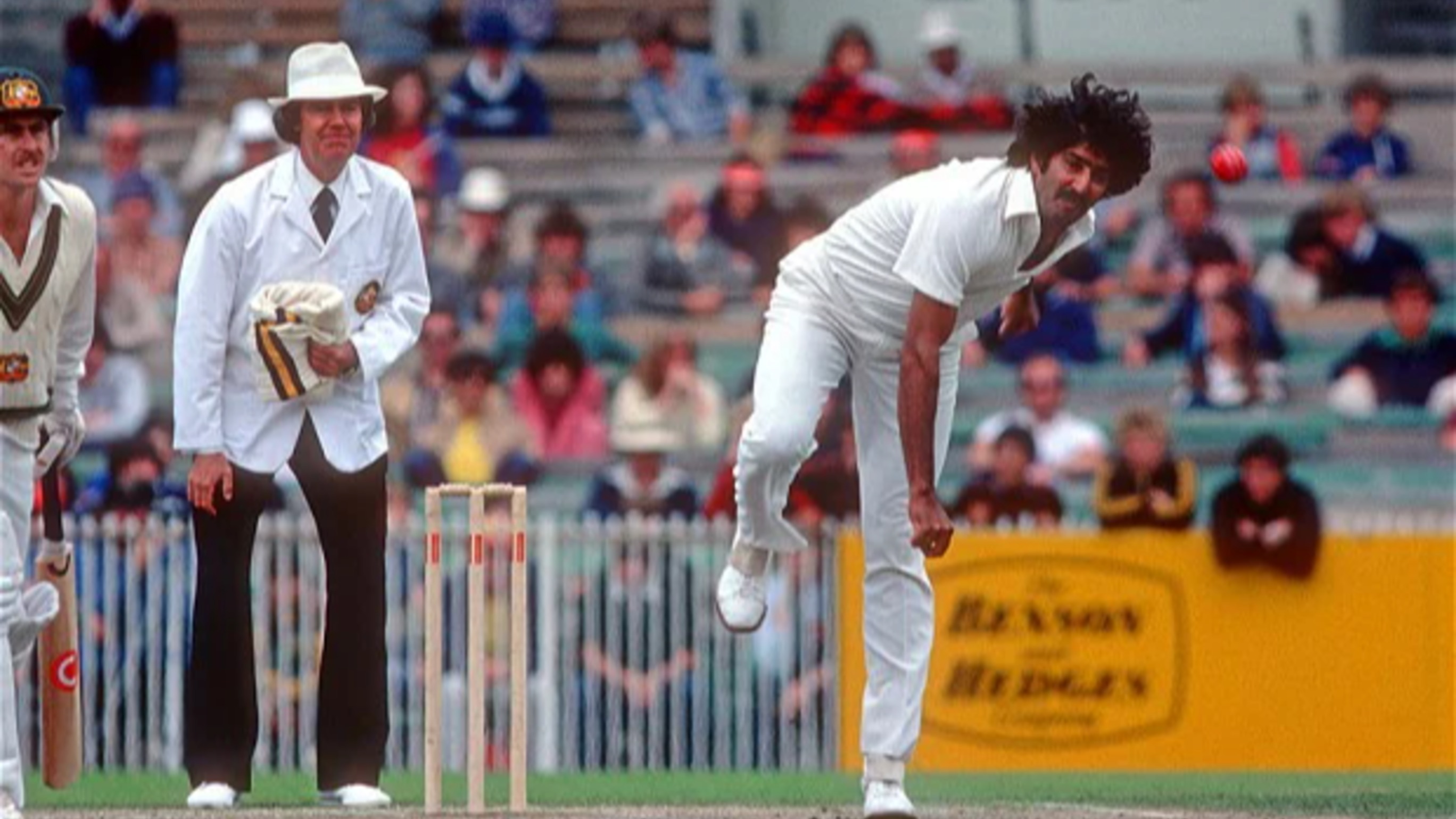
Reverse swing existed in some form before the 1980s and 90s, but Pakistan's Wasim Akram and Waqar Younis are widely credited with turning it into a genuinely terrifying, repeatable weapon at the international level, using it to produce sudden, unplayable deliveries deep into innings when batters expected the ball to have gone dead.
Their success sparked years of controversy and suspicion around the practice, with accusations of illegal ball tampering following Pakistani bowling attacks for years, since the line between legally maintaining a ball's condition and illegally accelerating its wear has never been perfectly clear or easy to police.
Modern fast bowlers across every top cricketing nation now train specifically to control reverse swing rather than treating it as a mysterious Pakistani specialty.
But the fear factor hasn't faded. A batter who's survived 35 overs against a tiring bowling attack can still lose their wicket in a single unplayable delivery the moment that old ball decides to move the wrong way.
For the science nerds: https://www.gray-nicolls.co.uk/blogs/the-game/what-is-reverse-swing-and-how-do-i-bowl-it


