




 0
0
Why Top Footballers Are Choosing the Süper Lig and Where Turkish Clubs’ Money Comes From
The Süper Lig: Between Spectacular Transfers and the Risk of Becoming Europe’s New Retirement Destination
Mohamed Salah’s arrival at Trabzonspor has captured worldwide attention, but the massive investments made this summer raise an important question. Have Turkish clubs found a winning strategy, or is the Süper Lig heading towards becoming another league where European stars spend the final years of their careers?
Europe’s Biggest Names Have Chosen Turkey
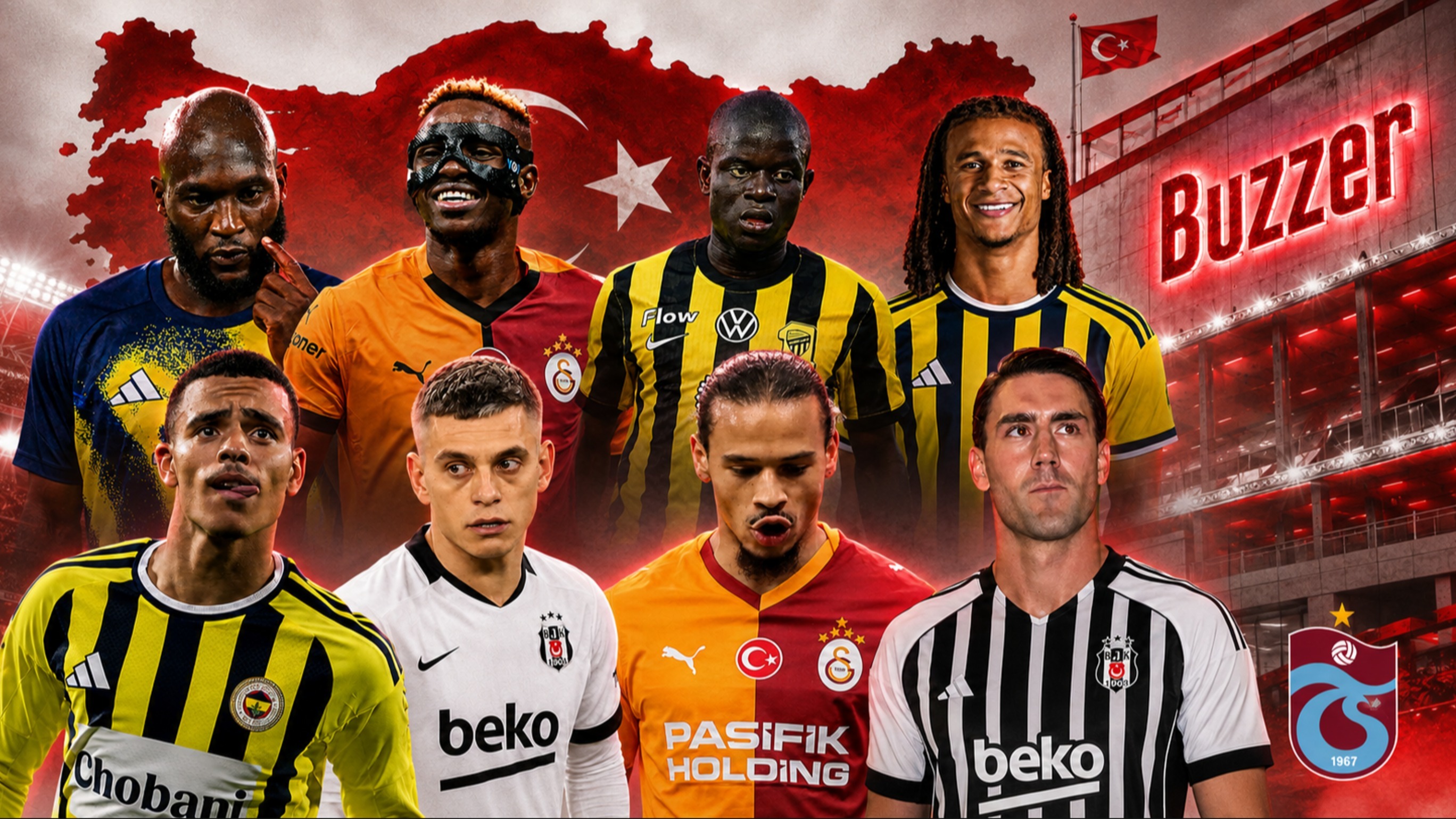
Mohamed Salah is not the only major footballer to have arrived in the Turkish top flight. Romelu Lukaku, Leandro Trossard, Leroy Sané, Nathan Aké, Mason Greenwood, N’Golo Kanté and Dušan Vlahović are also playing in the Süper Lig.
The list could become even more impressive in the coming weeks. Bruno Fernandes and Gabriel Martinelli are two other names linked with possible moves to Turkey, although any deals will depend on negotiations between the clubs, financial demands and the players’ willingness to make the switch.
Galatasaray already had Victor Osimhen in their squad, one of the most highly rated strikers in world football. The Nigerian international scored 43 league goals during his first two seasons with the Istanbul club and also found the net on the opening day of the current campaign.
Thanks to the number and reputation of the players recruited, the Süper Lig has quickly become one of the main attractions of the European transfer market. A league that once mainly welcomed stars approaching retirement is now convincing players who still have several seasons to offer at the highest level.
Mohamed Salah: The Transfer That Changed Perceptions
The most spectacular move of the summer remains Mohamed Salah’s arrival at Trabzonspor. The Egyptian forward represents far more than a major signing for the Black Sea club. His transfer sent a powerful message to Trabzonspor’s domestic rivals and Europe’s leading leagues.
According to reports in the international media, Salah will earn a salary at Trabzonspor similar to the one he received during his final season at Liverpool. The Egyptian was among the highest-paid footballers in the Premier League, but Turkey’s tax system and net-salary structure allow local clubs to put together extremely attractive offers.
His contract with Trabzonspor runs for two seasons, with his annual income expected to exceed £14.5 million. For the Turkish club, the deal represents one of the biggest statements of ambition in its history and an attempt to close the gap on traditional powerhouses Galatasaray, Fenerbahçe and Beşiktaş.
The Süper Lig Is Capitalising on Saudi Arabia’s Retreat
The rise of the Turkish league comes at a time when the Saudi Pro League is scaling back its aggressive transfer policy. The Saudi competition changed the balance of the market in 2023, investing billions of dollars to attract stars such as Cristiano Ronaldo and Neymar.
With Saudi clubs reducing their transfer spending, Turkey appears ready to fill the space left behind. Galatasaray, Fenerbahçe, Beşiktaş and Trabzonspor have invested significant sums to turn the Süper Lig into an attractive destination for high-profile footballers.
The arrivals include stars who are past their prime, players who were no longer receiving enough playing time at their former clubs and footballers whose wages were considered too high in relation to their performances. However, the scale of the transfer activity makes it impossible to reach a clear verdict at this stage. These investments could mark the beginning of a period of growth, or they could become a financial burden that proves difficult to sustain.
Where Is the Money Coming From?
The current wave of investment differs from projects developed in other leagues. The Süper Lig has not benefited from an injection of money through a government programme designed to improve the country’s international image through sport. Nor can the situation be fully explained by the emergence of oligarchs willing to spend without limits.
The sharp depreciation of the Turkish lira against the euro has played an important role. Around five years ago, one lira was worth approximately €0.10, while its current value is close to €0.018.
Turkish clubs pay some of their costs and salaries in lira but receive revenue from European competitions and international broadcasting rights in euros. The difference between the two currencies has given the wealthiest clubs greater financial power in the transfer market.
Galatasaray, Fenerbahçe, Beşiktaş and Trabzonspor can now afford players who would have been beyond their reach only a few years ago. Revenue received in euros carries significantly more weight in club budgets and balance sheets when converted into the national currency.
China Attempted the Same Rapid Rise
Turkey is not the first country to try to transform its domestic league into a destination for major stars. Every few years, a league emerges that invests huge sums and hopes to close the gap on Europe’s leading competitions in a very short time.
Before the Saudi Arabian project, the Chinese league attracted numerous well-known footballers and coaches. President Xi Jinping and the Chinese government aimed to use football to “turn China into a great sporting power as part of the Chinese dream.”
Chinese clubs offered enormous salaries and paid transfer fees that were almost impossible to refuse, but the era of massive investment did not last. Financial restrictions and changing political priorities significantly weakened the project, and the league quickly lost most of the high-profile names it had attracted from Europe and South America.
The Costly Russian League Experiment
A similar strategy was adopted in the Russian Premier League. Billionaire Suleyman Kerimov bought Anzhi Makhachkala and invested hundreds of millions to build a team capable of attracting some of the world’s most famous footballers.
His spending triggered a financial arms race involving Zenit St Petersburg, Rubin Kazan and Dynamo Moscow. The clubs began paying increasingly large transfer fees and salaries as they attempted to dominate Russian football and achieve success in European competitions.
However, the project did not last long. Kerimov reduced his involvement after only a few years, forcing Anzhi to part ways with its stars. The spending frenzy gradually faded without the Russian league ever reaching the level of Europe’s leading competitions.
Brazil Is Bringing Its Stars Home
Brazil’s domestic league has experienced several periods of significant transfer spending. Unlike China, Russia and Saudi Arabia, Brazilian clubs have focused primarily on bringing home players who had previously moved abroad.
Investment levels have fluctuated depending on the country’s economy and the clubs’ financial situations. During favourable periods, the biggest teams have been able to compete with European sides for Brazilian internationals.
In January, Flamengo set a new national record by signing Lucas Paquetá from West Ham for $50 million. The fee comfortably surpassed the previous record, which had been established only 20 days earlier when Cruzeiro paid Zenit St Petersburg $32 million for Gerson.
The two deals demonstrated the growing financial power of Brazilian clubs and their desire to turn the domestic league into an attractive destination for players who are still at an important stage of their careers.
The United States and Qatar Bet on Celebrity Appeal
Major League Soccer adopted a similar approach during what became known as the “Beckham era.” North American clubs offered contracts above normal market value to attract major names such as Thierry Henry and Robbie Keane.
The strategy helped promote the league and increase public interest, but many players moved to the United States after their peak years in European football had already passed.
The Qatar Stars League had tried even earlier to live up to its name by recruiting stars approaching the end of their careers. Gabriel Batistuta, Pep Guardiola, Frank de Boer and Marcel Desailly were among the famous figures persuaded to accept one final lucrative contract.
Neither the United States nor Qatar continued this policy indefinitely. Investment was reduced or redirected after league officials recognised the limitations of a development model based primarily on the celebrity appeal of foreign players.
Turkey Has a Major Advantage Over Previous Projects
Comparisons with those leagues do not fully capture the situation in the Süper Lig. Turkey has a long-established football culture, stadiums renowned for their incredible atmospheres and millions of supporters who are deeply attached to their clubs.
Galatasaray, Fenerbahçe, Beşiktaş and Trabzonspor are not newly established clubs built on lavish investment. They have rich histories, fierce rivalries and popularity that extends far beyond the country’s borders. As a result, the big names arriving in Turkey are not entering an environment without tradition or sporting pressure.
Another advantage is the opportunity to compete in European tournaments. Galatasaray qualified directly for the Champions League, while Fenerbahçe are attempting to reach the league phase through the qualifying rounds. Trabzonspor and Beşiktaş are involved in the Europa League qualifiers.
For a high-profile footballer, the prospect of continuing to play in the Champions League or Europa League may be just as important as the financial offer. This exposure sets Turkey apart from leagues that cannot offer players European football at the highest level.
European Clubs Can Offload Unwanted Contracts
The Süper Lig’s investments also benefit Europe’s major clubs. Teams from the Premier League, La Liga, Serie A, Bundesliga and Ligue 1 can sell players to Turkey who are no longer part of their coaches’ plans or whose salaries have become too expensive.
Through these deals, European clubs recover part of their initial investments, reduce their wage bills and free up places in their squads. The Süper Lig therefore risks becoming a financial escape route for wealthy teams looking to move on players who are difficult to sell elsewhere.
The money invested by emerging financial forces ultimately ends up in the accounts of traditional European clubs. Instead of closing the gap on the continent’s leading leagues, developing competitions may indirectly help reinforce their financial power.
Spectacular Transfers Do Not Guarantee Progress
Recent history shows that massive investment in stars does not automatically ensure the development of a league. China, Russia, Qatar, the United States and Saudi Arabia have all used the same strategy at different times, but none of their competitions has managed to consistently match the prestige or sporting level of Europe’s leading leagues.
After a few years of heavy spending, priorities change, budgets are reduced and officials adopt a different direction. Enormous salaries may generate international exposure and fill stadiums, but they cannot build successful academies, modern infrastructure or a competitive and balanced league on their own.
Turkey already possesses the advantages of tradition, passionate supporters and participation in European competitions. However, the success of its current strategy will depend on the clubs’ ability to transform the reputation of their signings into sporting success and sustainable long-term revenue.
Mohamed Salah, Victor Osimhen and the other stars can help raise the profile and quality of the Süper Lig. At the same time, their expensive contracts could become a burden if results fail to materialise or sources of funding begin to diminish.
For the moment, the Turkish league has won the battle for public attention. It remains to be seen whether this is the beginning of a genuine rise or merely another version of a familiar scenario in which the excitement generated by star names disappears as soon as investment is reduced.

Lionel Messi and Cristiano Ronaldo compared over their last 100 matches

From Hero to Enemy in Just One Year: Alexander Isak Faces a Hostile Newcastle Return

David Beckham Builds His Fortune Through Business Ahead of the World Cup

The 15 Most Unusual Spanish Transfers in Premier League History

England Have a New Undisputed Leader as Tuchel’s Euro 2028 Plan Comes to Life
They Won the Champions League, but Are Now Free Agents Looking for a New Club

“My grandmother would have run more than you” - The harsh Mourinho remark that brought the best out

The World Cup Transformed His Career Djed Spence Completes One of Serie A’s Biggest Summer Moves

Bundesliga pedigree at FC Voluntari! Romanian club sign 1.92m Serbia international

Juventus’ New Diamond Comes From Bosnia: Barbarez Believes He Can Become a Champion


