





 0
What Turns One Bad Collapse into a Psychological Pattern?
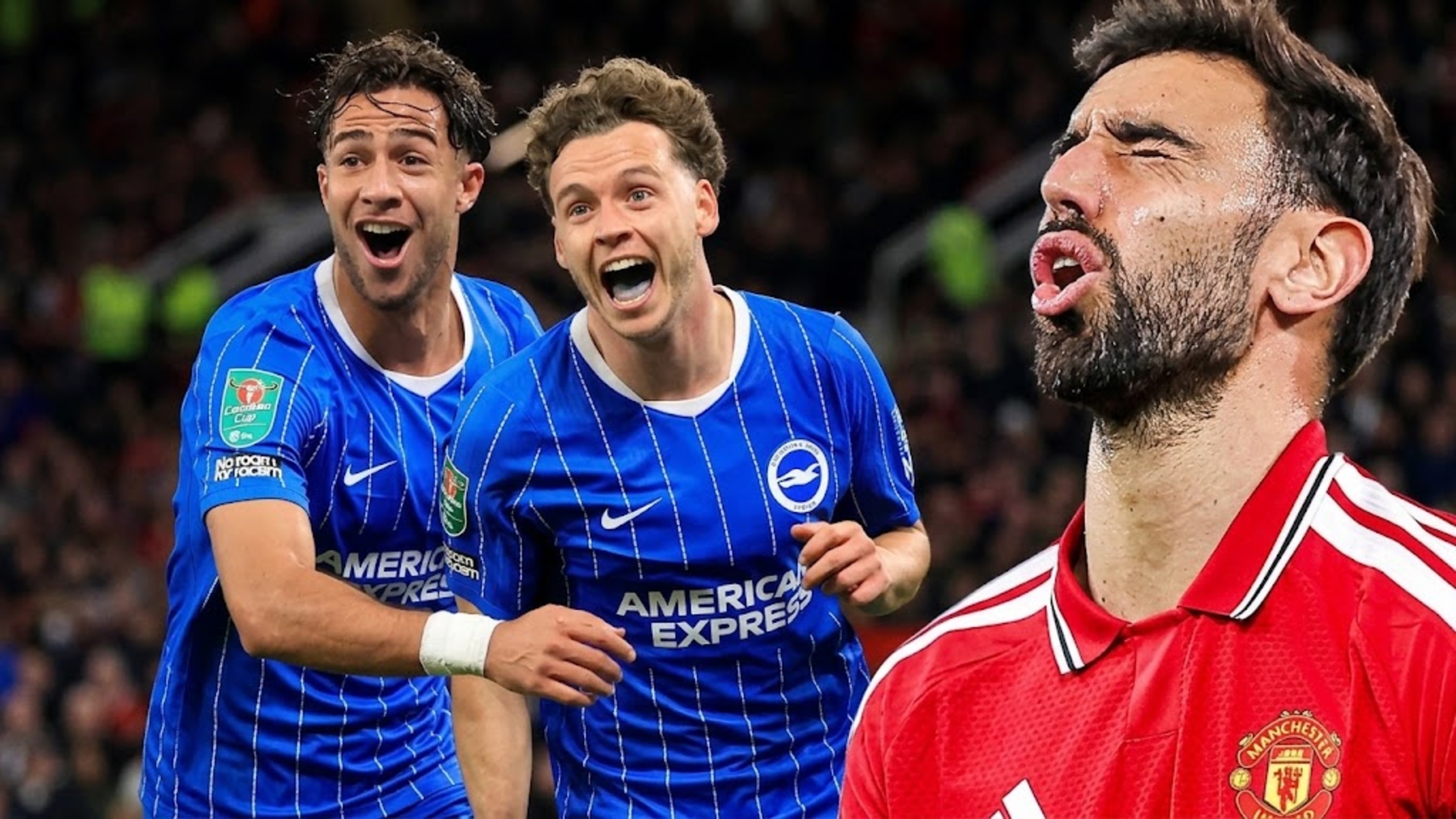
Manchester United had won 143 of their previous 145 matches at Old Trafford after taking a 2-0 lead. On Wednesday night, in the Carabao Cup third round against Brighton, they became the other two.
It's the first time in 50 years United have held a two-goal lead at Old Trafford and lost the match. That's not just a bad night. That's a statistical outlier so rare it needed half a century to happen twice.
How it actually unraveled
United raced into that lead almost immediately, with Shea Lacey and Mason Mount scoring inside the opening ten minutes. Mount's goal came from a rebound after Marcus Rashford's shot was saved, the kind of quick, ruthless start that usually settles a cup tie before it properly begins.
Then United stopped playing. Brighton's Charalampos Kostoulas pulled one back in first-half stoppage time, unnerving the hosts. Pascal Gross leveled it in the 65th minute, curling a finish into the corner after a defensive clearance fell straight to him. Substitute Maxim De Cuyper scored the winner just three minutes after coming off the bench, sealing a result that had United manager Michael Carrick admitting fault publicly. "We had the game exactly where we wanted it and let it get away from us in a big way," Carrick said. "We can't accept that as a group. I take responsibility for it."
Why one bad night becomes a pattern worth watching
A single collapse, on its own, is a footnote. What makes this one worth examining is the context around it. This was United's second straight home defeat, following a controversial 1-0 Premier League loss to Manchester City just days earlier, a result complicated by an admission from the referees' governing body that VAR officials were wrong to allow the winning goal.
Carrick made eight changes to his starting lineup for the Brighton tie, a squad rotation that's completely normal for early-round cup football. But the pattern that's emerging isn't about personnel. It's about what happens once United go ahead. Sitting on a lead, managing a game, closing it out under pressure, these are separate skills from simply scoring goals, and United's issue right now appears to live in exactly that gap.
The psychological weight of a collapse this specific
There's a difference between losing a game you were never really controlling and losing one you had comprehensively won inside ten minutes. The second kind does more damage to a squad's confidence, because it removes the easy explanation. United weren't outplayed for 90 minutes. They were outplayed for the 80 minutes that came after they should have been coasting.
Boos rang around Old Trafford at the final whistle, which tells you the crowd read the collapse the same way the numbers did. This wasn't unlucky. It was a team that stopped competing once the scoreboard told them they didn't need to anymore, and Brighton, to their credit, punished that lapse ruthlessly.
What comes next matters more than the scoreline
A cup exit in the third round doesn't threaten a season on its own. What it threatens is momentum, and momentum is the one thing a team already carrying pressure from a controversial league defeat can least afford to lose. United face winless Fulham away in the Premier League before the first international break, a fixture that now carries far more weight than it would have a week ago.
Once a team develops a reputation for surrendering leads, does that reputation start to feed on itself, with opponents believing a comeback is possible purely because it's happened before?

Sarajevo Back at the Heart of Regional MMA: SFC Returns with Explosive Matchups

How Buzzer Karma Works: Levels, Penalties, and What They Mean

Inside Buzzer's Latest Update (and Why It Changes How You Use the App)

Buzzer Introduces Ads Console: A New Era of Advertising Across the Entire Buzzer Ecosystem

Buzzer Is Evolving: From Quantity to Quality

Buzzer Now Has a Games Hub, and Tournaments Are Coming

Polo Al Taco Expands Its Global Reach Through Weekly Livestreams on Buzzer Arena TV

Al Ittihad SC's Matches Are Now Live on Buzzer

Palm City vs Gulf United Ends in 1–1 Draw in UAE Second Division League Clash

"We Don't Take the Guy With the Camera." He Built His Own Club Anyway. Now He's Coming to Find You.


