




 0
0
The NBA Widened Its Court Rules Because One Player Was Breaking Basketball
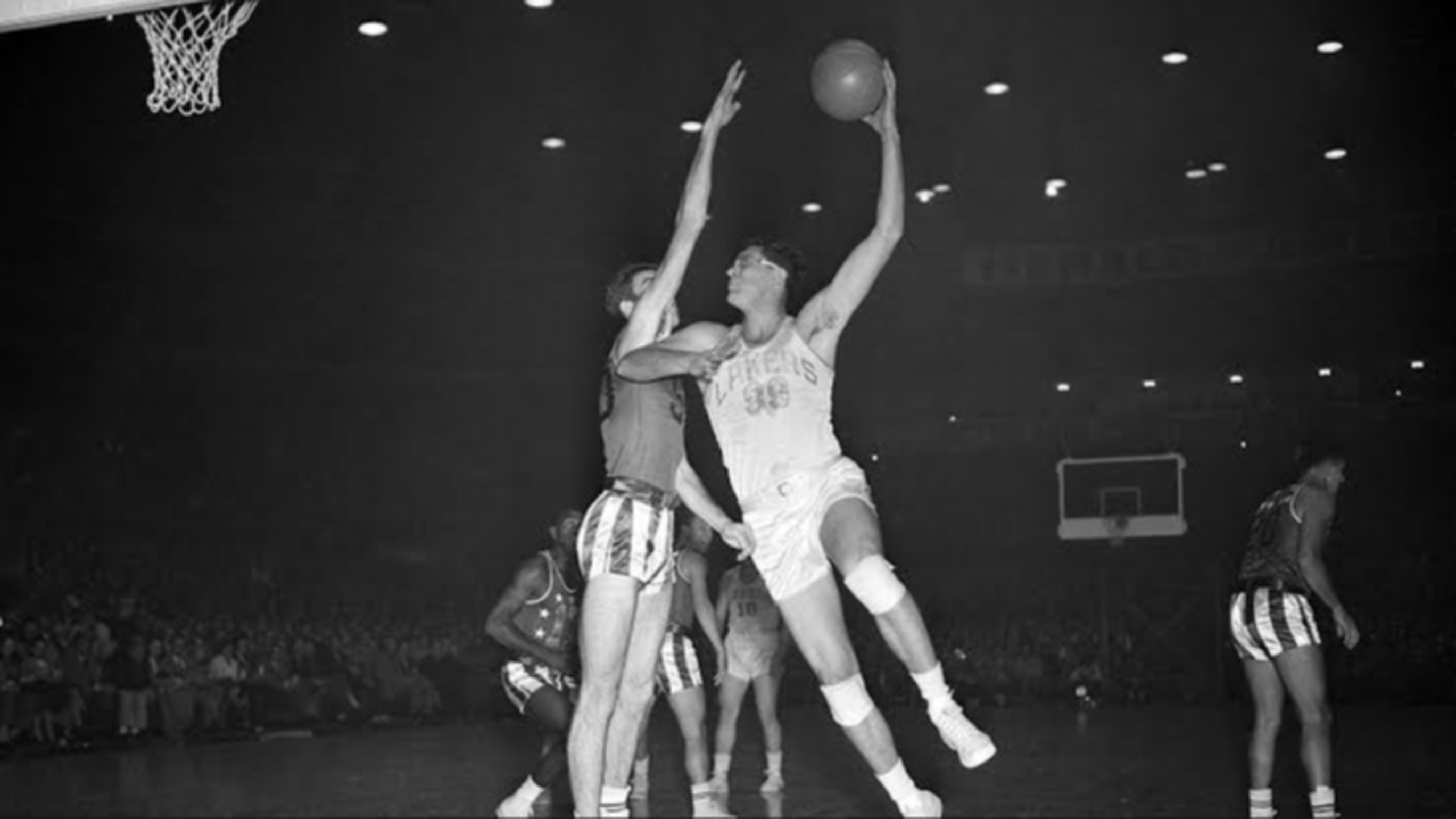
Most rule changes in sport arrive gradually, debated over seasons before anyone commits to anything. The NBA’s most famous early rule change wasn’t like that. It was named directly after the player who forced it, and it happened because George Mikan had made the game around the basket essentially unplayable for anyone else.
A big man nobody had a real answer for
Mikan stood 6-foot-10 in an era when most professional players were well under 6-foot-5, and he combined that size with genuine skill: a deadly hook shot with either hand, strong rebounding, and shot-blocking so effective it had already forced a separate rule change back in college.
Playing for the Minneapolis Lakers, he simply planted himself close to the basket, inside a foul lane that was only six feet wide at the time, and dared anyone to stop him from scoring or rebounding at will.
Teams tried increasingly desperate tactics to slow him down. In one infamous 1950 game against the Fort Wayne Pistons, the Pistons’ coach had his team simply hold onto the ball for minutes at a time rather than let Minneapolis get a possession, refusing to play basketball as normal specifically to keep it away from Mikan. The Pistons won 19-18, still the lowest-scoring game in NBA history, and fans in attendance reportedly grew so bored that some started reading newspapers in their seats.
The Mikan Rule
Ahead of the 1951-52 season, the league’s Board of Governors, pushed hard by New York Knicks owner Ned Irish, voted to widen the foul lane from six feet to twelve feet. Since offensive players could only legally stay inside the lane for three seconds at a time, doubling its width effectively forced Mikan to camp much further from the basket than before, giving defenders far more room and time to contest him. The rule became known immediately, and permanently, as the Mikan Rule.
It worked, to a point. Mikan’s scoring average dropped from 28.4 points per game the previous season to 23.8, and his field goal percentage fell too. But he adjusted his own game in response, using the extra space to add more variety to his shot selection, and the Lakers still won the NBA title that season anyway, extending a run that made them the league’s first true dynasty.
A rule that outlived the man it was built for
The lane got widened again in 1964, from 12 feet to its current 16 feet, this time specifically to slow down an even more dominant big man, Wilt Chamberlain. That two-stage history means the shape of the area under an NBA basket today exists almost entirely because of two centers the league considered simply too good to leave the rules as they were.
Mikan’s stalling game against the Pistons had another lasting consequence too: it became one of the clearest arguments for introducing a shot clock, which the NBA eventually adopted in 1954 specifically to stop teams from freezing the ball the way Fort Wayne had against him.
Mikan’s influence didn’t end with the lane and the shot clock either. His shot-blocking at DePaul University had already been so effective that it forced the NCAA to introduce its own goaltending rule years before he ever turned professional, banning defenders from touching the ball on its way down toward the rim. Few players in any sport can claim to have single-handedly forced three separate rule changes across two different levels of competition, but Mikan’s combination of size and skill was disruptive enough that officials kept having to redraw the boundaries of the game around him.
Does it feel fair for a sport to change its fundamental rules specifically to limit one dominant player, or is that simply what it takes to keep a game competitive once someone gets that far ahead of everyone else?


