



 0
0Sports: Body Revival, Soul Elevation, and a Lifetime Investment.
Introduction: More Than Just Movement
In an era characterized by speed and excessive reliance on technology, "movement" has become a rare currency. Sports are no longer just a recreational activity that some practice in their spare time; they have become a biological and psychological necessity for survival with a high quality of life. It is the bridge that carries us from physical lethargy and ill health to the vitality of youth and enduring wellness. Sports are the universal language that requires no translation—uniting peoples, refining souls, and building minds before bodies.
First: The Physiological Anatomy of Sports Benefits
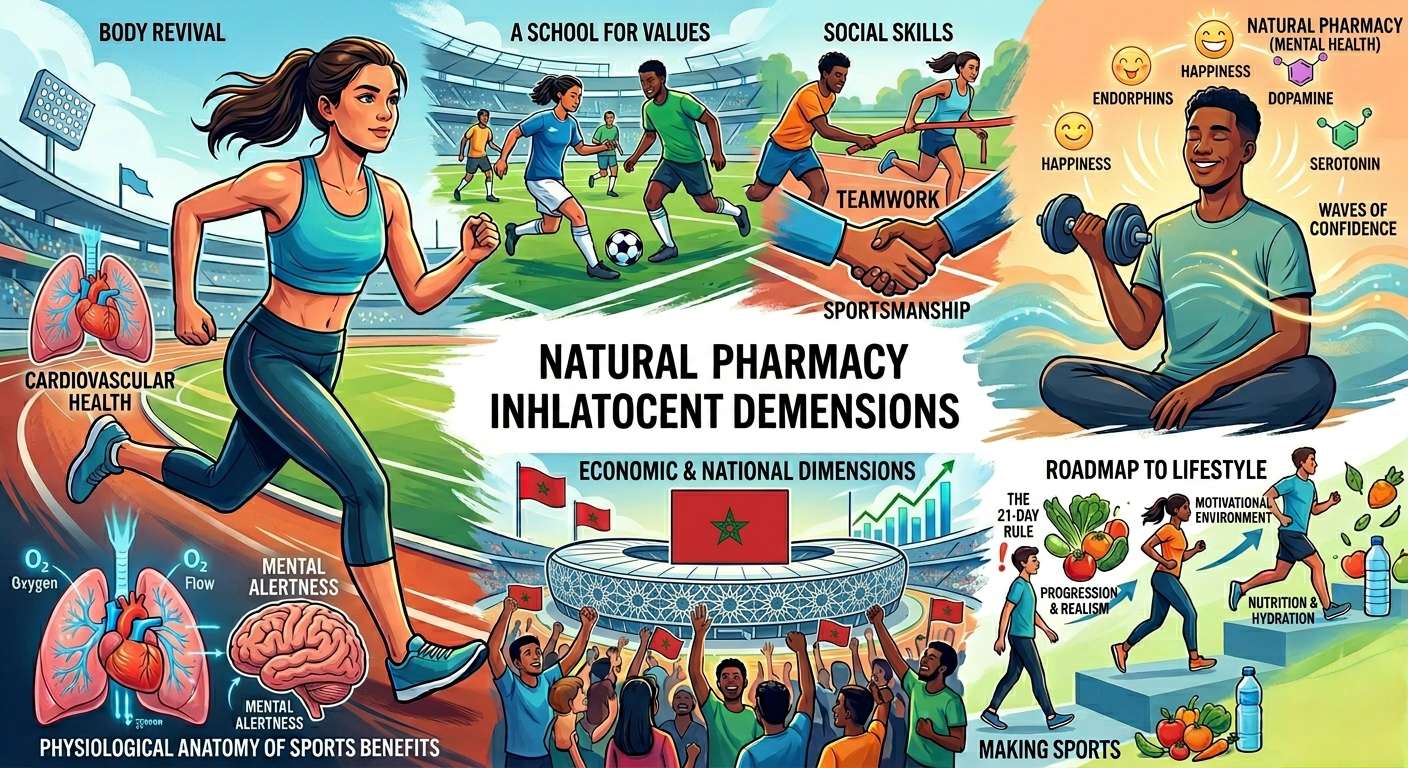
When we begin to move our bodies, a vital symphony begins within our organs that does not stop at the visible muscles but reaches the most microscopic cells:
A Revolution in the Circulatory and Respiratory Systems:
Physical activity, especially aerobic exercises (Cardio), is the most important workout for the heart muscle. It increases pumping efficiency and dilates arteries, which reduces high blood pressure and protects against clots. With deeper breathing, lung capacity improves, meaning more pure oxygen reaches every cell in your body—translating immediately into energy and mental alertness.
A Shield Against Chronic Diseases:
Studies have proven that regular physical activity is the primary enemy of Type 2 diabetes, as exercise increases cell sensitivity to insulin. It also plays a pivotal role in regulating cholesterol levels and reducing chronic inflammation, which often acts as fuel for cancerous diseases.
Engineering the Skeletal and Muscular Systems:
Sports are not just for the youth; they are a safety valve against osteoporosis as we age. Resistance training increases bone density and strengthens ligaments, protecting against injuries and fractures while maintaining a balanced physical posture that prevents back and neck pain caused by prolonged sitting.
Second: The Natural Pharmacy (Sports and Mental Health)
Perhaps the deepest impact of sports is what we do not see with the naked eye, but rather feel in the depths of our souls. The human brain responds to movement by secreting a cocktail of hormones that exceed the strongest medications in their effectiveness:
Endorphins (The Happiness Hormone): The body’s natural painkiller, released to alleviate pain and provide a sense of euphoria after an intense workout.
Dopamine and Serotonin: These are responsible for regulating mood and the feeling of achievement and reward. Therefore, sports are now an essential part of treatment protocols for clinical depression and anxiety.
Self-Confidence and Body Image: Seeing your body change and your endurance increase automatically reflects on your confidence in facing life's other challenges. Sports teach you that "impossible" is just a temporary state that fades with training and commitment.
Third: Sports as a School for Values and Social Skills
Away from the track and the field, sports instill leadership qualities in individuals that are not taught in books:
Self-Discipline: Committing to a workout schedule, resisting laziness, and following a diet are all practical exercises in willpower.
Teamwork: In team sports, an individual learns that the success of the group is more important than personal glory, and that coordination and sacrifice are the keys to victory.
Sportsmanship: Sports teach you how to lose with honor and how to win with humility. They refine the ego and make a person more accepting of life's ups and downs.
Fourth: The Economic and National Dimensions of Sports
One cannot ignore that sports today are a multi-billion dollar global industry. Developed countries invest in sports to reduce massive spending on healthcare; every dollar spent on stadiums and sports incentives saves multiples in hospital bills and medication. Additionally, sports are an effective tool for "Soft Power," raising flags in international forums and enhancing a sense of belonging and national pride.
Fifth: How to Make Sports a Lifestyle (A Roadmap)
Many people start with great enthusiasm and then stop after a week. The secret is not in "strength" but in "intelligence":
The 21-Day Rule: The mind needs about three weeks to register any new activity as a "habit." Be patient with the difficult beginnings until exercise becomes a biological need like eating and drinking.
Gradualism and Realism: Do not try to run 10 kilometers on your first day. Start with brisk walking, then jogging, then running. The goal is consistency, not exhaustion.
A Motivating Environment: Surround yourself with athletic friends, join a nearby club, or even dedicate a small corner of your home to basic calisthenics.
Nutrition and Hydration: Sports without good fuel can break down the body. Pay attention to drinking plenty of water and eating proteins and fibers to compensate for what the body loses and to build tissue.
Conclusion: The Final Call
The most precious thing you own in this life is "You." Every minute you spend in physical exercise is an investment that will bear fruit in your sixties and seventies, when you see your peers suffering from the diseases of aging while you still maintain your vitality and mobility.
Sports are not a punishment for what you ate; they are a celebration of what your body can do. Start today, even with a simple walk around your home—the journey of a thousand miles begins with a single step, and a lifetime of health begins with a decision.


