

 0
0
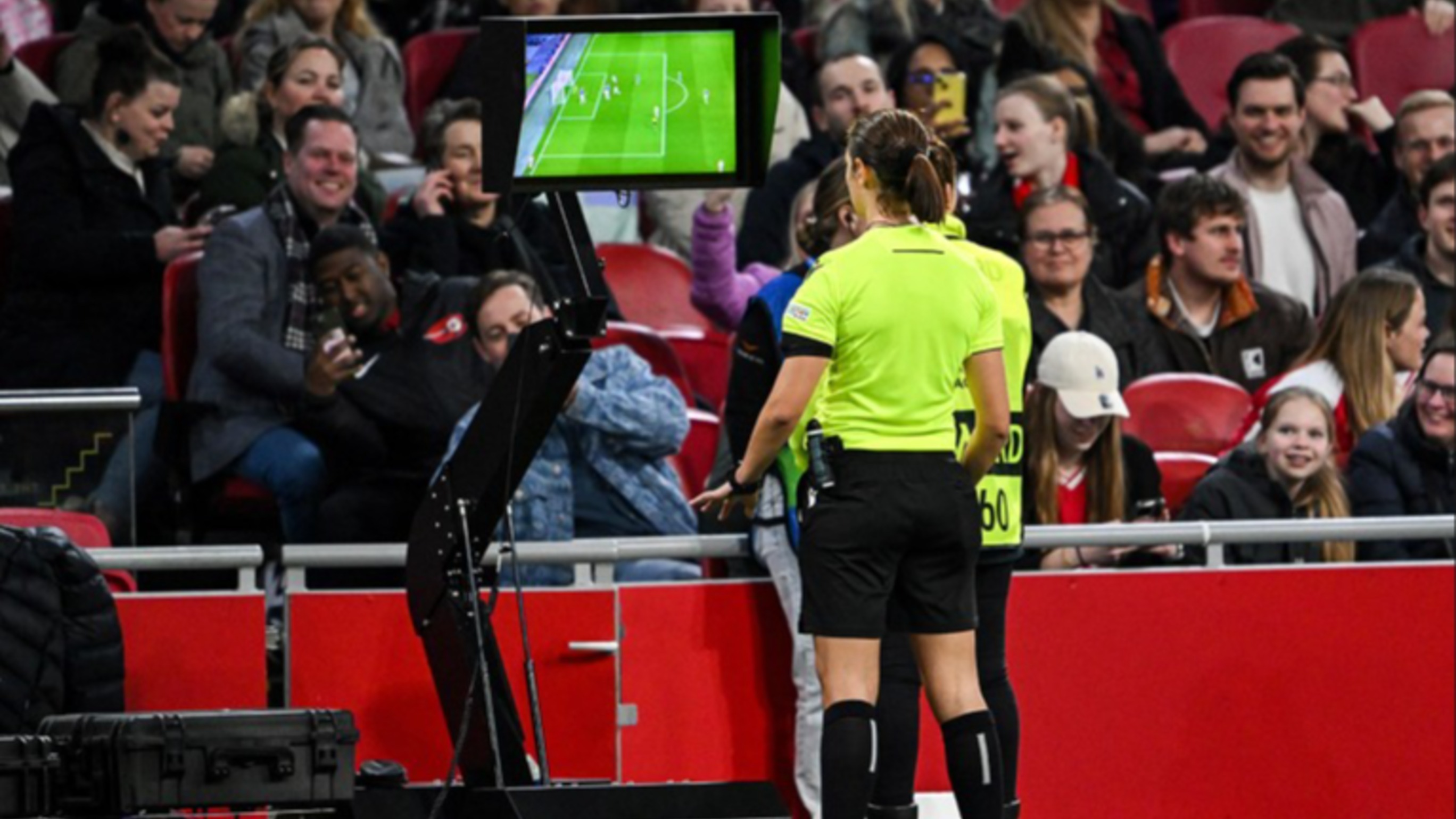
VAR Fixed the Problem It Was Built For and Broke Something Else
At the 2018 World Cup, VAR corrected roughly 99.35 percent of the decisions it reviewed, according to FIFA’s own figures. By almost any measure of accuracy, that’s a resounding success. So why does it feel like nobody actually enjoys watching football with it anymore?
The Premier League’s own numbers claim decision accuracy rose from 82 to 96 percent after VAR’s introduction. A 2020 YouGov poll found 67 percent of regular Premier League viewers said matches had become less enjoyable since VAR arrived. Both of those statistics are true simultaneously, and that contradiction is the entire story.
What actually broke
The technical accuracy isn’t really the argument anymore. The argument is about what accuracy costs. A 2020 study out of the Technical University of Munich found that 76 percent of tweets about VAR during Premier League matches were negative, with fan sentiment measurably souring for up to 20 minutes after any reviewed incident. That’s not a small dip, but a huge chunk of match time where the crowd’s emotional experience is actively worse because of a system built to make the game fairer.
Offside calls have become the sharpest flashpoint. Millimeter-precision lines have disallowed goals over an armpit’s position, a heel’s angle, a pointed finger breaking a line by centimeters. Leeds striker Patrick Bamford had a goal ruled out in 2020 for what fans dubbed “armpit offside.”
At the 2018 World Cup, an Iranian goal against Belgium was chalked off because a player’s body was fractionally offside in a way no human eye could have judged live. Jurgen Klopp publicly called for thicker offside lines specifically to stop decisions being made, in his words, over a player’s toenail.
The spontaneity problem
Football’s emotional core has always been the goal celebration, that pure unfiltered release the instant the ball crosses the line. VAR quietly killed a lot of that. Players and fans increasingly hesitate before celebrating now, waiting to see if a review is coming, because they’ve learned the hard way that celebrating too early only to have the goal chalked off minutes later feels worse than not celebrating at all.
Referees have faced their own version of this problem. Some have reportedly become reluctant to use VAR at all, worried that leaning on it too heavily undermines their authority on the pitch, which defeats part of the point of having the system in the first place.
Why the fix doesn’t fix it
Semi-automated offside technology arrived for the 2024-25 season specifically to speed up marginal calls, and it has genuinely cut review time down. But speeding up the process doesn’t solve the deeper issue, which is that football was never actually designed to be adjudicated with millimeter precision. The offside law itself, level or ahead by any measurable amount, wasn’t written with sub-second, sub-centimeter technology in mind. It was written for a game officiated by eye.
VAR isn’t broken in the sense of being inaccurate. It’s arguably too accurate for a sport whose rules and emotional rhythms were built around human-scale judgment calls. Fixing the accuracy problem created a completely different one, and nobody’s found a clean answer for it yet.
Would you rather have a slightly less accurate offside call made instantly by a human eye, or a perfectly accurate one that takes three minutes and kills the goal celebration?


 1
1