





 0
The Afghan Sisters Who Had to Leave Their Country to Represent It
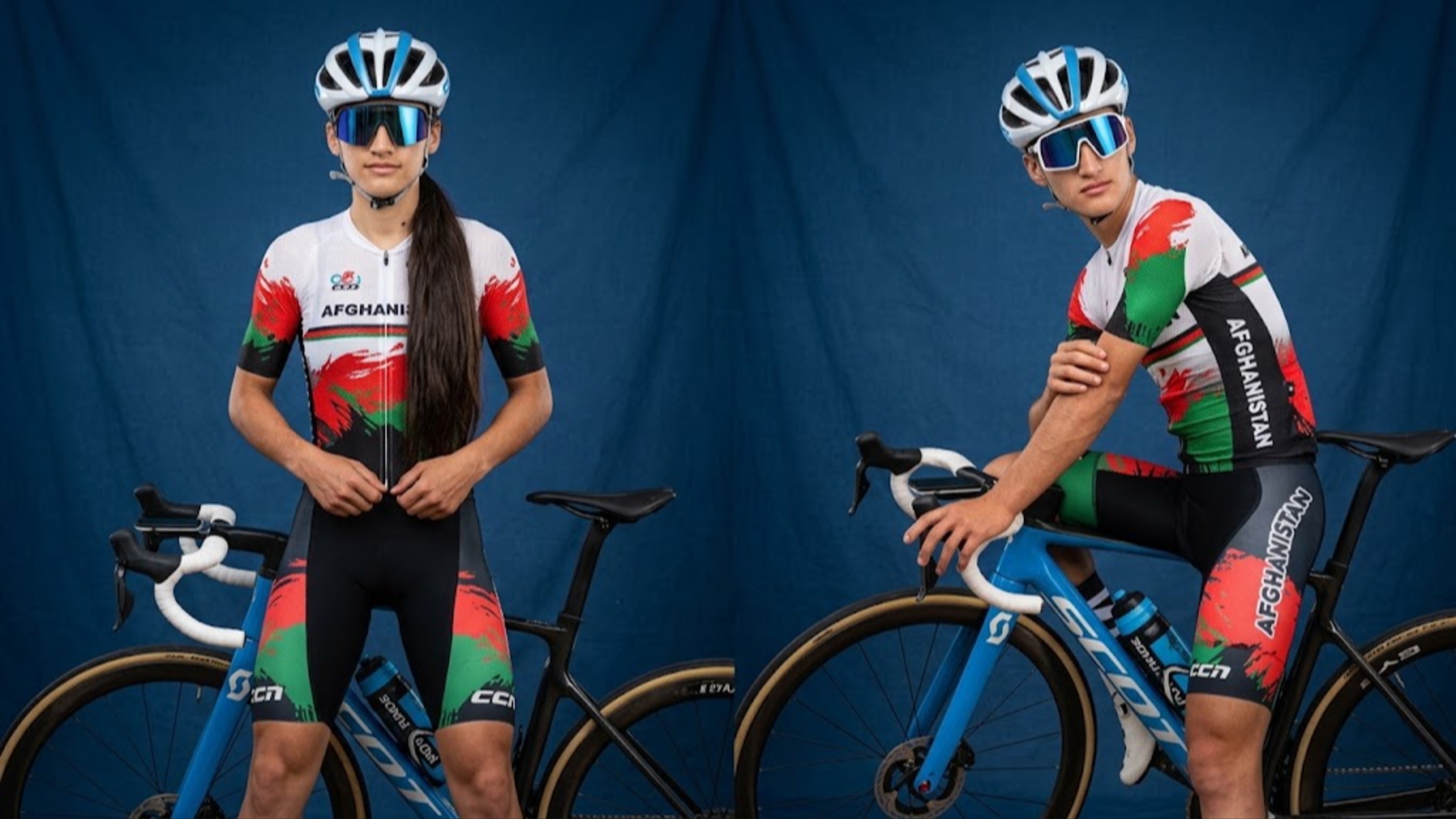
Fariba Hashimi has never raced a bike inside Afghanistan as a professional. She isn't allowed to. Neither is any Afghan woman, under the country's current government.
Learning to ride under threat
Fariba and her sister Yulduz grew up in Faryab province, where taking up cycling as girls wasn't just unusual; it was actively dangerous for them. People would try to hit them with cars or throw stones as they rode, Yulduz has said publicly. Even their own family initially asked them to stop before their talent became obvious to anyone watching.
When the Taliban retook control of Afghanistan in August 2021, women were formally barred from sport altogether across the country. The sisters left in the days before Kabul fell, eventually settling at the UCI's World Cycling Centre in Aigle, Switzerland, a program built specifically to support athletes from countries where they can no longer train safely at home.
Choosing a flag that won't let them race at home
At the 2024 Paris Olympics, Fariba and Yulduz became the first Afghan women to compete in cycling at any Olympic Games in history. They could have raced under the Olympic Refugee Team banner instead, which would have been the simpler path administratively. They chose Afghanistan's colors on purpose. Our achievement belongs to Afghanistan, Fariba said at the time. This belongs to Afghan women. I am going to the Olympics because of them.
Later that year, Fariba became the first Afghan cyclist, male or female, to win an international UCI race, taking the queen stage of the Tour Cycliste Féminin l'Ardèche solo on the climbs of Mont Lozère, well clear of a field packed with WorldTour riders.
What their presence at the Asian Games actually means
Both sisters are competing in cycling events at the 2026 Asian Games in Aichi-Nagoya, held between September 20 and October 2 across venues in Japan's Aichi and Shizuoka prefectures. For most competitors there, an Asian Games start line is simply one step on a career ladder. For the Hashimi sisters, being on that start line at all is the story, given that the sport they're racing in is one their own government has made illegal for women back home.
Their federation still runs an annual Afghan Women's Road Championships, but it can't be held inside Afghanistan either. This year's edition ran alongside the French national championships in June, with both the road race and time trial won by Fariba against a field of fellow Afghan exiles competing under similar circumstances.
There's a particular kind of pressure that comes with representing a country that has banned the very activity you're representing it in. Every race becomes proof of something larger than the finishing time. Whether Fariba or Yulduz stands on an Asian Games podium this year almost becomes secondary to the simple fact that they're allowed to be there competing at all, a distinction most other athletes in Nagoya never have to think about twice.For them, every kilometer carries a message: Afghan women are still competing, even when they cannot do so at home.

Sarajevo Back at the Heart of Regional MMA: SFC Returns with Explosive Matchups

How Buzzer Karma Works: Levels, Penalties, and What They Mean

Inside Buzzer's Latest Update (and Why It Changes How You Use the App)

Buzzer Introduces Ads Console: A New Era of Advertising Across the Entire Buzzer Ecosystem

Buzzer Is Evolving: From Quantity to Quality

Buzzer Now Has a Games Hub, and Tournaments Are Coming

Al Ittihad SC's Matches Are Now Live on Buzzer

Palm City vs Gulf United Ends in 1–1 Draw in UAE Second Division League Clash

"We Don't Take the Guy With the Camera." He Built His Own Club Anyway. Now He's Coming to Find You.

Building the Infrastructure Sports Tech Forgot


