





 2
VAR Admitted It Was Wrong About the Manchester Derby. That's the Part Worth Sitting With.
Pro Ref doesn't usually say VAR got it wrong. On Monday, it did exactly that, in writing, about the goal that decided the Manchester derby.
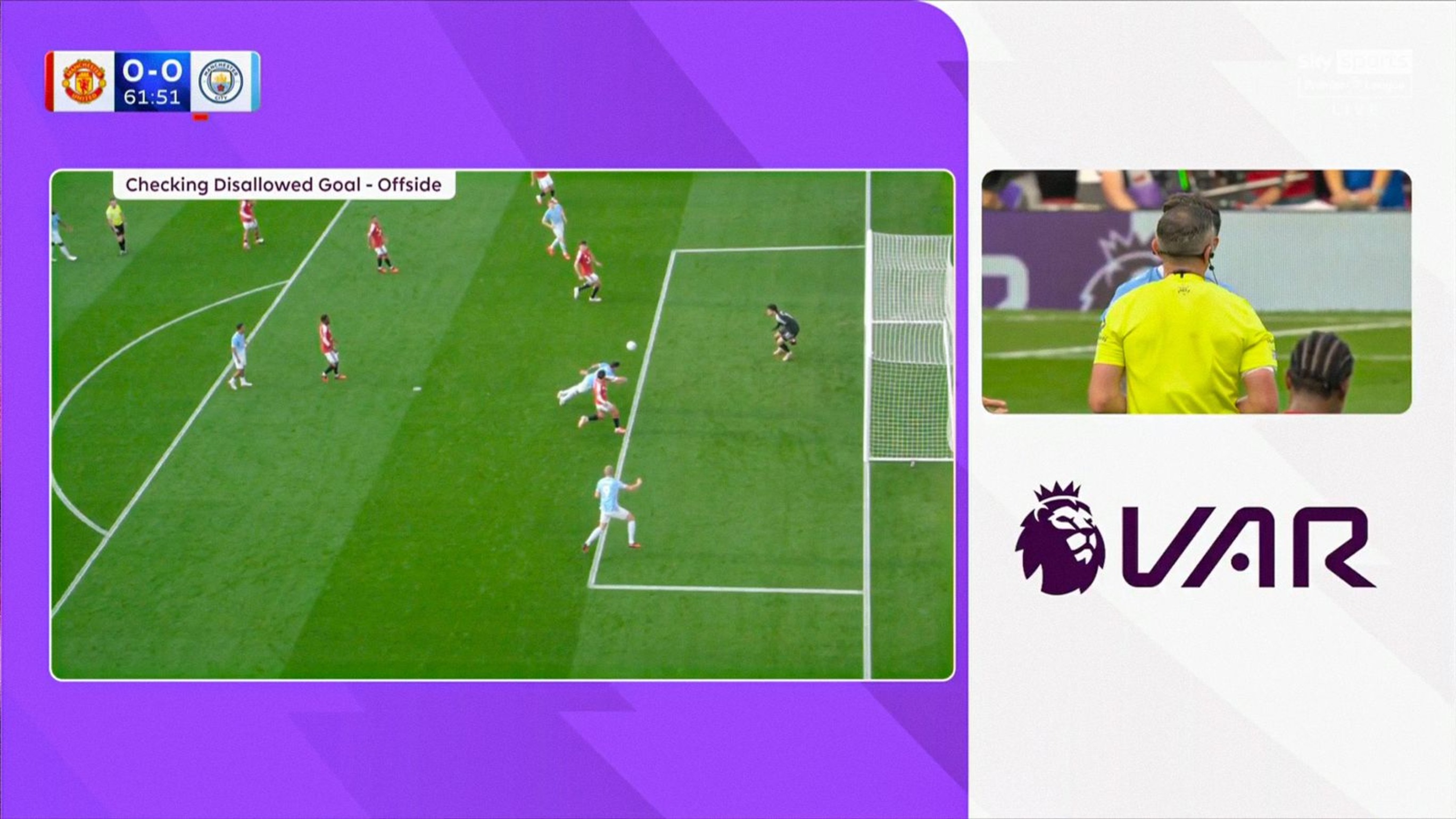
Erling Haaland's 60th-minute strike at Old Trafford stood after VAR ruled him onside off Josko Gvardiol's cross. City won 1-0. A day later, English football's refereeing body admitted the review should never have ended there.
What actually went wrong
The assistant flagged Haaland offside. VAR checked the automated lines and found United defender Patrick Dorgu had played him onside, which settled the factual part of the offside question. But offside isn't only a factual question.
Enzo Fernandez had also been in an offside position on the same phase, reaching to head the ball just before Haaland scored. Pro Ref's statement acknowledged that Fernandez "did not play the ball," which technically makes any offside claim against him subjective rather than automatic. And that's exactly where the process broke down.
"On this occasion, the VAR did not recognise the likely impact of his position and should have recommended an on-field review," the statement read. Pro Ref confirmed it had contacted Manchester United "to acknowledge what we deem is an error of judgement."
The line VAR keeps tripping over
Semi-automated offside technology settles the factual question fast: was a player's body in front of the last defender, yes or no. What it can't settle is whether a player standing in an offside position actually interfered with the phase enough to matter. That call still belongs to a human being watching a monitor, and Pro Ref's own admission says that handoff didn't happen when it should have.
This isn't the first time this exact seam has produced a Premier League controversy. Fans and pundits have picked apart near-identical offside interference calls for years, arguing every time about where "impact" starts and stops. What's different here is the rare, unambiguous written admission from the body that trains and assesses the officials.
What VAR was actually supposed to fix
VAR was sold to fans as a tool for eliminating "clear and obvious" errors, the joke throw-in that gets missed, the stonewall penalty that gets waved away. Factual offside decisions were supposed to be the clean, mechanical win in that pitch, since a line is a line.
Subjective interference was never going to be clean. It requires judgment, and judgment is exactly where VAR keeps generating the loudest arguments, not because the technology fails but because the technology was only ever built to answer half the question.
Pro Ref's admission doesn't undo the result. United still lost, and City still have the points.
But it does confirm something fans have argued for years without an official ever saying it out loud: VAR can nail the objective half of a decision and still get the outcome wrong, because the part that actually decides most controversial goals was never the part a line on a screen could settle.
The technology can draw the line, but it still can't decide what matters.

Sarajevo Back at the Heart of Regional MMA: SFC Returns with Explosive Matchups

How Buzzer Karma Works: Levels, Penalties, and What They Mean

Inside Buzzer's Latest Update (and Why It Changes How You Use the App)

Buzzer Introduces Ads Console: A New Era of Advertising Across the Entire Buzzer Ecosystem

Buzzer Is Evolving: From Quantity to Quality

Buzzer Now Has a Games Hub, and Tournaments Are Coming

Polo Al Taco Expands Its Global Reach Through Weekly Livestreams on Buzzer Arena TV

Al Ittihad SC's Matches Are Now Live on Buzzer

Palm City vs Gulf United Ends in 1–1 Draw in UAE Second Division League Clash

"We Don't Take the Guy With the Camera." He Built His Own Club Anyway. Now He's Coming to Find You.


 1


