





 1

The 2027 Tour de France Starts in Scotland. Why Do Grand Tours Keep Leaving Home?
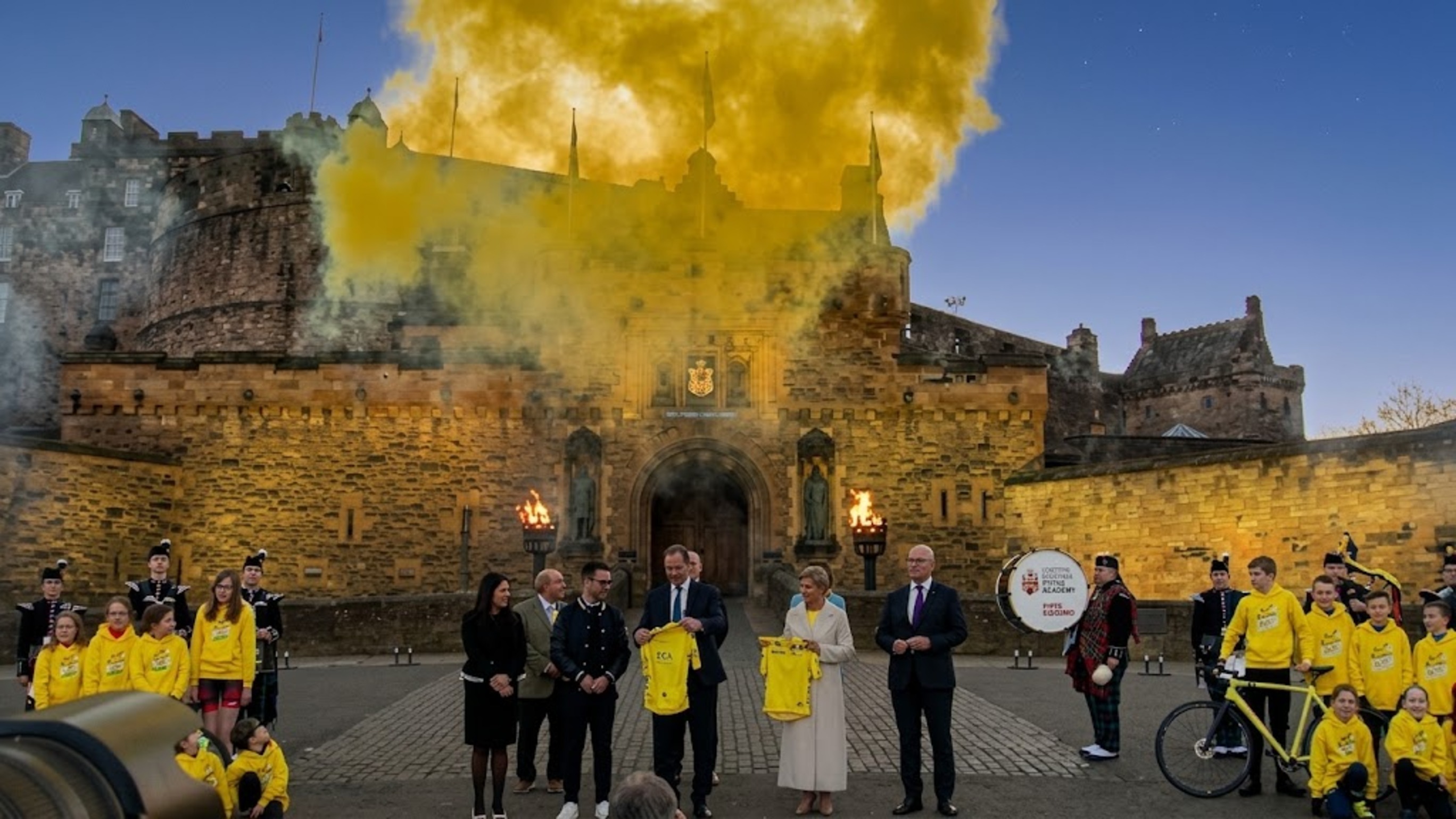
The Tour de France will roll out of Edinburgh on Friday, July 2, 2027, further north than the race has ever started. Riders will not cover a single kilometre of the opening weekend in France.
Stage one runs 184 kilometres south to Carlisle through Midlothian and the Scottish Borders. It has one categorised climb, the Côte de Melrose in the Eildon Hills, which will decide who wears the first polka dot jersey. The stage then crosses the border into England.
Stage two goes from Keswick to Liverpool on Saturday, and stage three from Welshpool to Cardiff on Sunday. That makes a Scotland, England and Wales run in three days, and the race reaches Paris on July 25.
Three days, three nations, one clever idea
Most Grand Départs borrow a single city. This one borrows a country, and in fact three of them. It will be the third British start, after London in 2007 and Yorkshire in 2014, and the Tour’s first foreign start dates back to Amsterdam in 1954.
The opening stages rarely decide the race, which is why the Tour can lend them out. Nobody wins the yellow jersey in the first weekend, though a bad day can lose it. That gives the organisers a product they can sell without hurting the competition.
The women’s race gets its own start. The Tour de France Femmes begins in Leeds on July 30 and heads through Manchester and Sheffield to London. It is the first time both Grand Départs have been held in the same country outside France.
What a host is actually buying
Host fees are negotiated privately and seldom published in full, so nobody outside the deals can say what Scotland, Cumbria, Merseyside or Wales are paying. What they get in return is easier to see. First Minister John Swinney called the start a moment of real national significance for Scotland.
The organisers have attached a social programme called Joy, aimed at tackling inactivity and improving mental wellbeing. British Cycling plans to recruit around 7,000 volunteers. The organisers describe the whole thing as the largest free sporting spectacle in British history, which is a bold claim and a very Tour de France one.
There is also a nice local touch. Cardiff, where stage three finishes, is the birthplace of Geraint Thomas, who won the Tour in 2018. If a race has to start in someone else’s country, it helps to finish in the hometown of a winner.
The risk of a good thing
Here is the opinion. The Tour has found a business that costs the race almost nothing. The first weekend rarely settles anything, the host pays and cheers, and the final week still happens on French roads and ends in Paris.
The fair objection is that a race which keeps starting abroad risks looking a little less French each time. A race is partly its geography, and the Tour sold its identity on the idea of a lap around France. Each foreign start is a small renegotiation of that idea.
For now the exchange looks like a good one. Millions of people will line roads in Scotland, England and Wales to watch a race they would otherwise see on television. Should the Tour keep its first weekend permanently for sale, or has selling it already changed what the race is?

Sarajevo Back at the Heart of Regional MMA: SFC Returns with Explosive Matchups

How Buzzer Karma Works: Levels, Penalties, and What They Mean

Inside Buzzer's Latest Update (and Why It Changes How You Use the App)

Buzzer Introduces Ads Console: A New Era of Advertising Across the Entire Buzzer Ecosystem

Buzzer Is Evolving: From Quantity to Quality

Al Ittihad SC's Matches Are Now Live on Buzzer

Polo Al Taco Expands Its Global Reach Through Weekly Livestreams on Buzzer Arena TV

Buzzer Now Has a Games Hub, and Tournaments Are Coming

Palm City vs Gulf United Ends in 1–1 Draw in UAE Second Division League Clash

"We Don't Take the Guy With the Camera." He Built His Own Club Anyway. Now He's Coming to Find You.


 1


