



 0
Mario Balotelli Finds Peace in the United Arab Emirates After a Turbulent Career
Mario Balotelli discusses retirement, Roberto Mancini and the Italian national team
Mario Balotelli finds peace after a turbulent career and speaks openly about the crisis in Italian football
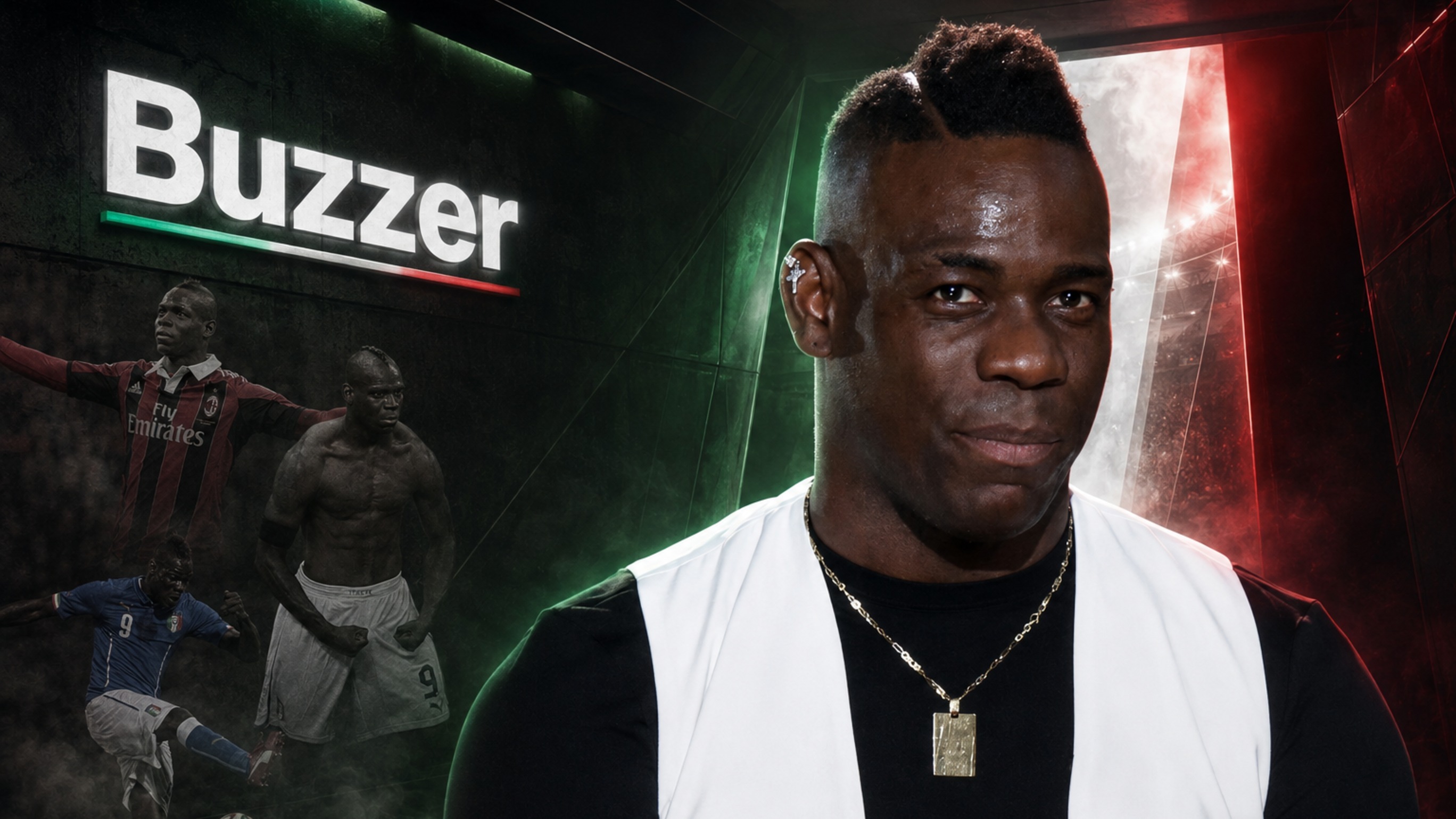
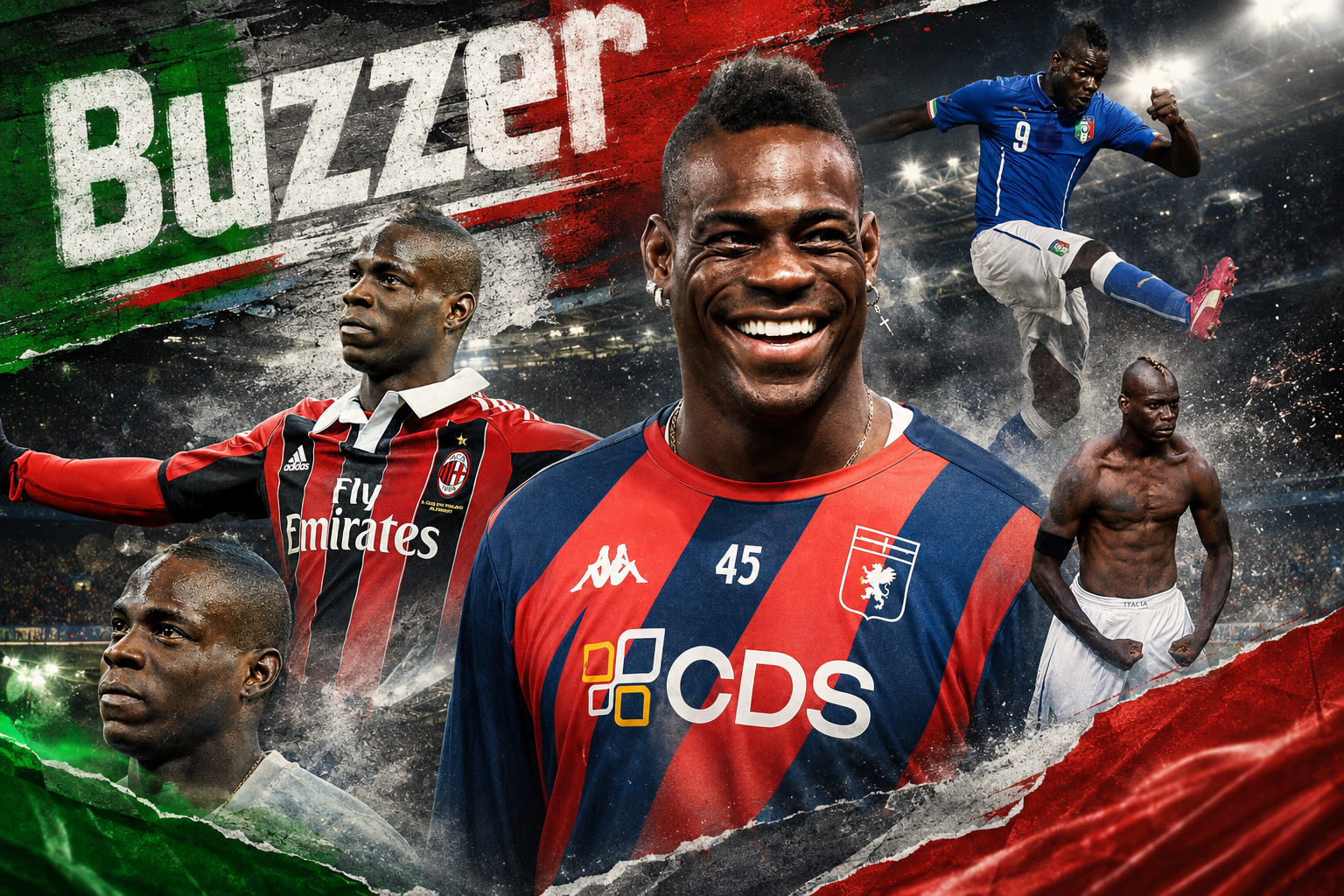
Mario Balotelli can now reflect more calmly on a career in which immense talent, trophies and spectacular moments were accompanied by controversy, poor decisions and numerous missed opportunities. Now 36, the Italian striker plays for Al-Ittifaq in the United Arab Emirates, where he is trying to enjoy football and fulfil a childhood dream.
The former Italy international plays alongside his brother, Enock Barwuah. Away from Europe’s biggest stadiums, Balotelli continues to follow developments in Italian football and has spoken about the reasons behind the decline of the Azzurri. In his view, one of the main problems is that children no longer play football every day in the streets and parks.
Money was not the main reason behind the move
Mario Balotelli signed a two-and-a-half-year contract with Al-Ittifaq in January 2026. He made his decision quickly after meeting the club’s president and discussing the sporting project.
The striker insists that the financial offer was not the decisive factor. The opportunity to continue playing in a competitive league and share a dressing room with his brother weighed more heavily in his decision.
“To be honest, it was an idea that came about more or less at the last minute,” he says. “The president wanted to meet us, and we talked. I was interested in the project. Everyone always says, ‘You’re going to Dubai for the money,’ but, thank God, I’m not short of money. So money wasn’t the only objective. The project was actually appealing and competitive. I started to like the idea and decided to give it a try.”
Adapting to football in the Middle East has provided Balotelli with good training facilities and modern stadiums. However, the experience differs from his spells in Italy and England, particularly because of the low attendances and certain organisational issues.
“In terms of infrastructure, things are very good. The stadiums are beautiful. The problem is the crowd: the stands are empty, which is a little sad,” he says. “The organisation also leaves a little to be desired, but I think things will improve over time. I’m talking about every team here, without exception.”
A childhood dream fulfilled alongside Enock Barwuah
Beyond the sporting project, the transfer also had an important personal dimension. Mario Balotelli and Enock Barwuah had promised each other as children that they would one day play together. The different paths taken by their professional careers appeared to make that dream impossible.
Mario played for major clubs such as Inter Milan, AC Milan and Manchester City, while Enock built his career at a lower level. Nevertheless, the two brothers continued to hope that, towards the end of Mario’s career, a club would offer them this opportunity.
“It’s wonderful. Ever since we were children, we always said that one day we would play together. He kept asking me, ‘If you play for Inter, AC Milan or Manchester City, how could I possibly play alongside you?’ I told him that, when I got older, I might join a team at a slightly lower level and perhaps we would be given that opportunity. It was always a dream, and now it is becoming a reality.”
Balotelli explains the decline of Italian football
Despite being far from home, the striker continues to follow the problems affecting Italian football closely. Italy have failed to qualify for three consecutive World Cups, an almost unimaginable decline for a national team with four world titles.
Balotelli believes the explanations should not be found solely in tactics, training methods or the quality of the coaches. In his opinion, the changes that have taken place in Italian society and the way children now spend their free time have directly affected the development of new generations of players.
“In my opinion, the problems are very simple,” he says. “I prefer to offer practical explanations rather than technical ones, based on everyday life and what I see in Italy.
“When we were children, we played football for hours. I remember my mother getting angry with me because I stayed outside until it was so dark that we could no longer see the ball. Our parents threatened not to let us go outside and play the following day. Now, when I walk around cities such as Brescia — although I have noticed the same thing in other Italian cities — the parks are empty. There is nobody there anymore.”
The streets and parks produced the footballers of the past
Balotelli remembers that organised training sessions represented only one part of the development of children who were passionate about football. After finishing their sessions with their clubs, they continued playing for hours in parks, courtyards or on the streets.
Matches played without coaches or a fixed schedule helped them develop their creativity, technique and ability to make quick decisions. The most talented children were invited to play alongside older players, forcing them to cope with a faster pace and greater physical demands.
The striker believes that mobile phones, computers and gaming consoles have profoundly changed this reality. Many children today become familiar with the skills of the world’s greatest footballers by watching videos online, but they no longer spend enough time on the pitch to reproduce them.
Balotelli continues: “Computers, mobile phones and PlayStation consoles have ruined many things. Above all, parents’ attitudes have changed. Nowadays, a seven-year-old child might play football for two hours once every three days. We had the same organised training sessions, but we also played for three hours in the park every day. It was fun for us, but in reality, it was additional training.
“I truly believe that talent was developed in the streets and parks. You played a lot, learned a lot and tested yourself against older children. If you were good, they did not let you play with children your own age; they made you play alongside the older ones. Those tests helped me greatly in the long term. Playing alongside people older than me was always one of the most important experiences of my career.
“Nowadays, children spend their time on their phones. They think they are Ronaldinho because they watch videos of him. I thought I was Ronaldo because I could actually perform the same skills in the park. There is a huge difference.”
Italy can return to the elite of world football
Despite the difficult period endured by the Azzurri, Balotelli does not believe the decline will be permanent. The former international points out that other major European nations have also experienced crises before rebuilding their systems and returning to contention for trophies.
The effects of any reforms will not be seen immediately. Italy may need two or three generations to make up the ground they have lost and begin producing players capable of competing at the highest level again.
“Yes, I believe future generations will be able to turn the situation around,” he predicts. “Perhaps it will not happen immediately, but in two or three generations. It is normal for a country to go through periods of decline, but then it recovers. Spain, France and Germany have all experienced similar periods.”
Roberto Mancini sent him a birthday message
Mario Balotelli made 36 appearances and scored 14 goals for Italy. His last appearance for the national team came on 7 September 2018, when the Azzurri faced Poland in Bologna.
The match also had special significance for Roberto Mancini, as it was the first competitive game of his first spell as Italy manager. Their relationship goes beyond their time together with the national team. Mancini also coached Balotelli at Inter Milan and later at Manchester City, becoming one of the most important managers of the striker’s career.
Following Mancini’s return as Italy manager, Balotelli revealed that the coach had sent him a message on his birthday. The striker responded jokingly, reminding his former manager that his playing career was not yet over.
“He sent me a message to wish me a happy birthday, and I joked with him and said, ‘You know I can still play!’” Balotelli reveals. “I am very happy that he has returned to the national team. I care about him a lot and wish him all the best. In Italy, people tend to blame coaches far too often, but honestly, the system should bear a greater share of the blame. That is the truth nobody wants to acknowledge.”
Balotelli does not rule out a surprise return to the national team. Everything will depend on his performances and the number of goals he scores for Al-Ittifaq.
“If I keep scoring, yes,” he replies firmly.
Manchester City holds a special place in his career
The three years Mario Balotelli spent at Manchester City remain one of the most important periods of his career. The Italian won the Premier League and the FA Cup under Roberto Mancini, helping to launch the club’s transformation into a major force in European football.
Balotelli joined City at a time when the English club did not yet possess its current prestige or dominance. Helping to build the team that won the league title after such a long wait remains a source of particular satisfaction for him.
“It remains one of the best memories of my career,” Balotelli says. “At that time, City were not as well known as they are today. We joined the team that took the first steps towards making City what they are now. That gives you a special feeling. In fact, it means much more than that.”
Balotelli is not thinking about retirement yet
The striker is recovering from a minor leg injury but continues to train. The high temperatures in the United Arab Emirates make training more challenging and force him to manage his energy carefully.
Balotelli has not set a date for his retirement. He intends to continue playing for as long as his body allows him to and as long as he still experiences the same joy whenever he steps onto the pitch.
“I feel good,” he says. “I’m recovering from a minor problem with one of my legs, but I’m training and things are going well. It is extremely hot, which makes it a little more difficult to give 100%, but if you manage your energy and play intelligently, you can cope quite well. Nevertheless, the heat is undoubtedly a disadvantage.
“On the pitch, I want to continue playing for as long as I feel good. Football is what I love doing, so I will carry on until my body tells me, ‘Enough.’ Away from the pitch, once my career is over, I definitely want to focus on my business interests and my children. However, I would like some peace and quiet. I have had a very turbulent career, so a more settled lifestyle would not be bad at all.”
The advice he would give his 16-year-old self
His experiences have led Balotelli to view many episodes from his past differently. If he could return to his teenage years, he would advise his younger self to avoid certain mistakes and pay more attention to those who tried to guide him.
“I would tell him not to make certain decisions and to listen to certain people at the right moments.”
Who Is Mario Balotelli?
Born on 12 August 1990 in Palermo, Italy, Mario Balotelli remains one of the most fascinating and controversial figures in modern football. Blessed with remarkable physical strength, outstanding technique and deadly accuracy from the penalty spot, the Italian striker has left his mark at several major European clubs. He has become as famous for his moments of brilliance on the pitch as for his eccentric personality away from it.
His professional career began at Lumezzane in 2006 before he rose to prominence with Inter Milan, where he played between 2007 and 2010 and won the UEFA Champions League. The striker subsequently represented Manchester City (2010–2013), AC Milan (2013–2014 and on loan in 2015–2016), Liverpool (2014–2016), Nice (2016–2019), Marseille (2019), Brescia (2019–2020), Monza (2020–2021), Adana Demirspor (2021–2022 and 2023–2024), Sion (2022–2023) and Genoa (2024–2025). In 2026, he moved to the United Arab Emirates to play for Al-Ittifaq.
At international level, Balotelli was a key player for Italy between 2010 and 2018, earning 36 caps and scoring 14 goals. His outstanding performances at UEFA EURO 2012 remain among the most memorable moments of his career.
Lionel Messi and Cristiano Ronaldo compared over their last 100 matches
From Hero to Enemy in Just One Year: Alexander Isak Faces a Hostile Newcastle Return
David Beckham Builds His Fortune Through Business Ahead of the World Cup
The 15 Most Unusual Spanish Transfers in Premier League History
England Have a New Undisputed Leader as Tuchel’s Euro 2028 Plan Comes to Life
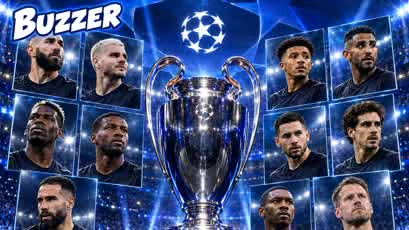
They Won the Champions League, but Are Now Free Agents Looking for a New Club
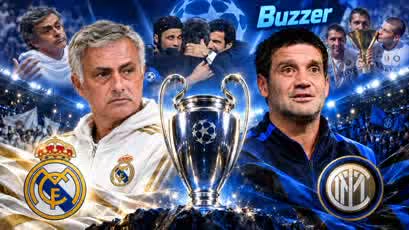
“My grandmother would have run more than you” - The harsh Mourinho remark that brought the best out
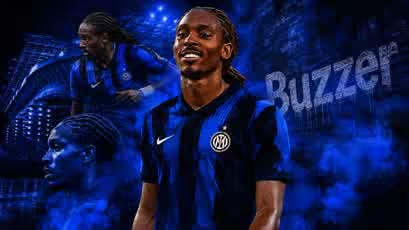
The World Cup Transformed His Career Djed Spence Completes One of Serie A’s Biggest Summer Moves
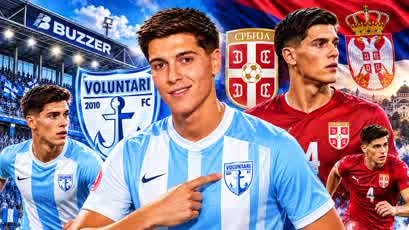
Bundesliga pedigree at FC Voluntari! Romanian club sign 1.92m Serbia international
Juventus’ New Diamond Comes From Bosnia: Barbarez Believes He Can Become a Champion


