




 0
0
The Longest F1 Race Ever Lasted More Than Four Hours
A Formula 1 Grand Prix typically wraps up in under two hours.
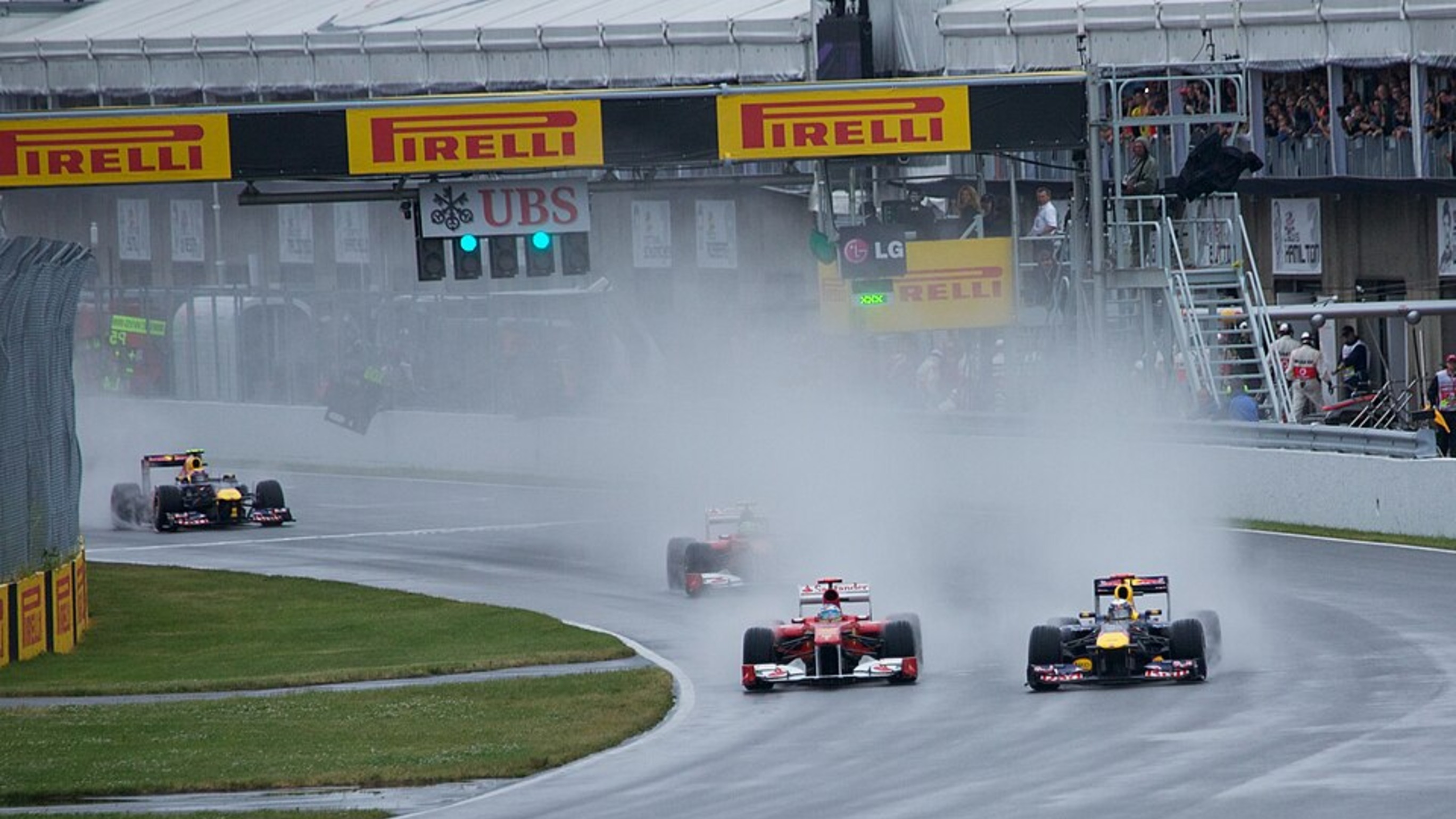
The 2011 Canadian Grand Prix took 4 hours, 4 minutes and 39 seconds from lights out to chequered flag, still the longest race in the sport's history.
Somewhere inside that marathon, a driver who was dead last with 30 laps to go somehow ended up celebrating on the top step of the podium.
A race that could barely start, then couldn't stop
Heavy rain hit Montreal's Circuit Gilles Villeneuve before the race had even begun, forcing officials to start the Grand Prix behind the safety car with standing water covering the track.
Real racing finally got underway after five laps, only for a collision between McLaren teammates Lewis Hamilton and Jenson Button to bring the safety car straight back out.
Torrential rain returned on lap 25, and officials red-flagged the race entirely, suspending it for just over two hours while the worst of the storm passed.
By the time the race resumed, six separate safety car periods had already been triggered, a record that still stands, and the afternoon had stopped resembling a typical Grand Prix in any meaningful sense.
Last, then first, in the space of 30 laps
Jenson Button's afternoon captured the chaos perfectly.
He collided with his own teammate Hamilton, picked up a drive-through penalty for speeding behind the safety car, then clipped Fernando Alonso later in the race and picked up a puncture that dropped him to dead last with roughly 30 laps remaining.
From there, he simply started passing people, making 34 overtakes across the race and working his way back through the entire field.
He caught race leader Sebastian Vettel on the final lap, sitting less than a second behind as they approached Turn 6.
Vettel, who'd led 68 of the race's 70 laps and looked to have the win comfortably wrapped up, ran wide under the pressure.
Button drove through to take the lead for the first time all afternoon and won the race by 2.7 seconds, having spent six visits to the pit lane, including that drive-through penalty, along the way.
Records that came with the chaos
Beyond the overall length, the race set records for the most pit stops by a winning driver, the lowest average winning speed in F1 history, and the most safety car periods in a single Grand Prix.
F1 introduced a new four-hour maximum race window shortly afterward, a rule that this exact race had pushed right up against, before later tightening it further to three hours in 2021.
Button himself later called it the greatest race of his career, and it's hard to argue: a race so long and strange that finishing it at all would have counted as an achievement, let alone climbing from last to first inside it.
A record that modern F1 is unlikely to threaten
Part of why this record has survived well over a decade is that modern F1 cars are simply more reliable than the field Button was racing against, meaning the kind of mechanical carnage and reshuffling that once forced repeated safety car interventions happens far less often today.
Race organisers have also become more willing to delay a start rather than begin behind a safety car in genuinely dangerous conditions, reducing the odds of a race stretching out the way Montreal's did that afternoon.
F1's own rulebook changes since then reflect exactly that shift.
Tightening the maximum race window from four hours down to three in 2021 was as much an acknowledgment that a repeat of 2011 shouldn't be allowed to happen as it was a scheduling decision, making Button's chaotic, rain-soaked victory a record that the sport has since quietly written rules to protect rather than one likely to be threatened again anytime soon.
Does a chaotic, weather-ruined race like this deserve to be remembered as one of the greatest in the sport's history, or does it say more about lucky timing than genuine racing skill?


